About & Origin
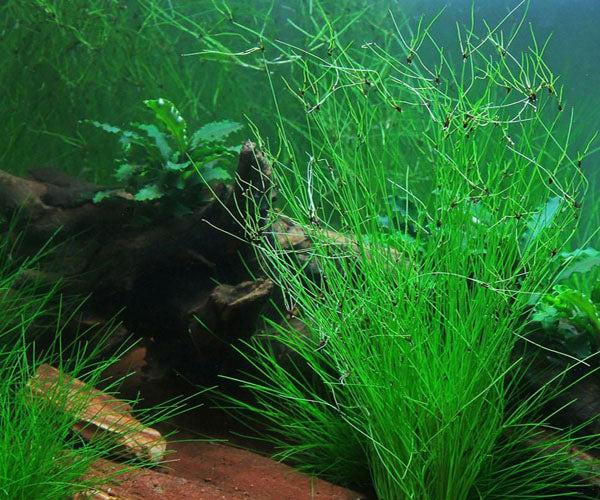
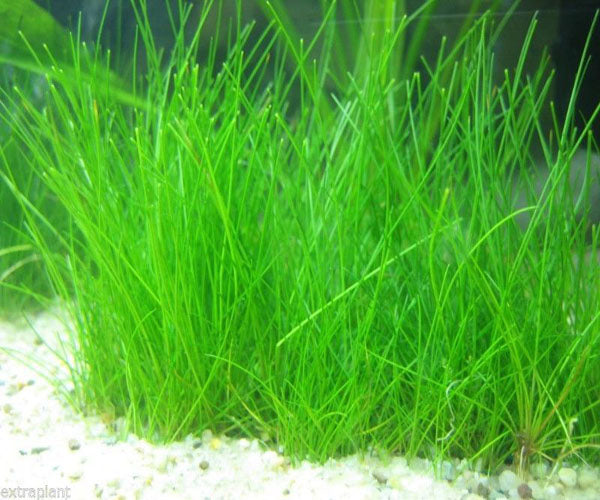
Eleocharis vivipara, commonly called Umbrella Hairgrass, is a grass-like freshwater aquarium plant in the spike-rush family, found growing wild in wetlands and shallow freshwater across the Americas. It's essentially a taller relative of the more familiar dwarf hairgrass often used for low aquarium carpets.
It grows as tall, thin, grass-like blades emerging from a spreading base of underground runners. Left to grow tall, the blades tend to fold over near the surface, creating a distinctive drooping "umbrella" canopy effect rather than staying upright like a typical carpet plant — hence the common name.
Because it spreads via runners across the substrate, a starter patch will steadily colonise more of the tank floor over time, making it genuinely useful either as a taller background/midground grass or, kept trimmed short, as a denser lawn-style planting instead.
The species name "vivipara" refers to a genuinely distinctive reproductive trait: alongside spreading by runners, it can produce small plantlets directly on its blade tips, which drop off and root themselves nearby -- a form of live propagation (rather than seed) shared by relatively few aquarium plants, and part of why this species can colonise open substrate space faster than its modest size alone would otherwise suggest.
Requirements
Umbrella Hairgrass is relatively hardy and adapts to a range of aquarium setups, though brighter light gives the best results.
Light: medium to high light is recommended for compact, vibrant green growth; in low light it tends to grow leggy and can fail to thrive.
CO2: not essential, but CO2 injection encourages faster growth and longer blades.
Substrate: spreads by runners, so a fine-grained or nutrient-rich substrate supports healthy root development and faster spreading across the tank floor.
Trimming: can be kept as a taller background grass (allowed to fold over near the surface) or trimmed regularly to keep it shorter and denser, depending on the look you want.
Spreading: left unchecked it will happily colonise open substrate across the tank, so plan for that if you want to keep it contained to one area.
Containment: a physical barrier (rock, wood, or a planted divider) is the most reliable way to stop runners spreading beyond an intended area, since simply pulling stray runners is a repeated, ongoing task rather than a one-time fix.
Propagation: beyond runners, the plantlets that form on blade tips can be gently detached and replanted elsewhere once they've grown a few roots of their own, giving a second, faster way to establish new patches.
Compatibility

Water & Care Conditions
Eleocharis vivipara is fairly adaptable and grows best within these ranges:
- pH: 6.0–7.5
- Hardness: soft to moderately hard water, roughly 3–15 dGH
- Light: medium to high for compact, vibrant growth
- Temperature: 22–28°C (72–82°F)
- Oxygenation: undemanding; normal community-tank circulation is sufficient
Outside these ranges it's generally forgiving — the main effect of weaker light or nutrients is leggier, less vibrant growth rather than the plant dying off.
Weekly partial water changes and a consistently stable temperature both support steady, healthy spreading over time. A nutrient-rich substrate or occasional root tabs give a genuinely visible boost to blade colour and overall density, though this species tolerates plain, unfertilised gravel reasonably well compared to many more demanding carpeting plants sharing the same tank.
A patch given good light and left undisturbed typically fills in noticeably within a couple of months, spreading steadily and reliably across open substrate as runners establish and, given the species' distinctive viviparous trait, blade-tip plantlets take root nearby as well.
Trim regularly once established to maintain whichever look you're going for -- a taller, drooping "umbrella" canopy left mostly alone, or a denser, shorter carpet-style lawn kept in check with scissors every couple of weeks during its active growing season.