About & Origin
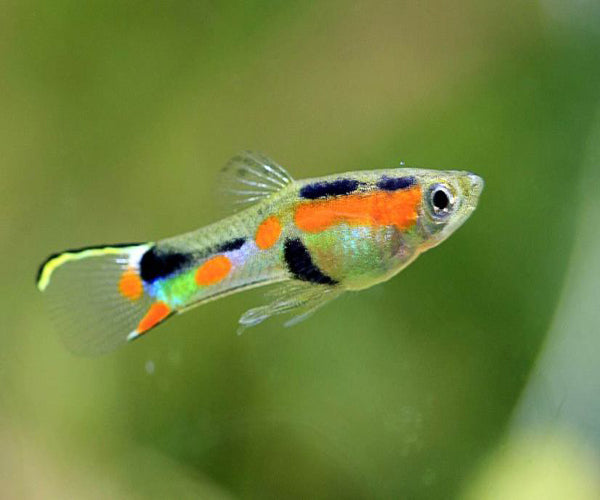
The Endler Guppy, Poecilia wingei, is a close relative of the common guppy (Poecilia reticulata) native to a small number of coastal lagoons and freshwater bodies around Cumaná, Venezuela — a much more restricted natural range than the widespread common guppy. It was described relatively recently in the aquarium hobby (named after biologist Franky Endler, who first collected and popularised it) and quickly became prized in its own right for its small size and intensely saturated, often metallic colouration.
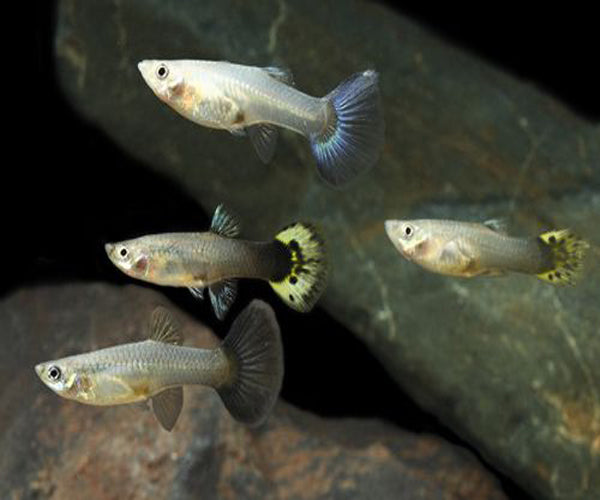
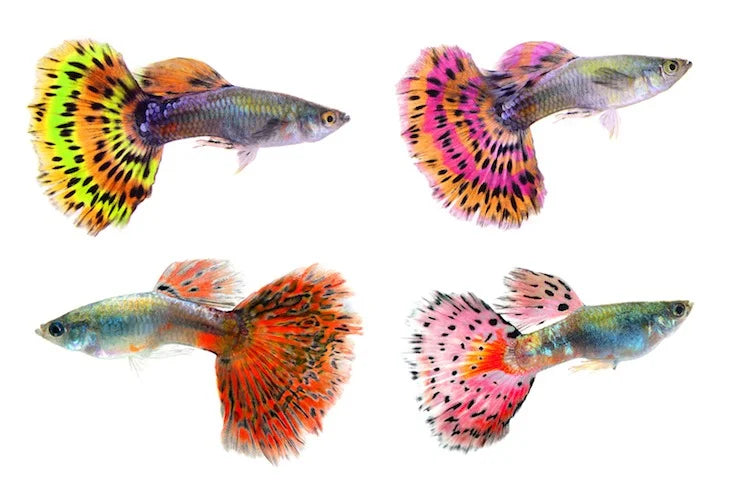
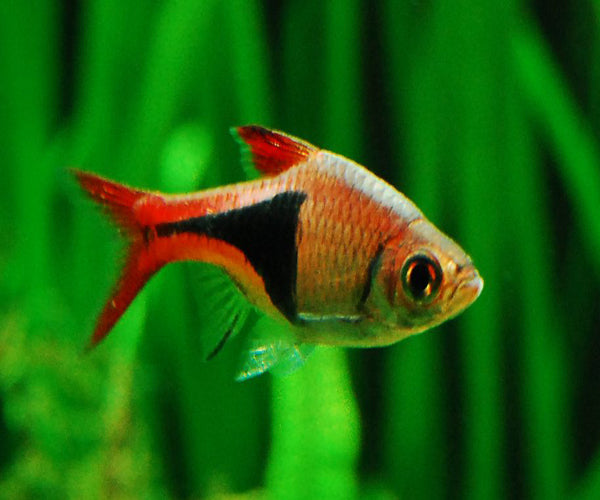
Males are the main draw: compact, usually under 2.5 cm (1 inch), and covered in vivid patches of orange, green, blue, and black in a huge range of named strains, each patterned slightly differently. Females are larger, plainer, and silvery-grey, following the same visual pattern seen across livebearers generally.
Endlers are active, hardy, fast-breeding livebearers, and — like common guppies — thrive in a very wide range of conditions, which is part of why they've become such an easy, popular beginner and breeder fish, particularly for hobbyists interested in maintaining distinct, named strains through careful breeding.
Wild Endler populations are considered vulnerable in their tiny native range due to habitat loss and pollution around Cumaná, which makes the large, healthy captive-bred population maintained by hobbyists worldwide genuinely significant — most Endlers in the trade today, including the fish sold here, descend from long-established captive lines rather than any ongoing wild collection.
Because the species was formally described relatively late and because pure-strain Endlers have been so extensively line-bred and, in places, hybridised with common guppies over the decades, hobbyists sometimes debate exactly how "pure" a given commercial strain really is — for a casual community-tank keeper this makes little practical difference, but it's worth knowing if you ever plan to seek out documented, traceable pure lines for serious breeding projects.
Requirements
Endlers are undemanding and forgiving, making them one of the easiest livebearers to keep well, even for someone new to fishkeeping.
Tank size: their small adult size means a group can be kept comfortably in as little as 20–40 litres (5–10 gallons), though more space is always better for long-term water stability and swimming room, especially once a group starts breeding and the population grows.
Sex ratio: as with common guppies, keep more females than males (roughly 2–3 females per male) to spread out courtship activity and reduce the near-constant pursuit that stresses individual females in a male-heavy group.
Breeding: Endlers breed prolifically and will readily crossbreed with common guppies if the two species are kept together, producing hybrid offspring that lose the distinct Endler patterning — if you want to preserve pure Endler strains and their fine, saturated colouration, keep them in a tank separate from other Poecilia livebearers.
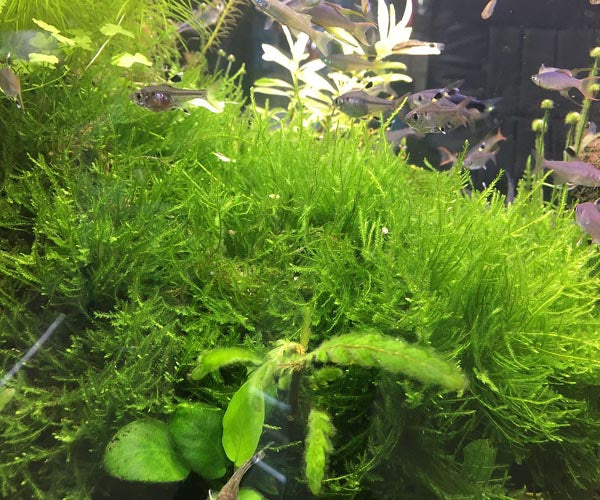
Cover for fry: dense or floating plants give newborn fry somewhere to hide from adults, which will otherwise treat them as an easy meal; without any special intervention at all, a small starting group can build a self-sustaining, growing population within a few months.
Diet: omnivorous and easy to feed — a good small-grained flake as a daily staple, with occasional live or frozen foods (baby brine shrimp, micro worms) for extra colour saturation and breeding condition.
Tankmates: their very small size means care is needed choosing tankmates — anything large enough to view an Endler as a snack, including some larger barbs or cichlids, is best avoided in favour of small, peaceful species closer to their own scale.
Water movement: gentle to moderate filtration is preferable to a strong current — Endlers are capable swimmers but, being so small, can be constantly buffeted and stressed by outflow strong enough that a larger fish wouldn't even notice.
Compatibility
Water & Care Conditions
Endlers tolerate a wide range of conditions but do best, and colour up most, within these ranges:
- pH: 7.0–8.0 — Endlers, like guppies, generally prefer neutral-to-alkaline water over soft, acidic conditions
- Hardness: moderate to hard, roughly 10–25 dGH; they tolerate harder water unusually well among common aquarium fish
- Temperature: 22–28°C (72–82°F)
- Oxygenation: standard community-tank filtration and surface movement is sufficient
As with common guppies, stable, mature water matters more than any single parameter being exact — Endlers are quite tolerant of a range as long as it isn't swinging suddenly from one day to the next.
A weekly or fortnightly partial water change of around 20% keeps water quality steady in an Endler tank, and matters more as a breeding group grows and adds to the overall bioload. Because Endlers are so small, even a modest tank can end up quite densely populated once breeding is underway — keeping an eye on filtration capacity and stocking density over time is worth doing, rather than letting a colony grow unchecked indefinitely.
Their small size also means water changes and any dosing (fertilisers, treatments) should be measured a little more carefully than in a tank of larger fish, since the margin for a sudden concentration spike affecting a tiny fish is smaller — introduce any new additive gradually rather than all at once.
Endlers are otherwise low-maintenance and don't need any special equipment beyond standard community-tank filtration and, in cooler climates, a small heater to hold a stable tropical temperature — their main real vulnerability is being physically outcompeted or predated by larger, faster tankmates rather than any particular water-chemistry sensitivity.
Because a colony can build up quickly, it's worth periodically checking that ammonia and nitrite remain at zero and nitrate stays within a reasonable range, using a liquid test kit rather than relying purely on the fish appearing outwardly healthy, since problems in a small, densely populated tank can develop faster than in a larger, more lightly stocked one.