About & Origin
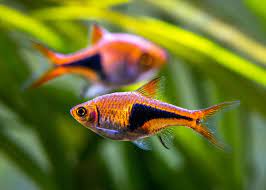
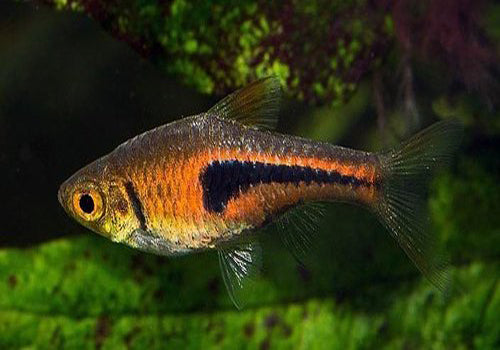
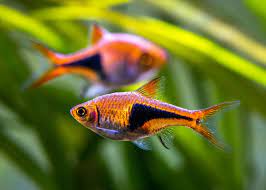
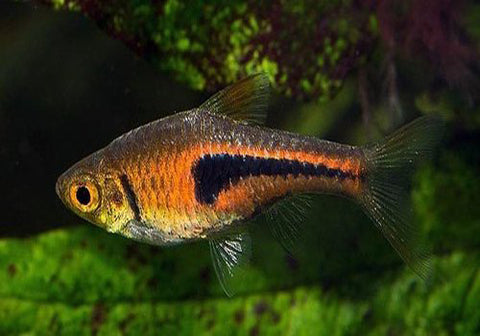
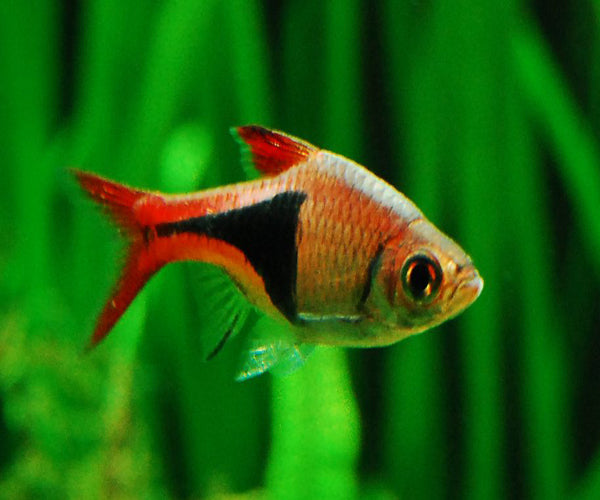
Espei's Rasbora (Trigonostigma espei) — sometimes sold simply as "Espe rasbora" — is a small, peaceful freshwater fish and another close relative in the same small rasbora genus as the Harlequin and Hengel's rasboras, native to Thailand, Cambodia, and parts of the Mekong basin. It shares the family's coppery-orange body but has a rounder, shorter black wedge marking than either of its relatives.
It comes from the same style of habitat as its cousins — slow, shallow, densely vegetated streams and swamps stained dark by decaying leaf litter, low in dissolved minerals and gently acidic.
Among the three closely related "harlequin-type" rasboras it's often considered the most subtly coloured, appealing especially to aquascapers who want a soft-water nano shoaler without the bolder contrast of a full Harlequin Rasbora.
"Espei" rasboras (Trigonostigma espei) are closely related to, and often confused with, the more famous Harlequin Rasbora, but are slightly smaller and slimmer, with a more elongated black wedge marking rather than the Harlequin's broad triangular patch.
They originate from slow-moving, densely vegetated, blackwater streams and peat swamps in Thailand and parts of Southeast Asia, environments characterised by soft, acidic, tannin-stained water and heavy leaf litter.
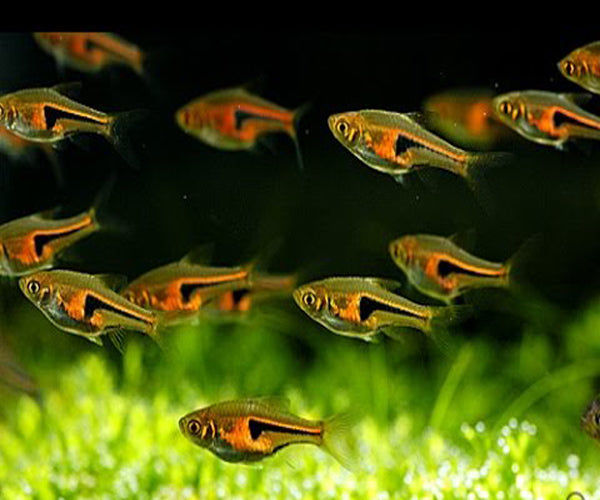
Like other members of their genus, they're peaceful, active schooling fish that spend most of their time in the middle water column, moving through planted areas in a loose but cohesive group.
The Espei/Espe Rasbora (Boraras merah or closely related trade names, sometimes crossed with the very similar Trigonostigma espei) is a diminutive Southeast Asian schooling fish from Thailand and Malaysia, found in shallow, densely planted blackwater streams and swamp forest. Its small, brilliant red-orange body with a subtle dark stripe makes a striking contrast against green planted foregrounds.
Requirements
Keep in a proper shoal of 8 or more for natural schooling behaviour and to reduce stress — like its relatives it is a genuinely social species that does poorly in small numbers.
It thrives in a planted, gently lit tank with soft, slightly acidic water, and is entirely peaceful toward other similarly sized fish. A well-matured tank with some driftwood or leaf litter suits it especially well and helps replicate its natural blackwater habitat.
Feeding is easy — a quality micro pellet or flake as a staple, with occasional live or frozen micro foods for conditioning.
A true shoaling species — keep in a group of at least 8-10 for natural, confident behaviour; in smaller numbers they tend to be shy and hide rather than display their best colour and activity.
Does best in a well-planted tank with some open swimming room, ideally with subdued lighting and some floating plants or driftwood to mimic the shaded, leaf-littered streams it comes from.
Small foods suit its small mouth best — micro pellets, crushed flake, and small live/frozen foods like daphnia or micro worms.
Like other nano rasboras it is best kept in large numbers — twelve or more — in a heavily planted nano or small community tank rather than a big, open aquarium where its subtle colouring and modest size would be lost. It is peaceful with everything except food-competitive with much larger, faster fish, so tankmates should be similarly small and calm.
Feed small, frequent amounts of micro pellets or crushed flake suited to its tiny mouth, and avoid overstocking the tank since its impact comes from a dense shoal rather than any single showy fish.
It rarely shows any aggression, even toward its own kind, making it one of the more universally peaceful nano fish available.
Compatibility


Water & Care Conditions
As with its close relatives, does best in soft, slightly acidic, warm blackwater-style conditions:
- pH: 5.5–7.0
- Salinity / hardness: freshwater only, soft water preferred
- Temperature: 23–28°C (73–82°F)
- Light: subdued, ideally with plant or driftwood cover
- Oxygenation: gentle flow and filtration; no special demands beyond stable, mature water
- Tank size: well suited to nano tanks (20 litres and up) given its very small adult size
- Blackwater conditions: shows best colour and confidence with driftwood, leaf litter, and subdued lighting that mimics its native swamp-forest habitat
- Feeding: small, frequent feedings of micro-sized food suit its tiny mouth better than standard flake
- Longevity: typically lives 3-4 years in stable, well-maintained conditions
- Tank position: stays mainly in the lower-to-middle water column among planting, rarely at the very surface
- Filtration: gentle filtration is preferred, as strong current can be tiring for such a small fish
- Substrate: dark substrate and driftwood suit its natural blackwater colouring best
Soft, acidic, tannin-stained water is closest to its natural blackwater habitat and brings out its best colour and confidence, though well-acclimated captive-bred stock tolerates moderate hardness reasonably well.
Gentle filtration and minimal current suit this species, since it comes from still to very slow-moving swamp and stream habitats rather than fast water.
Weekly partial water changes of 20-30% help keep this species colourful and active, since like most small characins and rasboras it's sensitive to accumulating nitrates and organic waste over time even though it isn't considered a delicate species.
A mature, cycled tank with established biological filtration is a much safer home for a new shoal than a freshly set-up system, since ammonia and nitrite spikes during cycling are a common cause of losses in small schooling fish.