About & Origin
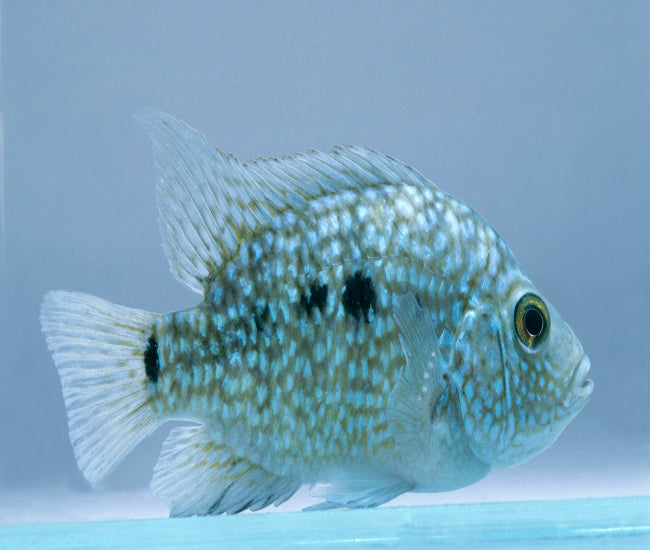
The Texas Cichlid group (commonly Herichthys cyanoguttatus or the closely related H. carpintis, both frequently sold simply as "Texas cichlid") holds the distinction of being one of the very few cichlid species native to the United States, found in the Rio Grande basin of Texas and northeastern Mexico — most cichlids come from Africa, Central, or South America. The "green" form refers to the iridescent turquoise-green spangling that covers the body, especially vivid on a well-conditioned adult.
It's a hardy, adaptable fish that tolerates a genuinely wide range of water conditions and even cooler temperatures than most tropical cichlids, a reflection of its more temperate native range compared to equatorial cichlid habitats.
Adults reach 25–30 cm (10–12 inches) and develop a bold, confident personality that many keepers find genuinely engaging — Texas cichlids are known for recognising their owners and interacting at the glass, more than most fish.
Its status as a native North American cichlid also makes it ecologically notable: much of its original Rio Grande range has been affected by habitat degradation and competition from introduced cichlid species over the decades, and wild "true" H. cyanoguttatus populations are considered more geographically restricted today than the widely-farmed aquarium strain, which has spread well beyond its native range through both the trade and, unfortunately, escaped or released fish establishing feral populations in warm waterways.
As with many large cichlids, colouration intensifies dramatically with age, good diet, and stable water — a young Texas cichlid can look almost plain silvery-grey, while a mature, well-kept adult in prime condition develops the dense, sparkling turquoise spotting the "green" form is prized for, sometimes accompanied by a pale, almost white margin along the dorsal and tail fins.
Requirements
300+ litres (75+ US gallons) for an adult given its size and territorial nature.
Temperament: aggressive and territorial, particularly once mature; typically kept alone, as a same-species pair, or with other large, robust cichlids able to hold their own — not suitable for a general community tank. Aggression tends to spike sharply around breeding, when a bonded pair will claim and defend a substantial portion of the tank against anything that approaches, tankmate or not.
Diet: not fussy — quality cichlid pellets as a staple, with occasional meaty frozen or live food (prawn, bloodworm, earthworm) to support its size and vivid colouration; this is a robust eater that rarely needs coaxing.
Décor: sturdy rockwork and driftwood; this fish will dig and rearrange substrate, so anchor decorations rather than relying on loose stacking. A layer of sand or fine gravel accommodates its digging instincts better than sharp, coarse substrate that can damage fins or scales during territorial disputes.
Handling and interaction: Texas cichlids are famously food-motivated and often become tame enough to hand-feed or recognise a regular caretaker at the glass — a genuinely engaging trait, though it doesn't reduce the fish's territorial aggression toward tankmates in any way.
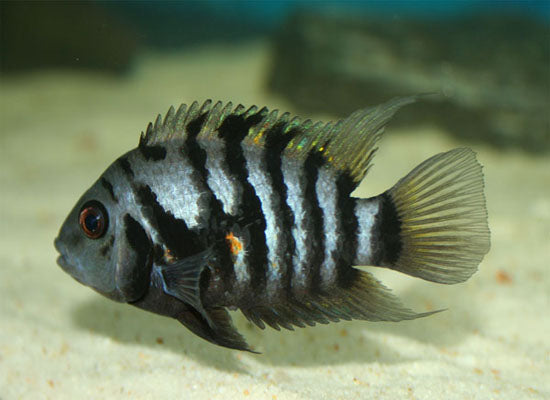
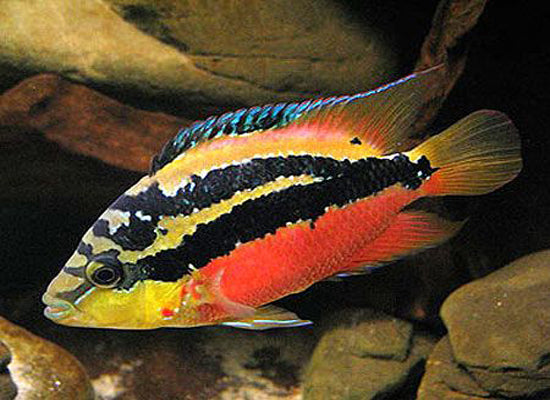
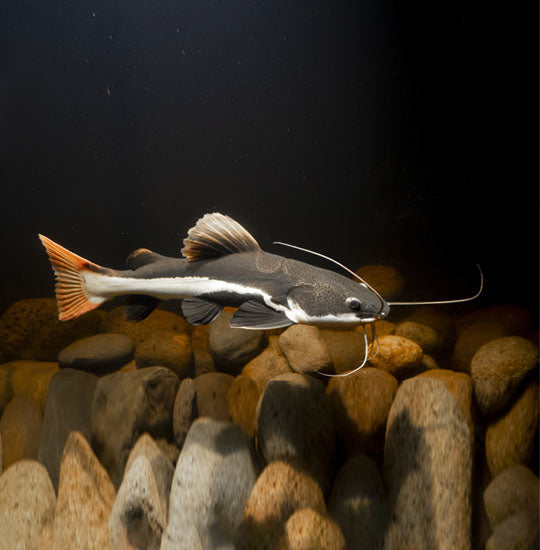
Compatible tankmates: other large, robust Central American cichlids of similar size and temperament, big plecos, and larger armoured catfish generally cope well; avoid small tetras, livebearers, or anything that reads as prey given this species' size and predatory instincts toward smaller fish.
Breeding setup: a compatible pair will need a flat spawning surface (a wide rock or slate tile) and, once eggs hatch, a considerable amount of undisturbed territory, since both parents guard the brood with real intensity and will treat every other tank occupant as a potential threat during that period.
Compatibility
Water & Care Conditions
One of the more temperature- and chemistry-tolerant cichlids on this list, reflecting its more temperate native range:
- pH: 6.5–8.0
- Water hardness: soft to hard, roughly 8–20 dGH
- Temperature: 20–28°C (68–82°F) — tolerates cooler water better than most tropical cichlids
- Oxygenation: strong filtration recommended given adult size and waste output, but no special aeration requirement beyond that
- Water changes: 25-30% weekly, more if the tank is stocked toward the upper end of its capacity for this species' adult size
This tolerance makes it forgiving of normal tap water, but its size and temperament remain the real planning factors. Because it hails from a subtropical rather than a strictly tropical climate, the Texas cichlid can also handle brief seasonal temperature dips better than most rift-lake or Amazonian species — useful to know for keepers in regions with occasional cooler indoor temperatures, though a stable heater is still recommended for consistent long-term health.
Robust filtration matched to the fish's adult bioload — not just its size as a juvenile — avoids the nitrate creep that's a common issue with large cichlids kept in undersized or under-filtered setups. A well-cycled tank with a canister filter rated for at least double the nominal tank volume is a reasonable target once this fish reaches full size.
Signs of stress or poor water quality in this species tend to show as faded, dulled colour before more serious symptoms appear, which makes colour a useful early-warning indicator alongside routine test-kit checks — a Texas cichlid that suddenly looks washed-out is often signalling a water-quality issue worth investigating promptly rather than a coincidence, so it's worth checking ammonia, nitrite, nitrate, and pH before assuming the change is simply mood or lighting.