...
About & Origin
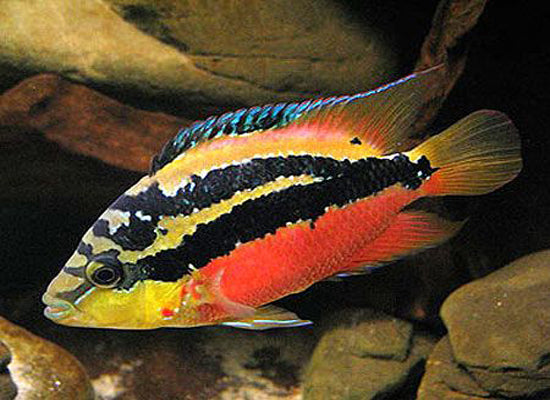
The Salvini Cichlid (Trichromis salvini, formerly classified under Cichlasoma) is a small-to-medium Central American cichlid from Mexico, Guatemala, Belize, and Honduras, found in a range of habitats from slow rivers to lake margins. Mature fish develop bold yellow-orange colouring across the body with black markings and blue-green facial highlights — one of the more strikingly patterned Central American cichlids at an accessible adult size.
At 12–15 cm (5–6 inches), it's noticeably smaller than the larger Texas or Green Terror-type Central/South American cichlids, which makes it a genuine option for keepers who want cichlid personality and colour without needing a truly enormous tank.
Don't let the smaller size fool you on temperament, though — salvini have a well-earned reputation for being disproportionately feisty for their size, especially once paired.
The vivid colouration develops progressively with age and is strongly influenced by diet, water quality, and stress level — a young or stressed salvini can look almost plain, while a mature, well-conditioned adult in a stable, well-maintained tank shows the full striking combination of golden-orange body, black lateral blotches, and iridescent blue-green highlights across the face and gill covers that make this species a favourite among Central American cichlid enthusiasts.
Salvini are also known for a bold, curious streak that goes beyond typical cichlid territoriality — they often investigate new objects, react visibly to movement outside the tank, and generally behave more like a much larger, more confident fish than their modest adult size would suggest.
They're sometimes called "yellow belly cichlid" in the trade, a nod to the bright yellow-to-orange underside that stands out sharply against the darker upper body and black markings — a naming quirk worth knowing since the same fish turns up under several different common names depending on the seller, even though the scientific name Trichromis salvini (occasionally still listed under its older synonym, Cichlasoma salvini) stays consistent.
Requirements
150+ litres (40+ US gallons) for a pair or small group given its territorial nature, even at a moderate adult size.
Temperament: aggressive and territorial relative to its size; best with other robust, similarly-tempered Central American cichlids rather than peaceful community fish, which it will bully despite being smaller than many other cichlids on this list. Salvini often punch well above their weight class in disputes with larger tankmates, so don't assume a bigger fish will automatically dominate the tank.
Diet: not fussy — quality cichlid pellets as a staple, with occasional meaty frozen or live food (bloodworm, brine shrimp, chopped prawn), which also helps bring out the species' best colour over time.
Décor: rockwork and driftwood for territory, with flat surfaces or caves available as spawning sites. Provide enough visual barriers to let a subordinate fish retreat out of a dominant one's direct sightline, which meaningfully reduces the intensity of ongoing aggression in a mixed-cichlid setup.
Breeding: salvini form bonded pairs that spawn on a cleaned flat surface or inside a cave, and both parents guard the resulting brood aggressively — as with most substrate-spawning Central American cichlids, expect a noticeable, temporary spike in territorial behavior around and after spawning.
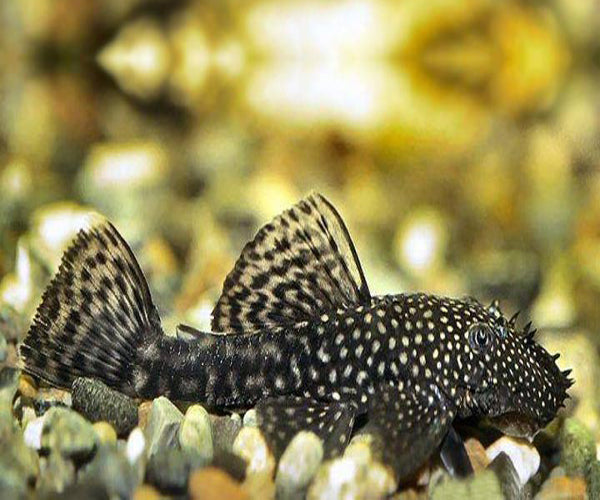
Compatible tankmates: other robust, similarly-sized Central American cichlids, larger tetras or silver dollars, and armoured catfish like bristlenose or larger plecos generally hold their own; avoid small livebearers, delicate tetras, or slow, long-finned fish that read as easy targets to a confident, food-driven salvini.
Sexing and grouping: males typically grow larger with more pointed fin extensions, while females stay smaller and often show a darker, more compact body — useful to know both for pairing and for anticipating which individual in a mixed juvenile group is likely to dominate as the fish mature.
A note for first-time cichlid keepers: the salvini's smaller adult size compared with an oscar or Texas cichlid makes the tank-size commitment more manageable, but its temperament genuinely punches above its weight — don't choose this species expecting community-tank manners just because the fish itself is modestly sized.
Compatibility
Water & Care Conditions
Tolerant of a fairly wide range typical of Central American cichlids:
- pH: 6.5–8.0
- Water hardness: soft to hard, roughly 8–20 dGH
- Temperature: 24–28°C (75–82°F)
- Oxygenation: standard strong filtration; no special requirement
- Water changes: 20-25% weekly is a solid baseline, keeping nitrates low and colour vivid
As with most Central American cichlids, temperament and tank size matter far more here than water chemistry precision. Salvini tolerate a genuinely wide window of pH and hardness well, which makes them a forgiving choice for keepers without access to soft, acidic water or the equipment to maintain it artificially.
Consistency is still the underlying principle worth remembering — a salvini kept in stable "acceptable" water will outperform one bounced between two different but individually "ideal" parameter sets, since the stress of frequent change tends to suppress colour, appetite, and overall vigor more than any single value sitting slightly outside the textbook range. A dependable heater and a well-planned water-change schedule matter more than obsessive precision on any one number.
Filtration should be sized with the fish's active, food-driven nature in mind — a Salvini in a busy, well-fed tank produces meaningfully more waste than a similarly-sized peaceful community fish, so a filter rated comfortably above the tank's nominal capacity, combined with regular gravel vacuuming around rockwork and spawning sites, keeps water quality stable and colour at its brightest. A drop-checker or basic weekly test-kit habit for ammonia, nitrite, and nitrate is a small investment that catches developing water-quality problems well before they show up as visible stress or illness in the fish, and it's especially worthwhile in the weeks following a spawn, when waste output and organic load both climb noticeably in the tank.