About & Origin
The zebra danio (Danio rerio) is a small, hardy minnow native to fast-flowing streams, rice paddies, and floodplains across the eastern Himalayan region of India, Bangladesh, Nepal, and Myanmar. In the wild it wears the plain silver-and-blue horizontal stripes that give it its name -- an active, torpedo-shaped shoaling fish built for open water.
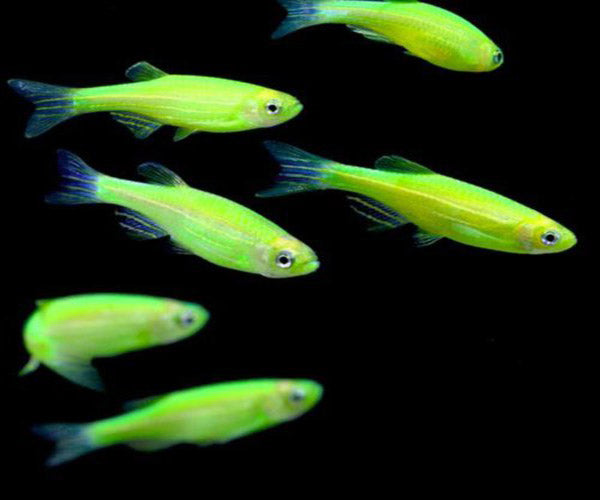
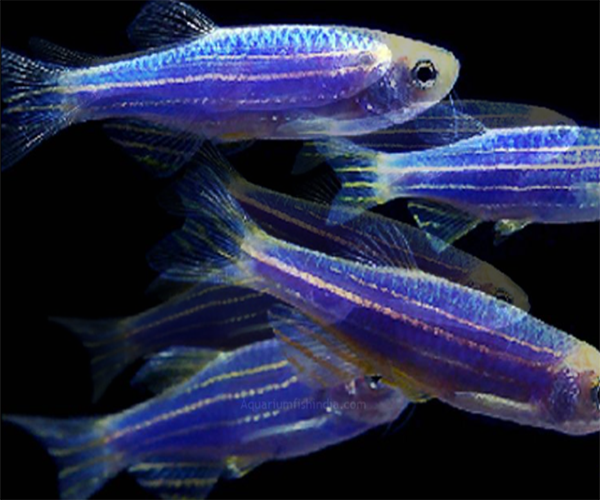
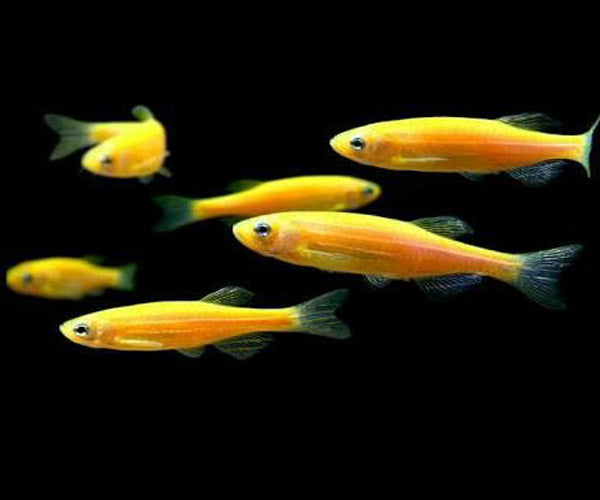
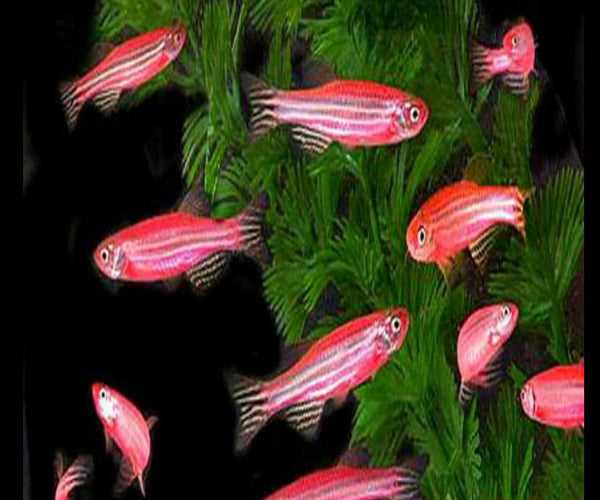
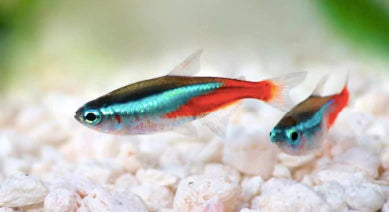
The bright, saturated color on this particular fish is not a natural wild pattern. It is a colour-enhanced strain of zebra danio, produced either through the well-known GloFish genetic-modification programme (which inserts a fluorescent protein gene, first developed from jellyfish/coral genes, giving a permanent, breed-true colour) or, in some markets, through dye injection of ordinary danios -- a much more controversial practice that fades over the fish's life and does not pass to offspring. fishykart.com's stock is a bred colour strain, not a dyed fish.
Underneath the colour, it behaves exactly like a standard zebra danio: fast, constantly on the move, and happiest in a group of its own kind darting around the upper and middle water column.
Danio rerio is one of the most scientifically important fish in the world -- an enormous amount of vertebrate developmental biology and genetics research is done on plain zebra danios because their embryos are transparent and develop outside the mother, making them easy to observe under a microscope. The green GloFish strain sold in the aquarium trade is a direct commercial spin-off of that same fluorescent-protein research (in this case a gene derived from jellyfish), first popularised in the early 2000s as the first genetically modified pet sold to the public.
Wild zebra danios shoal in large, loose groups in shallow, fast-moving water over gravel or sand, feeding on insects, worms, and other small invertebrates that wash past in the current, along with algae and plant matter. That fast-water background is exactly why the aquarium fish is such an energetic, constantly-moving swimmer even in the stillest home tank.
Requirements
Zebra danios are one of the easiest and most forgiving community fish, but they do have two real requirements.
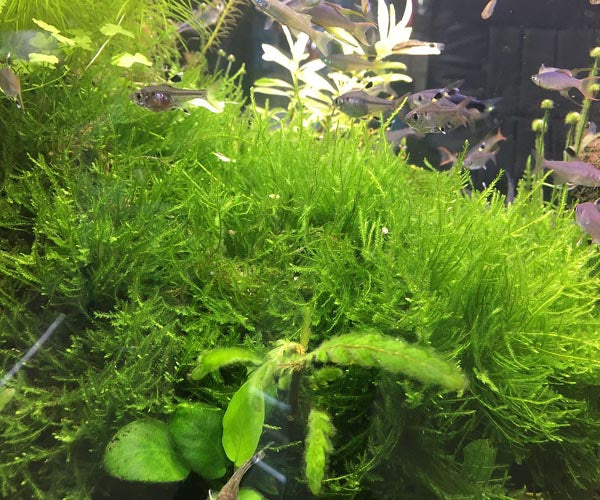
Group size: danios are obligate shoalers -- a single fish or a pair left alone becomes stressed and hides. Keep at least 6, ideally more; a larger group also spreads out any fin-nipping tendency instead of it focusing on one tankmate.
Swimming space and a lid: they are strong, fast swimmers that use the whole length of a tank and are notorious jumpers, especially when startled -- a tight-fitting lid is not optional. A tank at least 60cm (24") long suits a group far better than a tall, narrow one.
Diet is easy: a good quality flake or micro-pellet as a staple, with occasional live or frozen brine shrimp/daphnia for extra colour and conditioning. They breed readily by scattering eggs over fine-leaved plants or a marble substrate, though adults will eat their own eggs and fry if not separated.
Breeding in more detail: zebra danios are one of the easiest egg-layers to breed intentionally. A dedicated tank with marbles or a mesh grid on the bottom lets eggs fall out of reach of hungry adults; a well-conditioned pair (or small group) triggered by a slight temperature rise and fresh water will typically spawn at first light, scattering dozens of eggs which hatch within 2-3 days. Fry are large enough for baby brine shrimp within about a week -- fast even by livebearer standards, despite being egg-layers.
New arrivals settle in quickly thanks to their hardiness, but still benefit from a slow drip acclimation and a short quarantine period before joining an established community. Their strong jumping instinct is worth repeating separately: even a small gap in a lid or a hood cut for cables is often enough for a startled danio to end up on the floor, so check the whole rim of the tank, not just the obvious openings.
Compatibility
Water & Care Conditions
Zebra danios are one of the most temperature- and water-quality-tolerant community fish in the hobby, which is part of why they're often used to cycle new tanks -- but they still do best within a real comfort range:
- pH: 6.5–7.5
- Hardness: soft to moderately hard, roughly 5–19 dGH
- Temperature: 18–24°C (64–75°F) is their true comfort zone -- notably cooler than most tropical community fish; they tolerate warmer tropical tanks up to ~26°C but do less well kept permanently hot
- Oxygenation: appreciates good water movement and surface agitation, consistent with their fast-flowing-stream origin
- Lighting: unfussy about intensity, though brighter light does make the colour strain's fluorescent green tone stand out more
Their tolerance makes them a good beginner fish, but "tolerant" isn't the same as "thriving" -- stable, cycled water still gives noticeably better colour and lifespan than a neglected tank. One notable, genuinely useful trait: zebra danios tolerate a much wider temperature range than almost any other commonly-kept tropical fish, comfortably handling both an unheated room-temperature tank and a warmer 26°C+ tropical community setup.
Their high activity level and fast metabolism mean they process food (and produce waste) quickly for their size, so a consistent weekly water-change routine matters more for this species than for slower, more sedentary tankmates. A cycled filter, gentle-to-moderate current, and stable, matched-temperature water changes will keep a shoal active, colourful, and breeding readily for its full 3-5 year typical lifespan.
Always match temperature and pH when doing water changes rather than just topping up with straight tap water, and dechlorinate new water first -- chlorine and chloramine are harmful to gills at any dose, regardless of how tolerant a species is otherwise. A basic test kit for ammonia, nitrite, nitrate, and pH is worth having on hand, since problems with fast-moving fish like this can appear and worsen quickly if water quality slips unnoticed.