About & Origin
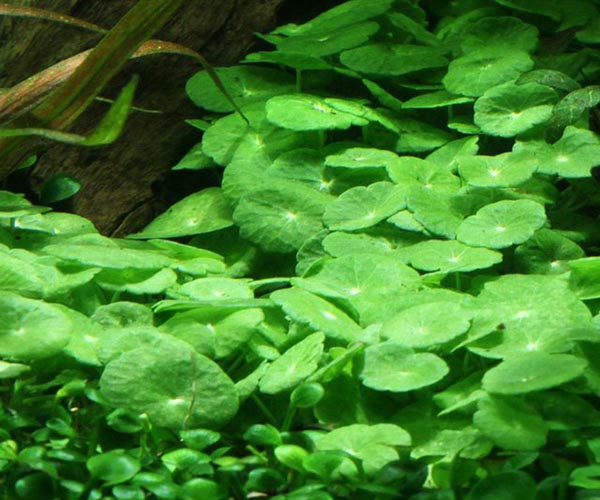
Whorled pennywort, Hydrocotyle verticillata, is a creeping aquarium plant native to the Americas — from the southern United States down through Central America and the West Indies — where it's found creeping through marshy, boggy ground and shallow wetland margins.
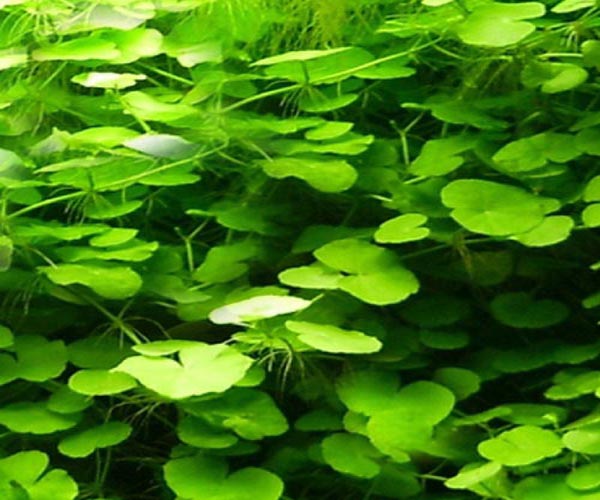
Unlike its round-leafed relative Brazilian pennywort, this species carries small, near-circular leaves arranged in distinctive whorls along an upright or creeping stem, giving it a slightly more architectural, tiered look. It can be grown as a low creeper or trained upward as a background stem plant.
It's a genus with a real dual life — equally at home fully submerged in an aquarium or growing emersed with its leaves above the waterline, which is part of why it adapts so easily to aquarium conditions.
The whorled leaf arrangement — several small, rounded leaves radiating from a single point around the stem, like the spokes of a tiny wheel — is what gives the species its common name and sets it apart visually from Brazilian pennywort's more scattered, alternating leaves. Left to grow tall it produces a distinctly tiered, almost architectural look as each whorl forms at a slightly higher point along the stem, which is why it's often used as a background accent rather than purely a creeping foreground plant. It's also sold under the alternative common names shield pennywort and whorled marshpennywort, all referring to the same species.
In parts of its native range, whorled pennywort also plays a role outside the aquarium trade as a marginal/bog-garden plant for outdoor ponds and water gardens, valued there for the same tiered, whorled foliage that makes it popular underwater. Unlike some other fast-spreading Hydrocotyle species that have become problem weeds when released outdoors, it hasn't developed the same invasive reputation, though as with any aquarium plant it's still best practice never to release trimmings into local waterways.
Requirements
Whorled pennywort is an easy, adaptable plant well suited to low-tech setups.
Light: low to moderate light keeps it growing steadily; it doesn't need intense lighting.
CO2 and nutrients: not required for healthy growth, though it responds positively to both if supplied.
Planting: root it in substrate and trim as it grows to encourage a fuller, bushier stem rather than one long runner; like other Hydrocotyle it roots readily at stem nodes, so trimmed sections can simply be replanted.
Placement: works equally well as a midground accent or trained along the front of the tank as a low, whorled hedge.
Growth habit and pruning: left untrimmed it will grow upright toward the surface, with the whorled leaves spacing out along an increasingly bare stem; regular topping every couple of weeks keeps the whorls close together and the plant looking dense rather than leggy. Because each cut section roots readily, this is also the easiest way to multiply a single starter bunch into enough material to fill a much larger area over a few months.
Emersed growth: if part of the plant is allowed to grow out of the water — along the rim of an open-top tank, for example — it will often produce noticeably larger, more robust leaves above the waterline than it does fully submerged, and can occasionally flower in that state, something it won't do kept permanently underwater.
Common issues: the most frequent complaint is the stem thinning out and dropping lower whorls over time in low light — the fix is more the same as with most stem plants, better light and more frequent trimming, rather than adjusting water chemistry. Because it roots at nodes so readily, an untrimmed planting can also start rooting into unintended areas of the substrate, so periodic tidying keeps the layout looking intentional rather than sprawling.
Compatibility
Water & Care Conditions
Whorled pennywort tolerates a wide range of typical freshwater aquarium conditions:
- pH: 6.0–7.8
- Hardness: soft to fairly hard, roughly 2–20 dGH
- Temperature: 18–28°C (64–82°F)
- Light: low to moderate is sufficient
It's a forgiving species for most community-tank setups without special water adjustments.
Like its Brazilian pennywort relative, it's genuinely undemanding on CO2 and fertilisation, making it a good choice for a low-tech or newly-cycling tank, and it competes reasonably well against algae for available nutrients while a new setup finds its balance. Its broad temperature range makes it one of the relatively few plants that stays healthy in an unheated or coolwater tank as well as a fully tropical one. Pale or stalled growth is more often a sign of a genuine light or nutrient shortfall than a water-chemistry issue, since it tolerates a wide pH and hardness range without much trouble; a mild yellowing of older, lower leaves as new growth appears higher up the stem is a normal part of its growth cycle rather than a cause for concern.
If supplementing CO2 and fertiliser for faster, denser growth, standard planted-tank dosing (a balanced liquid macro/micro fertiliser a few times a week, and 15–30ppm CO2 if injected) suits it fine — there's no special dosing regime this species needs beyond what any general community planted tank would already be running. Weekly partial water changes of around 20–30% help keep growth steady and consistent, though this species is forgiving enough that it will usually tolerate a missed or delayed change better than more sensitive plants would.
Good general water quality still matters even for a tolerant species like this one: ammonia and nitrite should always read zero in an established tank, and while whorled pennywort itself won't be harmed much by moderate nitrate levels, keeping them reasonable through regular water changes benefits any fish or shrimp sharing the tank and helps limit algae competing with the plant for the same nutrients.