About & Origin
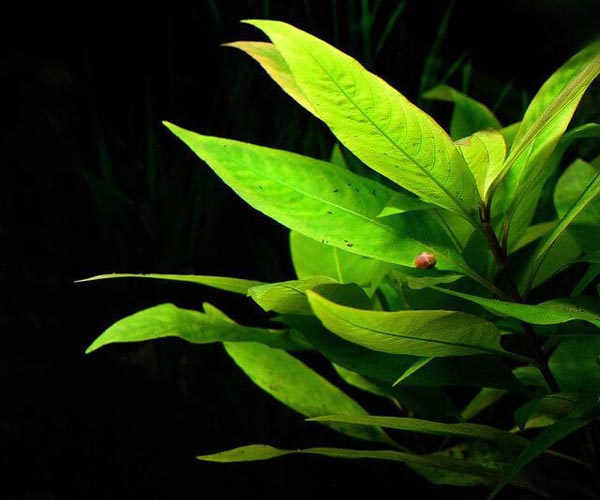
Variegated mint is an easy-care background stem plant for the freshwater aquarium — a cultivated variegated form of Hygrophila polysperma (sold as 'Rosanervig'), tracing back to a species native to South and Southeast Asia, where the plain green form grows in flooded fields, ditches, and slow streams.
This variegated selection is grown specifically for its two-tone foliage — leaves marked with cream and soft pink alongside the green, rather than the plain green of the wild type. It keeps the same upright, background stem-plant habit as its parent species: a straight stem lined with paired leaves that fills vertical space quickly.
As a variegated cultivar its colour is more light-dependent than a plain green plant's — the pink and cream tones are strongest under good light and fade toward plain green when light is weak.
The plain green parent species, Hygrophila polysperma, is actually classed as an invasive aquatic weed in parts of the United States and elsewhere, where escaped plantings have clogged waterways badly enough that it's restricted or banned from sale in some states. The variegated "Rosanervig" form sold here is the ornamental cultivar rather than the plain invasive type, but the same caution applies as with any fast-growing stem plant — never release trimmings into local ponds, streams, or drains.
Structurally it shares the classic Hygrophila background-plant habit: a straight, unbranching stem lined with opposite pairs of narrow, pointed leaves, growing steadily upward and readily branching from the base or from any cut point once trimmed. Planted in a group of several stems rather than a single specimen, the variegation reads much more strongly as a colour block within the layout than it does as an isolated plant, which is generally how this cultivar is used in aquascaping — as a patch of pink-and-cream contrast against plainer green neighbours.
Requirements
The species itself is easy; getting good variegated colour out of it takes a bit more light than the bare minimum for survival.
Light: moderate to high light brings out the pink/cream variegation; in low light it will still grow but tends to green over and lose the contrast that makes this cultivar worth choosing over the plain form.
CO2 and nutrients: not required for basic growth, but both help maintain stronger colour and denser growth.
Planting: root as a background stem plant in nutrient-rich substrate; it's a fast grower and benefits from regular trimming and replanting of the tops to keep growth dense rather than leggy.
Propagation: cut and replant healthy stem sections.
Getting the best colour: beyond light intensity, a nutrient-rich substrate and regular liquid fertilisation genuinely make a visible difference to how strong the pink and cream variegation comes through on new growth — a plant limping along on bare minimums will usually revert toward mostly green leaves even under decent light. Positioning it where it gets relatively unobstructed light (rather than shaded by taller neighbours) also matters more for this cultivar than it would for a plain green species, since the variegation is essentially a light-driven pigment response.
Trimming: as a fast grower, regular topping keeps it dense rather than tall and sparse, and replanted cuttings root readily enough that a single starter bunch can multiply into a full background row within a couple of months of steady growth.
Compatibility
Water & Care Conditions
Variegated mint does best within these ranges:
- pH: 6.0–7.8
- Hardness: soft to moderately hard, roughly 2–15 dGH
- Temperature: 22–28°C (72–82°F)
- Light: moderate to high for the best pink/cream variegation; lower light is tolerated but colour fades toward plain green
It's an otherwise forgiving plant for most established community tanks.
Because the whole appeal of this cultivar is its variegated colour rather than just healthy green growth, it rewards slightly more attentive fertilisation than a plain Hygrophila would need to simply survive — a root tab at planting plus a regular liquid macro/micro dose supports both growth rate and pigment intensity. If injecting CO2, roughly 15–30ppm alongside strong light gives the best combination of dense growth and strong variegation. Weekly 20–30% water changes help keep nutrient levels topped up consistently, which matters more here than for an undemanding plain-green species since colour quality (not just survival) is the goal. New growth reverting to mostly green after a period of good colour is usually the first visible sign that light or nutrients have dropped off, and is worth treating as an early warning rather than ignoring purely cosmetically. Regular trimming and replanting of cuttings keeps the variegated pattern looking its best, since older, lower leaves tend to lose definition over time.