About & Origin
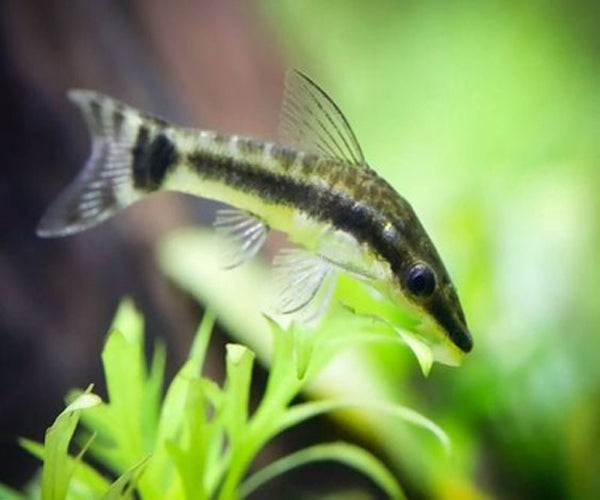
Otocinclus catfish (commonly "otos") are tiny, peaceful algae-grazing fish native to slow-moving streams and flooded forest margins across the Amazon basin and other river systems of South America. Several closely related Otocinclus species are sold under this common name, all sharing a similar small size, appearance, and grazing lifestyle.
Rarely exceeding 4–5cm as adults, otos have a slender, torpedo-shaped body with a distinctive dark lateral stripe and a specialised sucker-mouth adapted for grazing algae and biofilm off leaves, glass, wood, and decor — genuinely one of the most effective, dedicated algae-eating fish available for a peaceful community or planted tank, unlike some larger "algae eater" species that outgrow the role or become territorial.
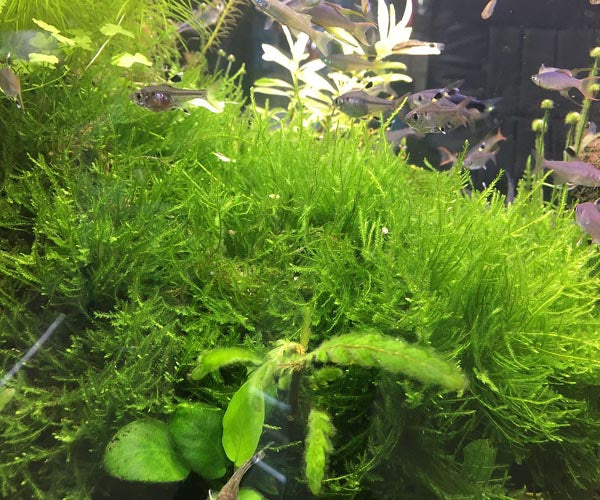
Otos are shy, gentle shoaling fish that spend most of the day grazing continuously across surfaces, rather than swimming openly in the water column — a well-planted tank with established algae/biofilm gives them the most natural, comfortable environment and the food source they actually rely on.
This combo pack supplies a small group at once, which matches how otos should be kept — they are a genuinely social species that fares poorly alone and does best in a proper group.
Otos have a somewhat unfortunate reputation for higher mortality shortly after purchase, which is almost always tied to how they were handled before sale rather than any inherent fragility in the species itself — otos are frequently shipped and held in bare, algae-free holding tanks with little food, effectively starving before they ever reach a home aquarium, so sourcing from a shop that keeps them in a planted or algae-present holding setup makes a real, measurable difference to survival odds.
In the wild, otos are found grazing in loose aggregations over submerged wood and leaf litter in clear, well-oxygenated water, often alongside much larger fish that simply ignore them — their small size and unassuming, constant grazing behaviour make them one of the least conspicuous but most genuinely useful fish in a planted aquarium's day-to-day ecosystem.
Requirements
Otocinclus are shoaling fish and should be kept in groups of at least 5–6 — a single oto is a notoriously stressed, poorly-adjusting fish, while a proper group settles in, feeds confidently, and is far more likely to thrive long-term.
Because they rely heavily on grazing established algae/biofilm, otos genuinely do best in a mature, planted tank rather than a brand-new or sparse one — adding them to a tank with no algae or biofilm at all is one of the most common reasons new keepers lose this species, since they may not get enough to eat even with supplemental feeding.
Supplemental feeding still matters, especially once they've grazed down available algae: blanched vegetables (courgette, cucumber, spinach) and algae wafers should be offered regularly to make sure the whole group is getting enough food.
A tank of at least 40–60 litres suits a small group comfortably, ideally well-planted with driftwood, since otos also graze biofilm off wood surfaces.
Otos are extremely peaceful and should only be kept with similarly calm, non-aggressive tankmates that won't outcompete them for food or stress this genuinely shy species.
New otos benefit from being offered a variety of food sources immediately (blanched vegetables in addition to whatever algae is present) rather than relying solely on existing tank algae, since a newly-purchased, possibly undernourished group needs a reliable food supply to recover condition in their first few weeks in a new home.
A mature sponge filter (or an established filter media source) borrowed or seeded from an existing healthy tank helps a new oto group settle in faster, since it introduces beneficial bacteria immediately rather than waiting weeks for a brand-new filter to fully establish on its own.
Compatibility
Water & Care Conditions
Otocinclus are somewhat more sensitive than many small community fish, and do best with attentive, stable water management:
- pH: 6.5–7.5
- Hardness: soft to moderate (2–15 dGH)
- Temperature: 22–26°C (72–79°F)
- Oxygenation: appreciates good oxygenation and gentle-to-moderate flow, reflecting their native stream habitat
- Water quality: genuinely sensitive to poor or fluctuating water quality and to being introduced to an uncycled tank — a fully established, mature tank is important for this species' survival rate
Otos have a reputation among experienced keepers for being somewhat delicate during the first few weeks after purchase, mainly due to shipping stress and starvation in holding tanks — sourcing well-fed, alert stock and providing plenty of grazing surface from day one makes a real difference.
Watching a new group's body condition (a pinched, concave belly is a sign of inadequate feeding) over the first couple of weeks is a worthwhile habit, since catching underfeeding early and supplementing accordingly makes a real difference to long-term survival for this species.
A sponge filter or a fine pre-filter sponge over any intake is particularly worth using with this species, since otos are small and slow enough to be at real risk from an unguarded filter intake while grazing along tank surfaces.
Avoid copper-based medications and treatments in any tank housing otos, since like most scaleless or thin-skinned fish they tolerate copper poorly; if disease treatment is needed, a separate hospital tank is the safer approach rather than dosing the display tank directly.
Weekly partial water changes of around 20–25%, paired with gentle gravel cleaning that avoids disturbing established biofilm on decor and glass, strike the right balance for this species between water-quality maintenance and preserving the grazing surface it depends on for food.