About & Function
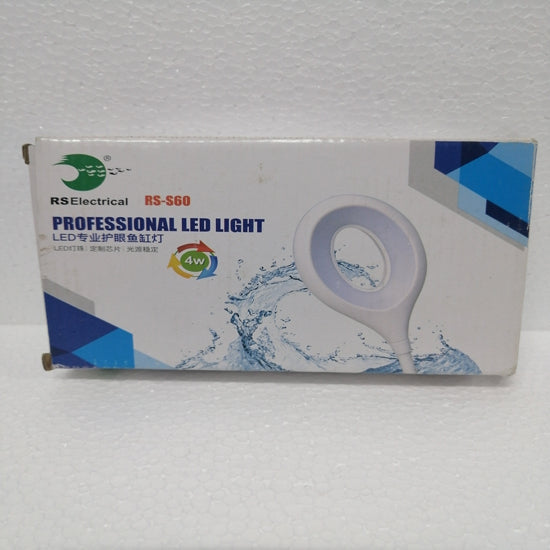
The RS-S60 is an extendable LED aquarium light bar designed to sit across the top of the tank on adjustable brackets, providing consistent, even lighting across the water's surface. LED lighting has largely replaced older fluorescent and incandescent aquarium lights because it runs cooler, uses far less electricity for the same brightness, and typically lasts many times longer before the diodes noticeably dim.
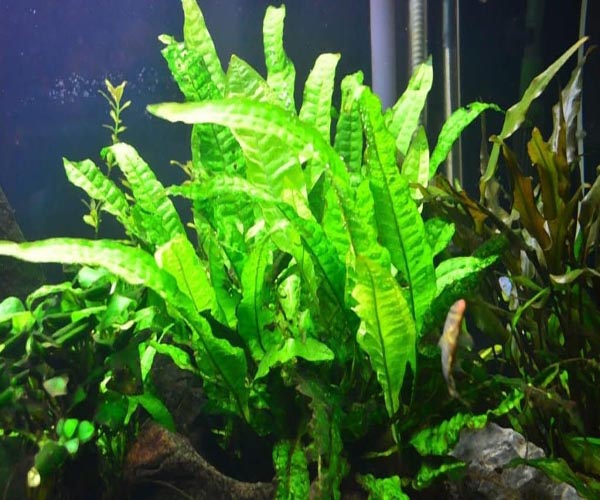
Good lighting does more than just let you see your fish clearly — it's the energy source that drives photosynthesis in live plants, strongly influences fish colouration and natural day/night behaviour, and (for better or worse) also drives algae growth, so getting both the intensity and daily duration right matters as much as simply having a light at all.
The "S60" designation typically refers to the bar's extendable length range, letting one fixture adjust to fit a range of tank widths (commonly the light bar extends from a shorter minimum length out to roughly 60cm or beyond) via telescoping brackets that rest on the tank's rim, rather than needing a fixed-size light matched exactly to one tank size.
This makes it a practical general-purpose light for a community, decorative, or lightly planted freshwater tank, rather than a specialist high-output fixture aimed at demanding high-tech planted or coral setups.
Most fixtures in this class combine white and blue LED diodes on the same bar, letting you run a bright daytime-white setting for normal viewing and plant growth, and switch to a dimmer blue "moonlight" setting in the evening that lets you view the tank after dark without fully lighting it up and disrupting fish that are winding down for the night.
Compared to the fluorescent tube fixtures many older tanks still ship with, an LED bar like this is also far lighter and slimmer, which matters for tank rims and hood/canopy clearance, and produces almost no heat at the water's surface — fluorescent tubes running close to the water can noticeably warm the top layer of water over a long photoperiod, which an LED bar largely avoids.
Requirements
This is a mains-powered fixture — it plugs into a standard wall outlet via its own power adapter and needs no other equipment to function on its own.
Power: runs on standard household AC mains power through its adapter; LED bars like this are low-wattage compared to older lighting technology, so running cost is modest even left on for a full daily photoperiod.
Mounting: the telescoping brackets rest on the tank's rim, so it needs a rimmed, open-top (or open-top-compatible) tank rather than a fully sealed enclosure; extend the brackets to match your specific tank width before use.
Placement and safety: keep the power adapter and any cable connections away from splashing water, and make sure the fixture itself is mounted securely so it can't slip into the water — a drip loop in the cable (letting it dip below the socket before rising to the adapter) also helps stop water from tracking down the cord into the plug.
Suitability: works well for general fish-viewing and light-to-moderate live plant growth; very light-demanding "high-tech" plants (fine-leafed carpeting plants, high-colour stem plants needing strong light and CO2) may want a more specialised, higher-output fixture than a general community light like this.
Timer use: pairing the light with a simple plug-in timer isn't strictly required but is strongly recommended — it keeps the daily photoperiod consistent without you needing to remember to switch it on and off manually every day, and consistency matters more for algae control than the exact number of hours chosen.
Bracket adjustment: extend both sides of the telescoping bracket evenly so the fixture sits level and centred over the tank rather than tilted to one side, which both looks better and spreads light more evenly across the water's surface.
Compatibility
Specifications & Maintenance
LED aquarium lights are low-maintenance by design, but a few habits keep this fixture performing well and lasting as long as it should:
- Daily photoperiod: most freshwater community/planted tanks do well with roughly 8–10 hours of light per day; consistent timing (ideally via a plug-in timer) reduces algae-triggering variability and keeps fish on a stable day/night cycle.
- Keep it dry: wipe down the housing and lens with a dry or barely damp cloth only, unplugged first — LED fixtures are not designed to be submerged or heavily splashed.
- Watch for excess algae: if algae growth increases noticeably, the photoperiod or intensity may be higher than the tank's plants/inhabitants need — reducing daily runtime is usually the first fix to try.
- Longevity: quality LEDs gradually dim over years of use rather than failing suddenly; if plant growth slows or the tank looks dimmer despite no other changes, the diodes may simply be aging.
- Adapter care: keep the power adapter itself dry and away from direct splash zones — most fixture failures come from adapter or cable moisture damage rather than the LED diodes themselves wearing out.
- Lens condensation: a small amount of condensation on the underside of the lens in humid setups is usually harmless, but wipe it away when unplugged rather than leaving moisture sitting against the electronics long-term.
- Bracket adjustment: re-check the telescoping bracket fit periodically, especially after moving the fixture, to make sure it's still seated securely on the rim.
- Condensation check: in a tightly covered or humid setup, occasionally check that condensation isn't building up around the adapter or connection points, and dry things off if it is.
With basic dry-handling and a consistent daily schedule, an LED bar like this typically runs reliably for several years, needing little more than an occasional wipe-down and a stable timer schedule.