About & Origin
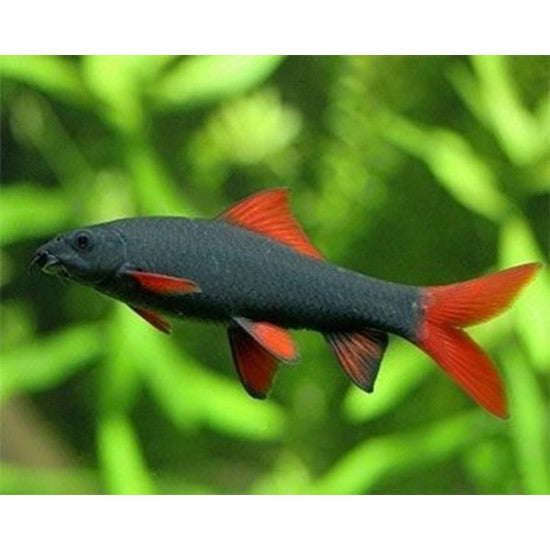
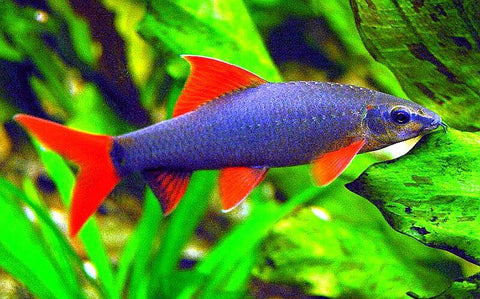
The rainbow shark (Epalzeorhynchos frenatum) is a freshwater fish in the carp family (Cyprinidae), despite the "shark" in its common name. It comes from the fast-flowing rivers of the Mekong and Chao Phraya basins in Thailand and Cambodia. It isn't related to true sharks at all -- the name refers to its streamlined body and tall dorsal fin, which give it a shark-like outline as it patrols the lower half of the tank.
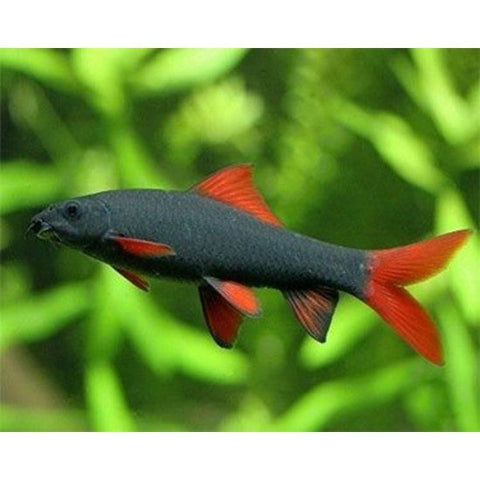
This listing is for a young specimen at roughly 2.5-2.8 inches, an in-between size where the fish already shows its full adult colouring -- a dark grey to black body with vivid red-orange fins -- but still has some growing left to do.
In its natural rocky, oxygen-rich rivers it grazes algae and biofilm off stones and driftwood, a habit it keeps up enthusiastically in the aquarium.
Juveniles are noticeably more tolerant of company than adults -- a young rainbow shark bought at this size may seem to coexist peacefully with tankmates at first, only to become genuinely territorial and intolerant of similarly-shaped fish as it matures over the following months, catching some keepers by surprise, so plan tankmates around the adult temperament rather than the juvenile one.
Requirements
Give a single rainbow shark at least 55-75 litres (15-20 gallons) of space, arranged with rockwork, driftwood, and plants so it can claim a cave or hollow as its own territory. Without enough cover and broken sightlines it tends to spend its time chasing tankmates along the glass instead.
Territoriality is the main thing to plan around: rainbow sharks are strongly intolerant of their own kind and of other bottom-dwelling fish with a similar shape or colouring, so they're almost always kept one to a tank.
Feeding is easy -- it's an omnivorous grazer that does well on sinking wafers and pellets supplemented with algae wafers, blanched vegetables, and the occasional live or frozen treat. Expect it to reach around 12-16cm at full size.
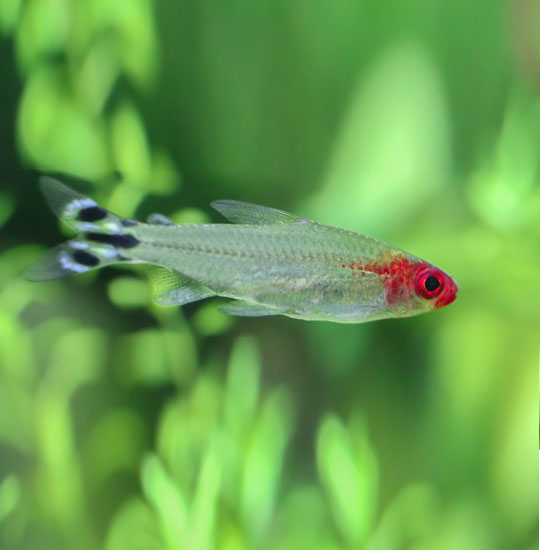
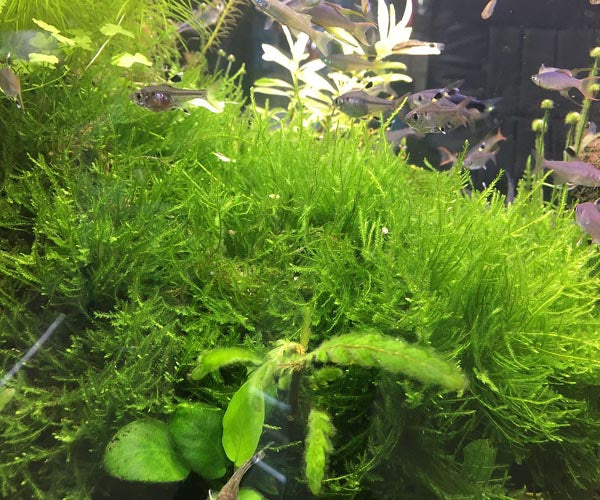
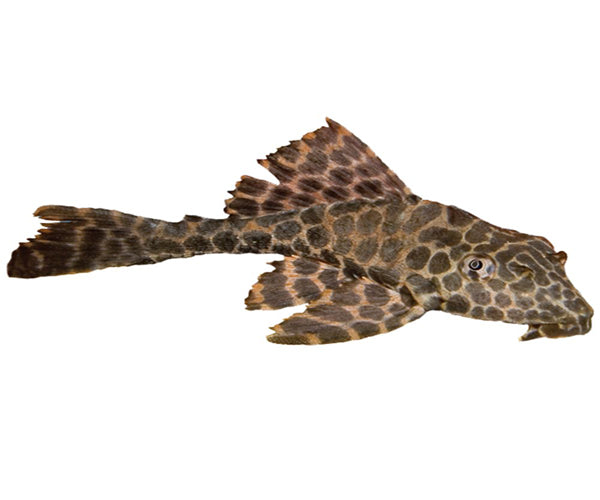
Tankmates: mid-to-upper-water community fish that don't compete for bottom territory generally work well -- avoid other bottom-dwellers with a similar elongated shape or dark colouring, since those are the fish most likely to be targeted. Mid-water tetras, barbs, and similar community fish that stay out of the lower territory generally coexist without issue, and dense rockwork or driftwood breaking up sightlines helps reduce chasing behaviour along open glass. Feeding time is a reliable indicator this fish is settling in well -- a confident rainbow shark will actively come out to grab sinking food rather than staying hidden.
Compatibility

Water & Care Conditions
Coming from fast rivers, this fish is comfortable with more current and higher dissolved oxygen than many slower community species:
- pH: 6.5–7.5
- Water hardness: 5–15 dGH
- Temperature: 22–26°C (72–79°F)
- Oxygenation: a river fish by nature -- good flow and surface agitation are appreciated
Weekly water changes of 20-25% keep this fish looking its best, since a dull or faded body colour is often one of the earliest visible signs that water quality needs attention. Well-kept individuals commonly live 6-8 years given stable conditions and enough territory to feel secure. Stability matters more than hitting the exact parameter numbers precisely -- sudden swings are more stressful to this species than a steady value near the edge of its comfort range. Ammonia and nitrite should read zero once cycled, and a secure lid is worth having since this species can jump when startled or when territorial disputes get intense. Fin fraying, clamped fins, or unusual lethargy are the general early signs worth checking against water quality first, before assuming illness in an otherwise robust species. Overall this is a hardy, low-maintenance fish once its territorial needs and adult size are properly planned for from the start, with most real problems traceable to stocking mistakes rather than the fish's own resilience.