About & Origin
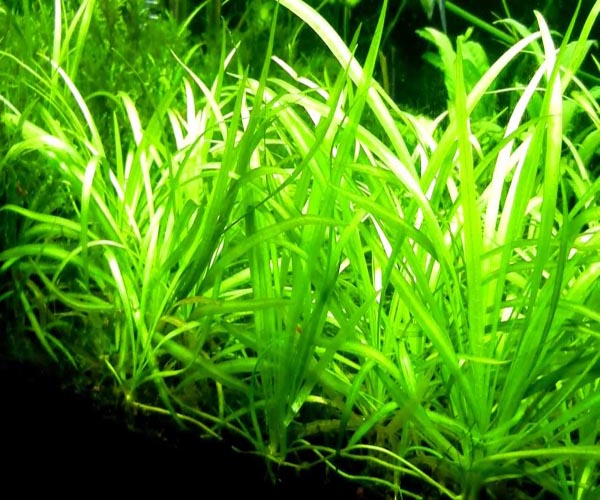
Sagittaria is a genus of roughly 30 aquatic and marginal plant species, native mainly to the Americas but with some species found more widely, growing naturally in shallow ponds, marshes and slow-moving streams. In the wild many species grow emersed with their namesake arrowhead-shaped leaves above the waterline, but the aquarium trade mostly grows narrower-leaved forms fully submerged as a grass-like plant.
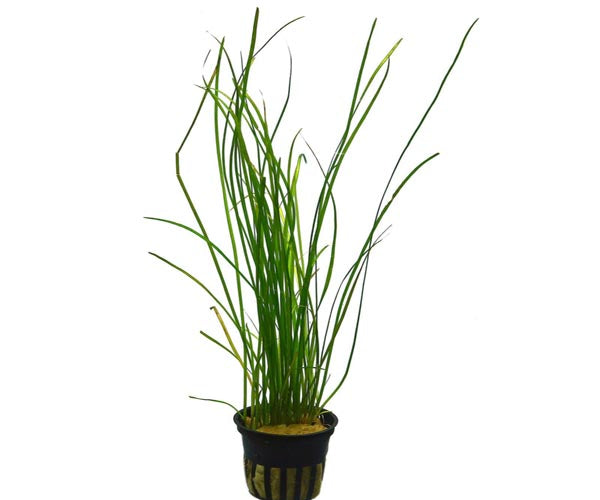
Submerged, it forms slender, ribbon-like leaves growing from a central rosette and spreads through runners, sending up new plantlets some distance from the parent — over time this fills in an area with a natural, meadow-like stand rather than staying as a single clump.
The genus name comes from the Latin for "arrow," referring to the arrowhead-shaped emersed leaf that gives several species their common name. Sold generically as "Sagittaria sp." here rather than a single named species, since several closely related dwarf/narrow-leaved forms (commonly including Sagittaria subulata and Sagittaria platyphylla-type stock) are traded almost interchangeably in the hobby and share essentially identical care — the exact leaf width and mature height can vary somewhat between batches as a result.
In its native range it's often found growing alongside Vallisneria and other grass-like marginal plants in shallow, sunlit water, which is exactly the kind of tankmate pairing that also works well in a home aquascape — the two genera have similar shapes but subtly different leaf textures, so combined plantings read as a natural meadow rather than a repetitive single-species carpet.
Requirements
A reliable, low-fuss grass-like plant that's a common recommendation for planted-tank beginners.
Light: grows well under low to moderate light, though better light produces denser, more compact growth; doesn't require CO2 injection to thrive.
Substrate: roots into the substrate and appreciates a nutrient-rich one, but isn't dependent on it — regular liquid fertilizing works fine too.
Spreading: spreads via runners rather than staying put, so give it room to fill in an area over time; it can be divided and replanted once it's spread enough to thin out a section.
Placement: typically used as a foreground-to-midground grass, depending on the specific leaf-length variety.
Trimming runners: unlike stem plants, Sagittaria isn't cut back at the top — instead, manage its spread by snipping the thin horizontal runner connecting an unwanted new plantlet back to its parent once the plantlet has its own roots established, then either discarding it, replanting it elsewhere, or giving it away, since letting every runner take means it will eventually carpet well beyond the area you intended.
Emersed vs. submersed leaf shape: if grown partly out of the water (common in paludariums or very shallow setups), expect broader, more arrowhead-shaped leaves above the waterline compared to the narrow, grass-like leaves it produces fully submerged — this is a normal response to growing conditions, not a sign of a different plant or a health problem.
Compatibility
Water & Care Conditions
An adaptable species that tolerates a fairly wide range of aquarium conditions:
- pH: 6.0–7.5
- Water hardness: adaptable, general community-tank hardness is fine
- Temperature: 20–28°C (68–82°F)
- Light: low to moderate is sufficient; stronger light simply produces denser growth
One of the easier background/foreground plants available — it tolerates low-tech, non-CO2 setups well, which is a big part of its popularity.
Signs of trouble: yellowing, thinning leaves usually point to a nutrient-poor substrate or a long stretch without any fertilizing rather than a lighting problem, since this species is genuinely undemanding on light — check root-tab or liquid-fert dosing first. Leaves that stay short and never lengthen properly can indicate the plant hasn't rooted well yet, which is common right after replanting a runner and usually resolves within a couple of weeks.
Snails and some algae-eating fish will occasionally graze on Sagittaria's soft leaf tips, which is generally cosmetic rather than a real threat to an established, spreading stand — a young, still-establishing plantlet is more vulnerable and benefits from being kept somewhat separated from heavy grazers until it's rooted in.
Once established, a Sagittaria stand needs relatively little ongoing intervention beyond runner management — no regular top-trimming schedule the way stem plants need, which makes it a genuinely low-maintenance long-term fixture in a foreground or midground planting once it's settled in.