About & Origin
The Siamese Algae Eater (Crossocheilus siamensis/oblongus, often traded interchangeably) is widely regarded as the single best true algae-eating fish for the planted aquarium, largely because it's one of the very few fish that will reliably eat black beard algae and other tough, brush-like algae types most fish and shrimp ignore. It's native to fast-flowing rivers and streams of Thailand and the surrounding Mekong basin region of Southeast Asia.
In the wild it lives in shoals in clear, oxygen-rich water, constantly grazing algae from rocks, wood, and plant leaves. Unlike the similarly-named and frequently confused Chinese Algae Eater (Gyrinocheilus aymonieri), the true Siamese Algae Eater stays peaceful and remains a dedicated algae grazer throughout its life rather than becoming territorial with age.
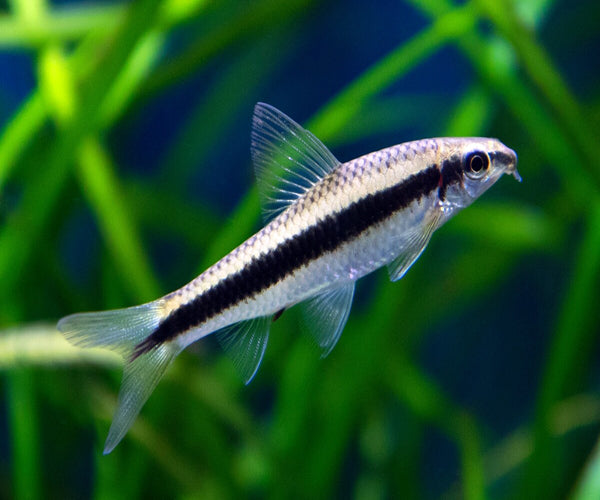
It's a slim, torpedo-shaped fish with a bold black horizontal stripe running the length of its body, an active swimmer that spends time both grazing the substrate/décor and swimming in open water.
Adding to the naming confusion in the trade, the "Flying Fox" (Crossocheilus siamensis-lookalikes and relatives) and the "False Siamese Algae Eater" are both sold under similar names and can resemble true SAEs closely enough to fool a casual buyer -- the reliable tell is the black stripe's clean, straight edge and consistent width along the body, whereas look-alikes typically have a more ragged, uneven, or fading stripe. Getting the correct species matters in practice, since some of the look-alikes are noticeably more prone to fin-nipping or territorial squabbling than the genuinely peaceful true SAE.
Adult size tops out modestly, typically 10-14cm, and given good care this is a reasonably long-lived fish, often reaching 6-10 years in a well-maintained aquarium -- another reason it's worth confirming you have the genuine species before committing to it as a long-term planted-tank resident.
Requirements
Siamese Algae Eaters are genuinely one of the easiest and most useful community fish for a planted tank, with few real caveats.
Group size: best kept in a small group of 4–6; they're more confident and less likely to squabble over territory in a proper group than kept singly or in pairs.
Tank size: comfortable from around 75–90cm/30–36 inches upward, given their active swimming habit.
Diet as they mature: as with most algae grazers, natural algae supply alone won't sustain an adult -- supplement with algae wafers and blanched vegetables (courgette, spinach) as they grow.
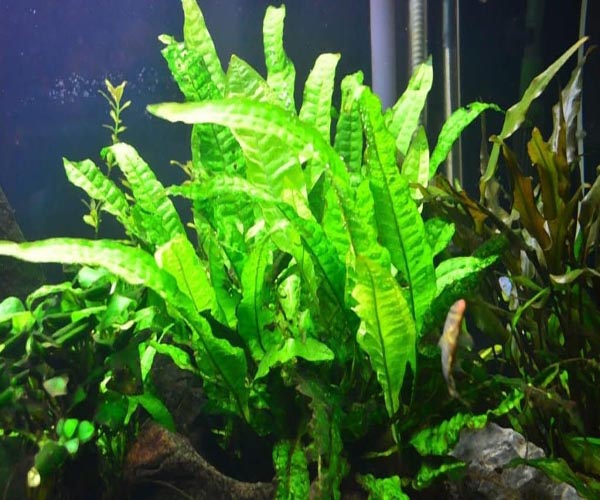
Décor: appreciates driftwood, rocks, and broad-leaved plants to graze across.
Genuine ID matters: confirm you're getting true Crossocheilus, not the superficially similar but temperamentally very different Chinese/Golden Algae Eater, if planning a peaceful community tank long-term.
Swimming space: unlike many bottom-dwelling algae grazers, SAEs are genuinely active mid-to-lower-level swimmers, not just substrate-huggers -- plan for open swimming area in addition to grazing surfaces, not just a densely packed hardscape.
Black beard algae control: if BBA (black beard/brush algae) is a specific problem in your tank, a small group of true SAEs is one of the few genuinely reliable biological controls available in the hobby -- introduce them while the algae is still relatively fresh/soft, since they're less interested in old, tough, established growth.
Diet variety: supplement natural grazing with algae wafers, blanched vegetables, and occasional protein (bloodworm, brine shrimp) so adults stay well fed once available algae in the tank can no longer keep pace with their appetite.
Jumping risk: like many active cyprinids, SAEs can be surprisingly good jumpers when startled -- a secure, well-fitted tank lid is worth having, particularly in a tank without much surface cover.
Compatibility
Water & Care Conditions
Siamese Algae Eaters are hardy and adaptable, which is part of why they've become a staple of the planted-tank hobby.
- pH: 6.5–7.5
- Hardness: soft to moderately hard, roughly 5–15 dGH
- Temperature: 24–28°C (75–82°F)
- Oxygenation: appreciates good flow and well-oxygenated water, consistent with its native fast-stream habitat
- Filtration: standard community-tank filtration with moderate flow is sufficient -- no special requirements beyond good general water quality
- Water changes: weekly 20-25% partial water changes keep nitrate in check and support the fish's overall hardiness and long-term coloration
Comfortably fits standard tropical community tank parameters -- one of the more forgiving fish on this list, and it rarely shows the sharp sensitivity to minor parameter drift that some of the more delicate bottom-dwellers on this site do.
Because it's often purchased specifically as a working algae-control fish, it's worth noting that a tank with genuinely zero algae for it to graze will still need supplemental feeding to keep it in good condition -- treat it as a real community fish with real dietary needs, not a self-sustaining cleaning tool.
Overall, this species is genuinely one of the lower-maintenance, more disease-resistant fish commonly sold for planted tanks, provided it's given adequate swimming space and a proper shoal -- most health issues reported for SAEs trace back to being kept singly, in too small a tank, or being confused with a more delicate or temperamentally different look-alike species rather than any inherent fragility in the true fish itself.
Standard ich/parasite treatments are generally well tolerated by this scaled fish (unlike the scaleless catfish elsewhere on this site), though as always it's worth checking a medication's label against your full stocking list, particularly if the tank also houses shrimp or scaleless tankmates that may be more sensitive to a given active ingredient.