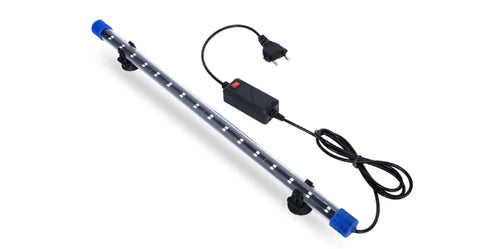
best for 2 feet tanks
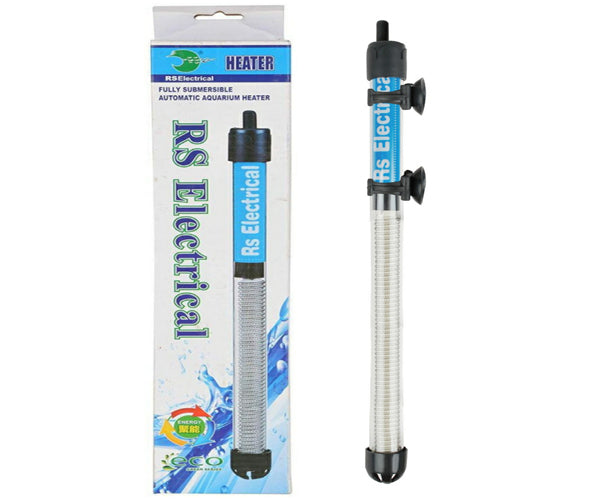
You can submerse into the water
About & Function
A submersible aquarium light is a fully waterproofed light fixture designed to sit directly inside the tank, underwater, rather than mounted above or clipped to the rim like a conventional aquarium lamp. Because the whole unit — housing, LEDs, and cable — is sealed against water ingress, it can be placed on the substrate, tucked among decor, or used to backlight plants and ornaments from within the tank itself, creating lighting effects that a top-mounted light simply can't produce.
These lights are used more for accent and decorative effect than as a tank's primary plant-growth light source — a light sitting low in the tank casts shadows and uneven coverage across the water column compared to a light mounted properly overhead, which is why most keepers pair a submersible light with a separate top light rather than relying on it alone for a planted setup.
This unit is sized for roughly 2-foot tanks, suiting small to medium aquariums rather than larger show tanks.
Colour-changing or multi-colour submersible lights (a common feature on this style of fixture) are popular for evening viewing and for photographing the tank, since low, close-up lighting brings out colour and texture in fish, plants, and decor that overhead lighting alone tends to flatten. Some keepers also use a submersible light on a timer for a "moonlight" effect after the main light cycle ends, giving a dim glow rather than total darkness overnight.
Requirements
This is a mains-powered electrical device, even though it operates underwater — the sealed housing and cable gland are what make submersion safe, so the unit should never be used if the housing, lens, or cable shows any crack, split, or damage that could let water reach the electrical components. As with any aquarium electrical equipment, route the power cord through a drip loop and plug into an ideally RCD/ELCB-protected socket.
It's sized for roughly 2-foot tanks — in a much larger tank a single unit will only light one area rather than the whole tank evenly. It can rest on the substrate or be positioned with a suction cup/clip if the product includes one; check that decor doesn't block too much of the light output once placed.
Before submerging, double-check the housing and cable for any shipping damage, and confirm the seal is intact by inspecting the seam around the lens — this is worth doing every time before use, not just on first setup, since a seal that's fine today can degrade with age or accidental impact from decor or a curious fish.
If the fixture has multiple colour modes or a remote, keep any dry electronics (remote, controller box if separate from the submerged light itself) genuinely away from splashes, since only the light head is rated for submersion, not necessarily every accessory in the box.
Compatibility
Specifications & Maintenance
Real-world specifications and upkeep:
- Power: mains electricity, fully sealed/waterproofed housing rated for full submersion
- Suitable for: roughly 2-foot tanks as accent or supplementary lighting, not as the sole light source for a planted tank
- Inspection: check the housing, lens, and cable regularly for any crack, scratch, or seal degradation — stop using immediately if damage is found, since a compromised seal is an electrical safety risk underwater
- Cleaning: algae will build up on the lens over time from being submerged in lit, nutrient-rich water; wipe gently with a soft cloth or algae pad while unplugged
- Longevity: LED output gradually dims over years of use, which is normal for LED fixtures generally, faster if the light runs very warm from being fully enclosed underwater
- Placement: avoid burying the fixture fully in substrate, which traps heat around the sealed housing and can shorten its working life
- Cable check: inspect the cable where it exits the tank/housing for wear each time you do routine maintenance, since that's the most likely point for damage from handling over time
- Accessories: keep any non-submersible controller or remote genuinely dry, since typically only the light head itself is rated for full submersion
- Seal check: re-inspect the lens seam periodically, not just on first setup, since impacts from decor or fish can degrade a seal over time