About & Origin
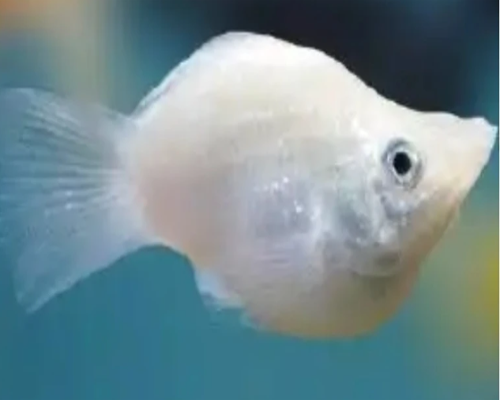
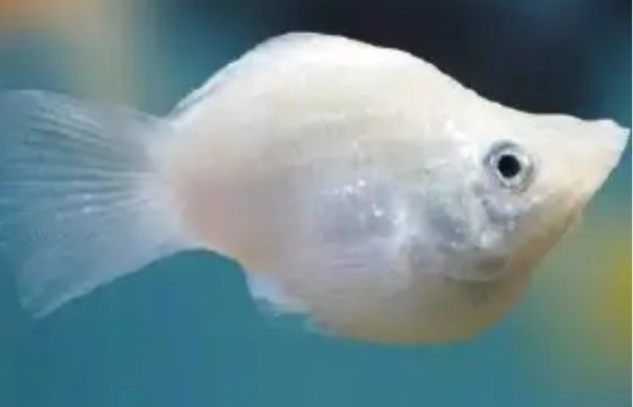
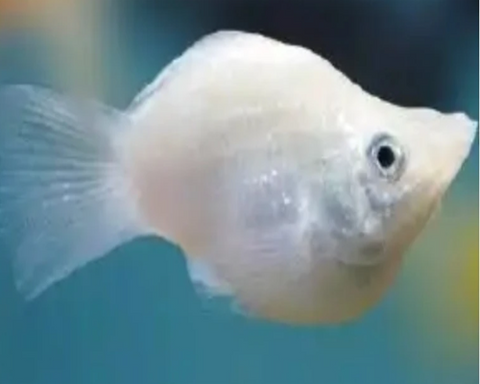
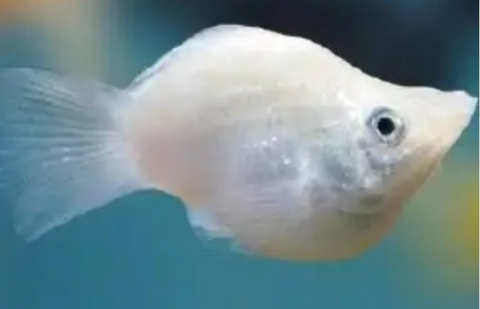
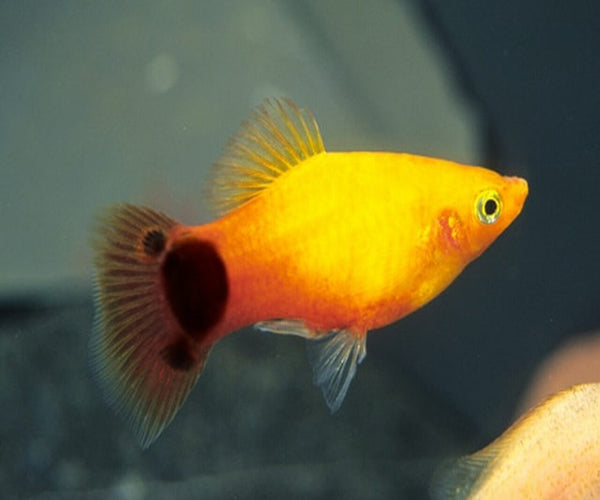
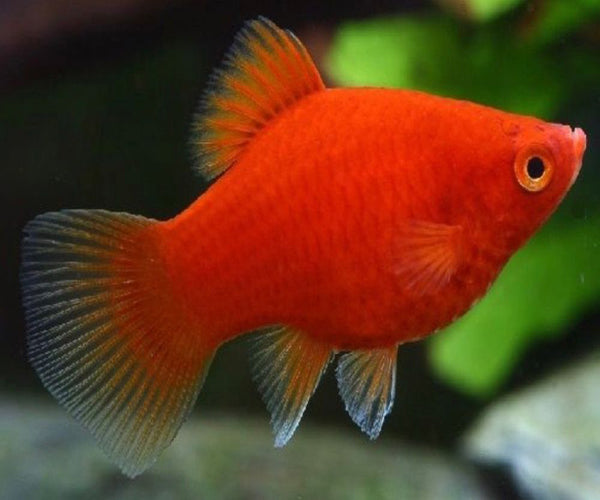
The White Balloon Molly is a livebearer fish, a pale, cream-white colour form combined with the "balloon" body shape of Poecilia sphenops, the short-finned molly, a species native in the wild to fresh, brackish, and coastal waters of Central America and the southern United States.
Like other balloon-form mollies, its shortened, rounded body comes from decades of selective aquarium breeding for spinal curvature rather than natural wild-type anatomy -- worth knowing that balloon-bodied fish are somewhat more prone to internal compression and mild swimming difficulty than standard-bodied mollies, a trade-off for the compact, rounded shape.
Otherwise it behaves like any molly: an active livebearer, giving birth to free-swimming young, breeding readily in mixed-sex groups, and grazing algae/biofilm alongside general omnivorous feeding.
The white/cream colouring itself is a separate selectively-bred trait from the balloon body shape, and the two are commonly combined but genetically independent — this is why balloon mollies also turn up in black, orange, and marbled colour forms alongside this white one, all sharing the same rounded anatomy but with entirely different pigmentation.
Some individuals show faint dusky shading along the back or fin edges rather than a completely uniform white, which is a normal amount of pigment variation within the strain rather than a sign of impurity — genuinely solid, edge-to-edge white specimens do exist but tend to command a premium precisely because that level of uniformity is harder to consistently breed for.
Requirements
Standard molly husbandry applies (hard/alkaline water, tolerates a light dash of aquarium salt, female-heavy groups, grazing omnivore diet with vegetable matter, standard filtration) — plus the same honest caveats as any balloon-bodied molly.
The round body comes from a selectively bred spinal curvature, not fat — a deliberate deformity some keepers choose to avoid on welfare grounds, since it can affect swimming and, for some individuals, organ function and lifespan next to a standard-bodied molly.
Practical notes: keep flow gentle, favour smaller and more frequent meals over large ones, and use the pale white body to your advantage — stress and illness show up as visible streaking or discolouration here well before they would on a darker strain.
Tankmate selection: because the compressed body shape can make quick, agile swimming harder, avoid pairing a balloon molly with fast, competitive feeders that would consistently out-race it to food — calmer, similarly-paced tankmates make for a much less stressful feeding routine and reduce the risk of this fish going underfed relative to faster tankmates.
An honest note on the trait: the balloon shape is a form of selectively-bred spinal deformity, and some keepers and welfare-conscious breeders choose to avoid balloon-bodied fish specifically for this reason, preferring standard-bodied mollies instead. Buyers uncomfortable with a deliberately compressed spine as an ornamental trait may prefer a standard-bodied molly variety, which shares the same easy care and colour options without that trade-off.
Compatibility
Water & Care Conditions
- pH: 7.5–8.5 (alkaline)
- Hardness: moderately hard to hard, roughly 15–30 dGH
- Salinity: freshwater to brackish; a small dose of aquarium salt is well tolerated
- Temperature: 24–28°C (75–82°F)
- Water changes: weekly 20-25%
Watch the pale body for reddish streaking or cloudy patches — an early, easy-to-spot cue on this strain — alongside "shimmying" (side-to-side swaying without moving forward), which usually means the water's too soft, acidic, or unstable. Also check buoyancy and swimming ease, since the curved spine of a balloon body can cause difficulty independent of water chemistry.
With correct hard/alkaline water this strain is reasonably hardy, though its swimming ability and typical lifespan run somewhat behind a standard-bodied molly's. Not suited to a soft, acidic community tank.
A small addition of aquarium salt (roughly 1 tablespoon per 5-10 gallons, well dissolved) is a traditional and generally safe way to nudge water further toward the hard, brackish-leaning chemistry this species evolved in, and many keepers report visibly improved colour and activity after doing so — though it's not compatible with scaleless fish or most live plants if kept in a mixed tank, so it's worth planning tankmates and planting around that choice rather than adding salt to an already-established community setup without checking first.
A gently sloped, buffered substrate (crushed coral or aragonite sand mixed into a standard substrate) is a common, low-effort way to help maintain the harder, more alkaline water this species prefers over the long term, particularly in regions where tap water runs naturally soft.