About & Origin
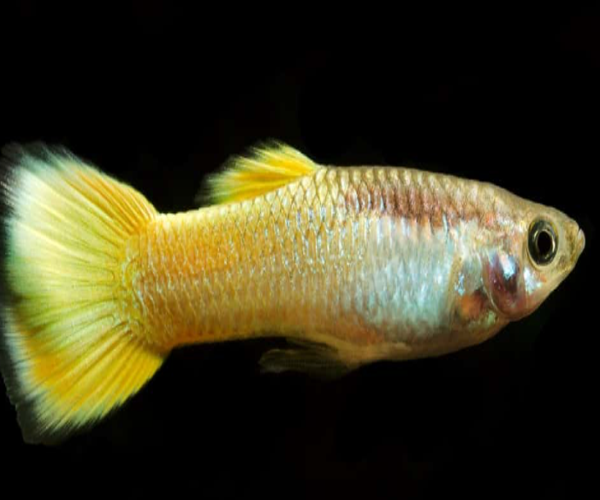
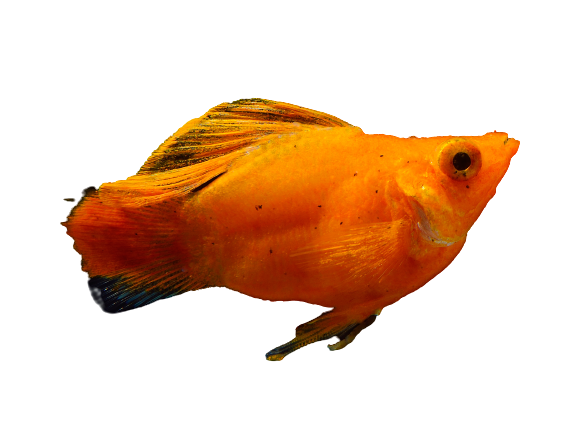
The Yellow Platinum Guppy is a small livebearer fish, a colour strain of the guppy species Poecilia reticulata pairing a bright yellow body with a metallic platinum sheen. Wild guppies originate from streams, ponds, and coastal waters across Venezuela, Trinidad, Guyana, and northern Brazil, and this strain is a purely ornamental color selection from that same adaptable species.
In the wild, guppies live in shallow, warm, often nutrient-rich water and are famous among biologists for how fast they adapt to local conditions — including to predators, which has made them one of the most studied fish in evolutionary biology. In the aquarium hobby, that same adaptability is exactly what makes guppies such a reliable beginner fish.
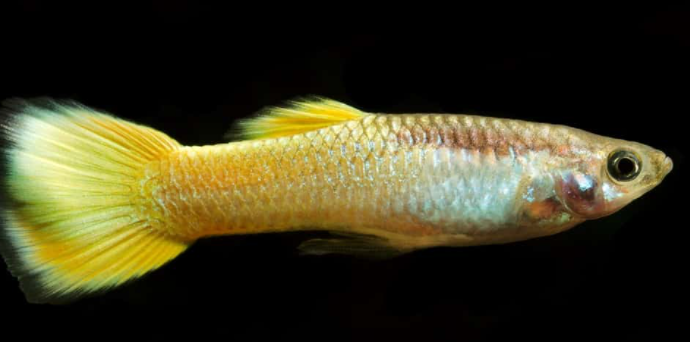
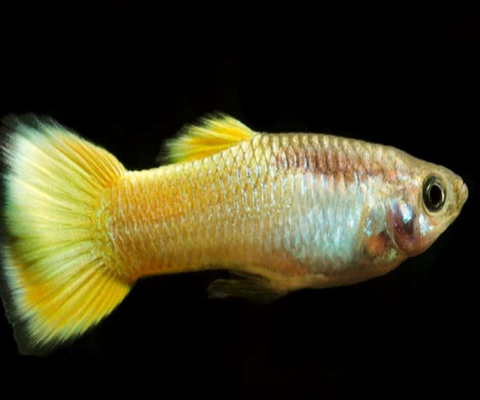
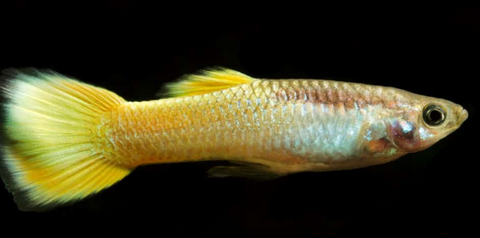
The platinum trait comes from an unusually dense, reflective layer of guanine-based iridophore cells in the skin, giving the whole body a metallic, almost mirror-like sheen rather than a flat pigment color — laid here under a yellow pigment layer, which is why the fish can shift between reading as a bright warm yellow in direct light and a cooler, silvery yellow-white in shade. That light-dependent shift is a hallmark of structural, iridescence-based coloring rather than simple pigment, and it's part of why platinum-based strains are often described by breeders as having more visual "depth" than flat single-pigment colors.
As with other platinum-based strains, expect the metallic sheen and yellow tone to fill in and intensify as the fish matures — juveniles typically look noticeably plainer than a fully grown, finished adult of the same strain, so newly arrived young stock is worth giving a few months before judging its final color.
The Yellow Platinum Guppy strain sold here is bred and raised for the aquarium trade specifically for its coloring and finnage; its care, temperament, and water needs are identical to any other guppy variety.
fishykart.com ships healthy, actively-colored stock, not fish pulled straight from a wholesale feeder tank.
Requirements
Standard guppy husbandry applies (10 gallon/38 litre minimum for a group of 6+, roughly 2 litres per adult, female-heavy sex ratio, omnivorous flake/micro-pellet diet with occasional live/frozen foods, floating or fine-leaved plants for fry cover, a tight lid since they jump, fry every 4-6 weeks once mature).
This strain specifically: the yellow pigment and the reflective platinum sheen come from different biological sources (pigment cells vs. a guanine reflective layer), so they can develop somewhat independently as the fish matures — young fry sometimes look more plainly silver before the yellow tone fills in fully over the following weeks. Angled, moderate lighting shows the platinum shine better than flat overhead light does.
Tank decor: a darker substrate and backdrop make both the yellow tone and the metallic shine read more vividly by contrast than a pale or busy background would — worth keeping in mind if display appearance is a priority alongside basic care.
Breeding considerations: platinum-based strains are sometimes reported by breeders as slightly more prone to certain genetic sensitivities in heavily inbred lines, though this varies a great deal by specific breeding stock rather than being a fixed trait of the platinum gene itself — buying from a source with healthy, actively swimming stock rather than judging purely on colour intensity is the more reliable way to avoid this.
Compatibility

Water & Care Conditions
- pH: 6.8–7.8
- Salinity / hardness: freshwater, moderately hard (10–20 dGH)
- Temperature: 24–28°C (75–82°F)
- Oxygenation: moderate surface movement, avoid stagnant water
Stability matters more than an exact number. A yellow tone that fades or a platinum sheen that looks flat rather than shimmery are both early visible cues worth checking against water quality.
Weekly 20-25% water changes keep colour and finnage healthy and reduce fin rot/ich risk; acclimate new arrivals slowly (20-30 minute drip) rather than a quick release.
Captive-bred and generally adaptable to ordinary dechlorinated tap water once roughly in range. Well-kept guppies typically live 2-3 years.
Guppies generally do better in moderately hard, slightly alkaline water than soft/acidic conditions — where tap water runs soft, a small remineralizing addition or pinch of aquarium salt helps replicate the mineral-rich water this species evolved in, and often shows up as improved colour and finnage condition within a few weeks.
A varied diet including some carotenoid-rich foods (spirulina flake, occasional live or frozen daphnia/brine shrimp) supports the yellow pigment layer specifically, while the platinum sheen itself is largely genetic and less diet-dependent — so a fish with a dull yellow but still-bright metallic sheen usually points to a nutrition gap rather than a water-quality problem.