About & Origin
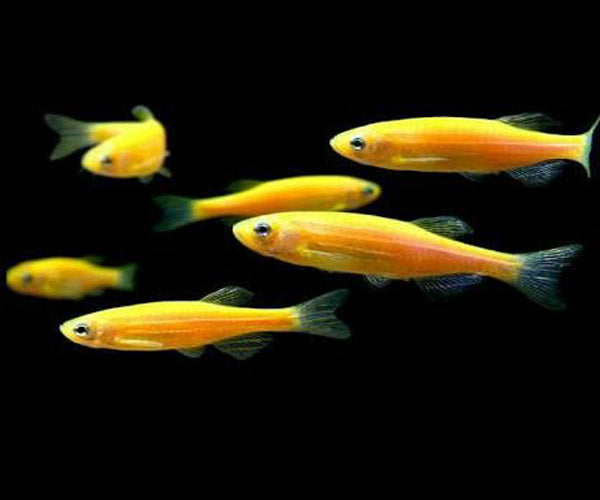
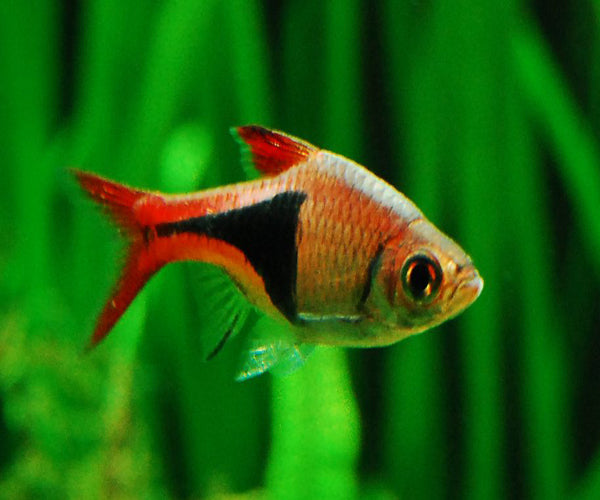
This yellow/orange-coloured fish is a genetically modified strain of the Zebra Danio (Danio rerio), a small, hardy shoaling fish native to slow-moving streams, rice paddies, and floodplains across the Indian subcontinent. Unlike dyed fish, GloFish-type colour strains carry a fluorescent protein gene expressed throughout the fish's own tissue and passed on genetically to offspring — the colour is a permanent, heritable trait, not a coating or injection.
The underlying species, the common zebra danio, is one of the most widely kept, hardiest small fish in the hobby (and one of the most-used research fish in the world), known for constant, energetic swimming and genuine ease of care regardless of colour strain.
Wild-type zebra danios show the classic horizontal blue-and-gold stripes running the body length; the fluorescent colour strains overlay a bright, uniform hue (yellow/orange, in this case) that's typically most vivid under blue/actinic aquarium lighting, though still visible under standard white light.
This combo pack supplies a starter shoal at once, matching how zebra danios should always be kept — as an active, always-moving group.
GloFish-branded zebra danios were among the first genetically modified ornamental fish to reach the aquarium trade, originally developed for environmental-pollutant research (their fluorescence was designed to activate in the presence of certain toxins) before being bred and marketed purely for their appearance — a notable piece of aquarium-hobby history behind an otherwise very ordinary, easy community fish.
Requirements
Same easy shoaling danio as the red strain, just a different colour: keep 6 or more in a 60-75L-plus tank with a secure lid (strong jumpers), and expect calmer behaviour from a properly-sized group than a thin one. Unfussy eater -- any quality flake, pellet, or frozen food works. Pairs best with other active, robust community fish rather than slow or delicate long-finned species.
Buying as a combo: stocking the full shoal at once rather than adding fish one at a time avoids the stress a lone or thin group experiences, and is generally kinder on the fish than repeatedly introducing new individuals into an already-settled small group over weeks.
Tank shape: because zebra danios are genuinely fast, constant swimmers, a longer, wider tank footprint lets them make full use of their natural activity level better than a tall, narrow tank of the same overall volume -- horizontal swimming space matters more to this species than vertical height.
Regional regulations: GloFish-type genetically modified strains are restricted or require specific permits for sale, import, or breeding in some countries and states -- worth confirming local rules before planning to breed or resell offspring, even though simply keeping them as pets is unrestricted almost everywhere they're sold.
Compatibility
Water & Care Conditions
Same broad tolerance as any zebra danio: pH 6.5-7.5, hardness 5-19 dGH, 18-24C (can be kept unheated in many climates), undemanding on oxygenation. As with other GloFish-style strains, sale/import/breeding is restricted in a few regions -- worth checking locally before breeding or reselling.
Because the fluorescent colour is genetic rather than a coating, it doesn't fade with water quality the way a dyed fish's colour would -- so a dulling appearance in this strain is a more reliable, unambiguous sign of a genuine health or stress issue rather than something that could just be colour wear needing a water change to fix.
Weekly partial water changes of 20-25% and consistent filtration remain the baseline for keeping any zebra danio shoal healthy long-term, this strain included -- their hardiness makes them forgiving of minor lapses, but not immune to genuinely poor water quality maintained over time.
Well-kept zebra danios commonly live 3-5 years, sometimes longer, making them a genuinely long-term community fish rather than a short-lived starter species despite their small size and low price.
New arrivals settle in more reliably with slow, drip-style acclimation over 20-30 minutes rather than a quick release, reducing the combined stress of transport and a sudden shift in water chemistry.