Java Fern Care: How to Attach It, Light and Varieties
Published: 2026-10-27 · FishyKart Blog
Java fern (Microsorum pteropus, recently reclassified as Leptochilus pteropus) is one of the hardest plants to kill in an aquarium, with one rule that matters above all: its rhizome must not be buried. It grows on wood or rock, needs only low light, and its tough, bitter leaves are ignored by nearly all fish.
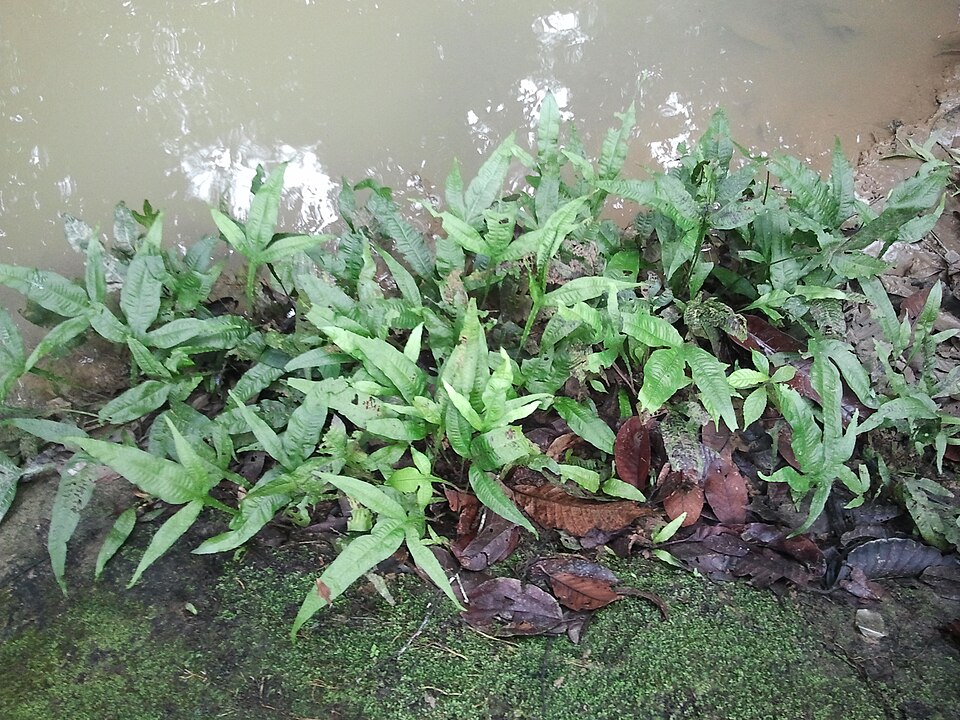
Photo: Fhurzan - Wikimedia Commons, CC BY-SA 3.0
| Parameter | Value |
| Scientific name | Microsorum pteropus / Leptochilus pteropus |
| Origin | Southeast Asia, stream banks and rocks |
| Height | 6-12 in (15-30 cm) |
| Growth | Slow |
| Light | Low to moderate |
| Temperature | 68-82°F (20-28°C) |
| Placement | Attached to wood or rock, rhizome above substrate |
How to Attach Java Fern
- Tie the rhizome (the thick horizontal stem) to driftwood or rock with cotton thread or fishing line
- Or use a dab of gel superglue on a dry spot of the rhizome
- Wedge it between stones; roots grip the surface within weeks
- If you push it into gravel, keep the rhizome above the surface or it rots
Varieties
The common form has broad leaves. Narrow leaf and needle leaf forms suit smaller tanks, Windelov has finely branched leaf tips, and Trident has deeply lobed leaves. Care is the same for all.
Brown Spots and Baby Plants
Dark brown dots under the leaves are usually spores, not disease. Java fern also grows small plantlets on older leaves; once they have a few roots, pull them off and attach them elsewhere. Transparent or melting brown patches, on the other hand, point to too much light or too few nutrients.
Where Java Fern Fits
Because fish rarely eat it, java fern is a good choice for oscar, goldfish and cichlid tanks where softer plants get destroyed. It pairs naturally with java moss and anubias on the same piece of wood.
See our listed java fern (narrow leaf)