Tap Water Hardness by City for Aquariums
Published: 2026-10-31 · FishyKart Blog
Tap water hardness in US cities ranges from very soft to very hard, and it decides which fish will thrive with the least effort. From the latest utility reports: Seattle and New York City have mostly very soft water (about 1-2 dGH on average), Austin is moderate (average 93 ppm, about 5 dGH), Los Angeles is moderate to very hard depending on the source (103-236 mg/L), and Phoenix is hard to very hard (172-302 ppm, about 10-17 dGH). Match your fish to your tap water and you will rarely need additives.
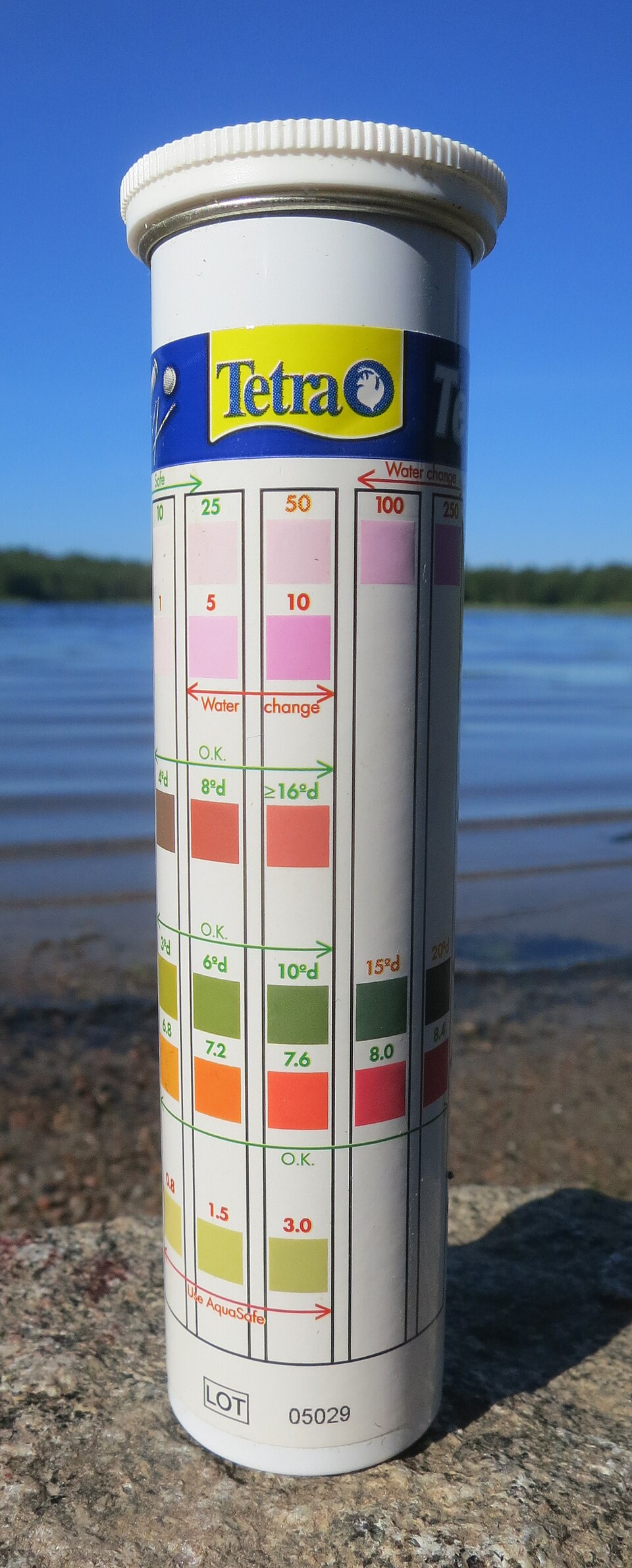
Photo: R. Henrik Nilsson - Wikimedia Commons, CC BY 4.0
Hardness by City (Utility Reports)
| City (utility, report) | Total hardness / approx. dGH |
| New York City (NYC DEP, 2025 data) | 18-100 mg/L, average 32 / about 1-5.6, average 1.8 |
| Seattle (SPU, analysis of May 20, 2026) | 0.5-1.73 grains/gal (about 9-30 mg/L) / about 0.5-1.7 |
| Austin (Austin Water, 2025 report) | 70-126 ppm, average 93 / about 4-7, average 5.2 |
| Los Angeles (LADWP, 2025 data) | 103 mg/L (LA Aqueduct) to 234-236 (MWD supply) / about 5.8-13.2 |
| Phoenix (City of Phoenix, 2025 report) | 172-302 ppm (10-17.6 grains/gal) / about 9.6-16.9 |
dGH is our conversion (ppm divided by 17.86). Numbers vary by neighborhood, season and source blend; your own test kit is the final word.
What the Numbers Mean
Utilities report total hardness: calcium and magnesium expressed as calcium carbonate, in mg/L (= ppm) or grains per gallon. Fish keepers usually use dGH. The conversions:
- dGH = ppm / 17.86
- grains per gallon = ppm / 17.1
The USGS classes water as soft (0-60 mg/L), moderately hard (61-120), hard (121-180) and very hard (over 180). For comparison, Neocaridina shrimp do best around 6-8 dGH, roughly 107-143 ppm.
Hardness is not the same as KH (carbonate hardness, close to the "alkalinity" line in utility reports). KH buffers pH: very soft, low-alkalinity water can drop in pH quickly in an aquarium, while high-alkalinity water holds pH steady and high.
New York City and Seattle: Very Soft Water
NYC averaged 32 mg/L of hardness in 2025 (about 2 grains per gallon); Seattle's May 2026 analysis showed 0.5-1.73 grains per gallon with alkalinity of about 20-30 mg/L. This is ideal for soft-water fish: neon and cardinal tetras, harlequin rasboras, corydoras, freshwater angelfish and even discus.
Watch two things: low KH means pH can crash in an old, overstocked tank, so keep up weekly water changes; and shrimp and snails need some minerals for shells, so shrimp keepers in these cities often add a GH remineralizer.
Austin: The Easy Middle
Austin Water reports 70-126 ppm, average 93 ppm (5.4 grains per gallon). Moderate water like this suits nearly every common community fish, from tetras to livebearers, plus shrimp and snails. If you live in Austin, almost anything in our best fish for beginners list will do well straight from the tap after dechlorinating.
Los Angeles: Depends Where Your Water Comes From
LADWP blends several sources. In its 2026 report (2025 data), total hardness averaged 103 mg/L at the Los Angeles Aqueduct Filtration Plant, 115-116 mg/L for city wells, 140 mg/L from the MWD Jensen plant and 234-236 mg/L from the MWD Weymouth and Diemer plants. pH ran about 7.7-8.3. Test your own tap: the same aquarium can see moderate water one season and very hard water the next if the blend changes. LADWP also lists chloramine in its treated water, so use a dechlorinator that neutralizes chloramine.
Phoenix: Hard Water
The City of Phoenix reports 172-302 ppm (10-17.6 grains per gallon), with alkalinity of 121-167 ppm and pH from 6.6 to 8.8. Hard, well-buffered water is a gift for mollies, guppies, swordtails, African cichlids, goldfish and snails. Soft-water species such as discus or wild-caught tetras are a poor match unless you mix tap water with RO water.
Photo: Yasmine.shal - Wikimedia Commons, CC BY-SA 4.0
Which Fish for Which Water
| Your tap water | Easy fish |
| Very soft (under 3 dGH) | tetras, rasboras, corydoras, angelfish, discus, gouramis |
| Moderate (4-8 dGH) | almost all community fish, shrimp, snails |
| Hard (8-12 dGH) | livebearers, barbs, danios, goldfish, rainbowfish |
| Very hard (12+ dGH) | mollies, guppies, platies, African cichlids, goldfish |
How to Find Your Own City's Number
Every US community water system must publish an annual water quality report (Consumer Confidence Report). Search "[your city] water quality report", open the PDF and look for "Total Hardness" (often in a table of secondary or unregulated substances) and "Alkalinity". If your area has several sources, note the range. Then confirm with a GH/KH test kit at your own tap, because older reports and source changes can differ from what comes out today.
When Not to Change Your Water
- Do not use a household water softener's output for fish: it swaps calcium for sodium.
- Do not chase numbers with chemicals; stability matters more than an exact GH.
- Do not mix RO water without testing, and keep each water change the same.
Hardness also affects new tanks: see how to cycle a fish tank and cloudy aquarium water.