Dropsy in Fish: Pinecone Scales, Causes and Treatment
Published: 2026-11-28 · FishyKart Blog
Dropsy in fish is a build-up of fluid inside the body that swells the belly and pushes the scales outward, so the fish looks like a pinecone from above. It is a symptom, not one disease: most often the end stage of a bacterial infection that took hold in poor water. By the time the scales stand out, the damage inside is serious, so treatment works best in larger fish caught early.
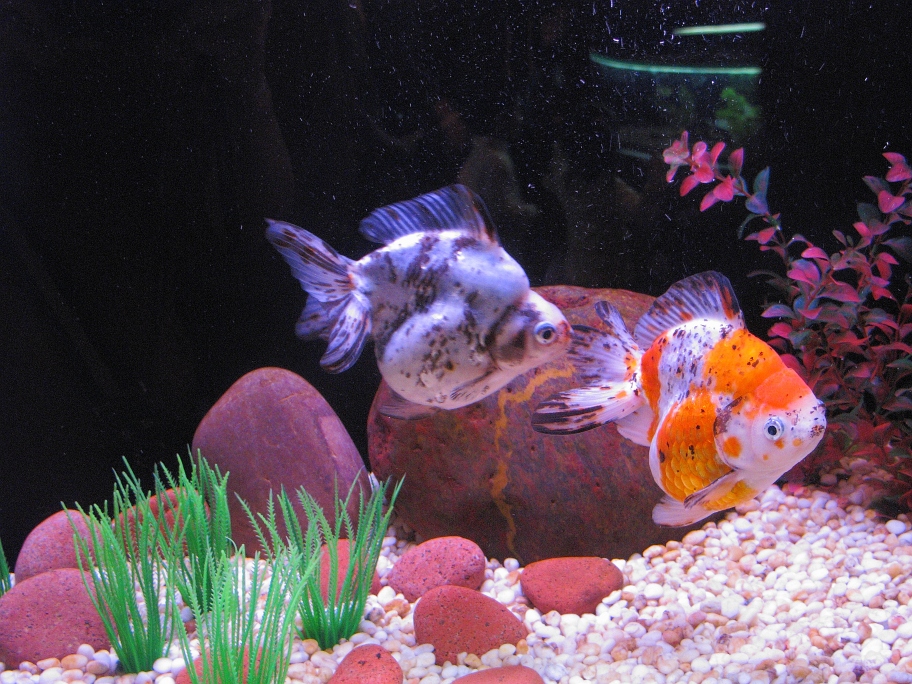
Photo: Lawrencekhoo - Wikimedia Commons, CC BY-SA 4.0. Healthy ryukin goldfish: round bodies, but the scales lie flat. In dropsy they stand out from the body.
Signs of Dropsy
The pinecone look is the sign everyone knows, but it is usually not the first one. Watch for:
- Swollen belly, often on both sides, not just a full stomach after a meal.
- Raised scales that flare out from the body; easiest to see from above.
- Bulging eyes (pop eye) on one or both sides.
- Pale gills, clamped fins and a curve developing in the spine.
- Pale, stringy feces, swelling near the vent, loss of appetite and little movement.
Symptoms as listed in Wikipedia's dropsy in fish entry and Chewy's guide to dropsy and Malawi bloat (updated January 2026).
Dropsy or Something Else?
Not every round fish has dropsy. Three conditions look similar, and the scales are the quickest way to tell them apart:
| Condition | Scales | Other clues | Outlook |
|---|---|---|---|
| Dropsy (fluid in the body cavity) | Stick out, pinecone look | Bulging eyes, pale gills, lethargy | Poor once scales are raised |
| Constipation | Lie flat | Stringy feces, trouble swimming (common in fancy goldfish) | Good with diet change |
| Egg-binding (females) | Lie flat | Female swells quickly | Can be fatal |
| Malawi bloat (African cichlids) | Swelling, similar to dropsy | Bloating, refusing food; linked to diet, water and salt use | Treated with metronidazole |
A swollen fish whose scales still lie flat is more likely constipated; Chewy's fish care team uses Epsom salt as a gentle laxative at 1 teaspoon per 5 gallons for that. A fish that floats or sinks without swelling is more likely dealing with swim bladder disease.
What Causes Dropsy
The fluid itself is the result; something has stopped the fish's body from controlling water balance. The usual causes:
- Opportunistic bacteria. The most common cause. Freshwater fish are most often infected with Aeromonas and Pseudomonas, and the Merck Veterinary Manual ties outbreaks to poor water quality, organic waste, handling and transport, temperature changes and low oxygen.
- Viruses. Dwarf Gourami Iridovirus causes a group of symptoms that includes dropsy.
- Parasites. Hexamita, the protozoan behind hole-in-the-head disease in cichlids, can also cause dropsy; by then the outlook is poor.
- Organ failure. Kidney and liver problems in older or chronically stressed fish lead to the same fluid build-up.
The common thread is stress, and the most common stress in a home tank is the water. If one fish has dropsy, test the main tank for ammonia and nitrite before anything else.
How to Treat Dropsy
- Move the fish to a hospital tank. Dropsy may or may not be contagious, depending on its cause, so standard practice is to isolate the sick fish. A bare tank with a heater, gentle filter and cover makes dosing easier.
- Fix the main tank's water. Test ammonia, nitrite and nitrate, do a partial water change and look for the cause: overstocking, overfeeding or a failing filter.
- Use antibiotics for larger fish. Chewy's fish care team says dropsy from a systemic bacterial infection can be treated in larger fish such as cichlids and goldfish with antibiotics, for example erythromycin or minocycline. Follow the product label or an aquatic vet; the Merck manual advises choosing the drug by sensitivity testing when possible.
- Add Epsom salt as support. Chewy gives 1 teaspoon of Epsom salt per 5 to 10 gallons and a temperature of 82-86 F alongside antibiotics. Epsom salt (magnesium sulfate) is used to help draw out fluid; it is a different chemical from table salt and aquarium salt (sodium chloride), so do not swap one for the other.
- Keep the water clean and watch. Do small, regular water changes in the hospital tank, re-dose for the water you replace, and keep notes on swelling, appetite and behavior.
For a quick sense of the Epsom salt range in common hospital tank sizes:
| Hospital tank | Epsom salt at 1 tsp per 10 gal | Epsom salt at 1 tsp per 5 gal |
|---|---|---|
| 5 gallons | 1/2 tsp | 1 tsp |
| 10 gallons | 1 tsp | 2 tsp |
| 20 gallons | 2 tsp | 4 tsp |
Calculated by FishyKart from Chewy's range. Use the real water volume, which is less than the label on the tank; our aquarium volume calculator helps. Start at the lower dose for sensitive or small fish.
Survival Chances: Be Realistic
Dropsy is one of the hardest fish problems to treat. Chewy's fish care team puts it plainly: once fluid pushes the scales out, severe damage has already been done. What changes the odds:
- Fish size. Larger fish such as goldfish and cichlids sometimes recover with antibiotics; small fish such as tetras and guppies rarely do.
- How early. A swollen fish caught before the scales flare, in good water, has the best chance.
- The cause. Bacterial cases respond to treatment more often than viral cases or organ failure.
If a small fish is fully pineconed, is not eating and is struggling to breathe, humane euthanasia can be kinder than a long treatment that is unlikely to work. An aquatic vet can advise and do it properly.
How to Prevent Dropsy
- Keep the water right. A cycled filter, ammonia and nitrite at 0 and regular partial water changes remove the main trigger.
- Do not overstock or overfeed. Both raise waste and stress.
- Quarantine new fish for a few weeks before they join the main tank, so infections show up in isolation.
- Feed the right diet. For African cichlids, Chewy links Malawi bloat to diets low in greens and fiber and to using plain salt; use a proper cichlid salt mix if you need harder water.
- Act on early signs. A fish that hides, stops eating or swells slightly is easier to treat than one with raised scales.