Fish Tank Smells Bad? What Each Smell Means and How to Fix It
Published: 2026-11-21 · FishyKart Blog
A healthy fish tank smells only faintly, like damp soil or a garden pond. A strong smell means something is wrong, and the type of smell tells you what: rotten eggs point to hydrogen sulfide gas in the substrate, a fishy or rotting smell to uneaten food or a dead animal, a sharp, urine-like smell to ammonia, and a musty smell to a clogged filter. Most smells clear once you remove the source, do a partial water change and clean the filter gently.
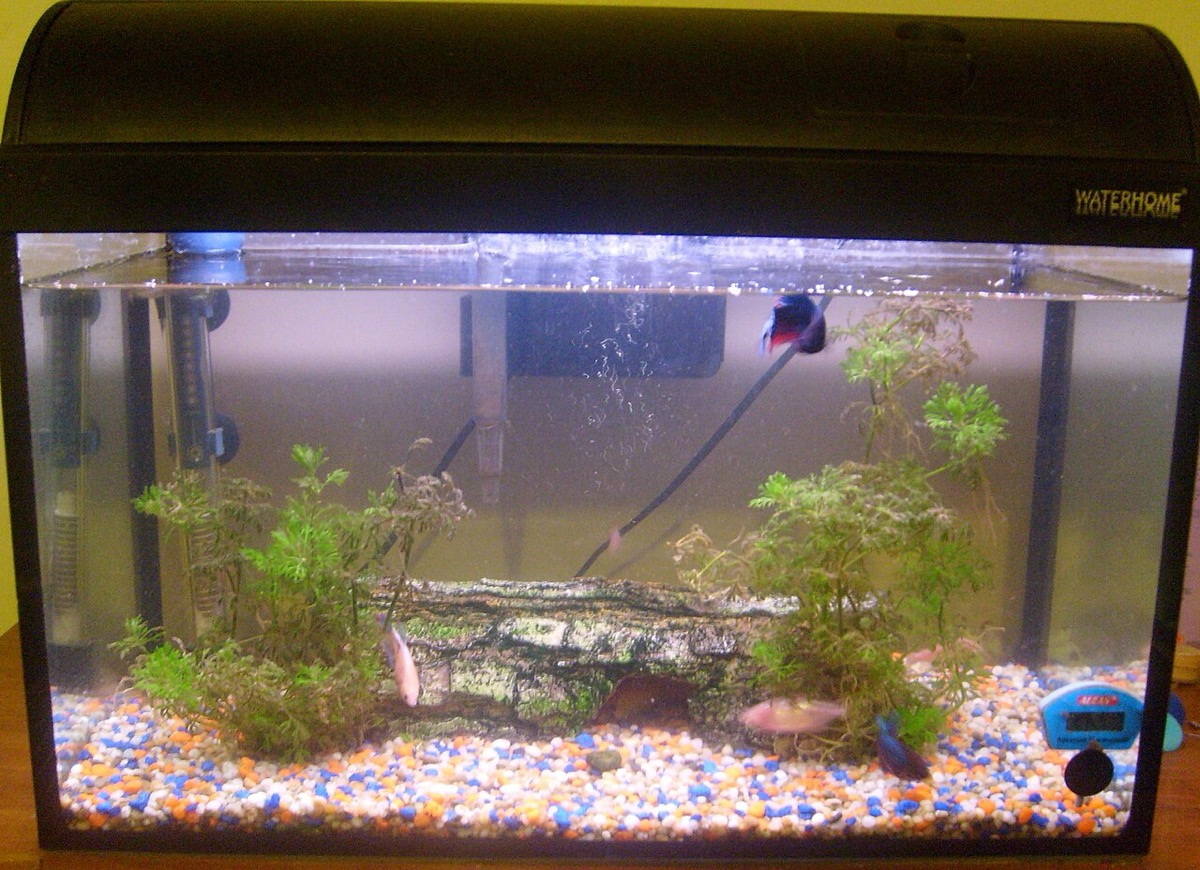
Photo: JohnstonDJ - Wikimedia Commons, CC BY-SA 3.0
Smell Guide: What Your Tank Is Telling You
| Smell | Likely cause | Risk to fish | First fix |
| Faint earthy, like soil | Normal bacteria, plants, wood | None | Nothing to do |
| Rotten eggs | Hydrogen sulfide from oxygen-free pockets in sand, gravel or filter | High | Stir substrate surface, water change, clean filter |
| Fishy, rotting | Uneaten food, dead fish or snail, decaying plants | Medium to high | Find and remove the source |
| Sharp, like urine | Ammonia from overfeeding, overstocking or an uncycled tank | High | Test ammonia, water change |
| Musty, swampy | Clogged filter, sludge, low water flow | Low to medium | Rinse filter media in tank water |
| Chemical, plastic | New decor, paint, sprays used near the tank | Depends on source | Remove item, water change, carbon |
Rotten Egg Smell: Hydrogen Sulfide
A rotten egg smell is hydrogen sulfide. It forms where there is no oxygen: in deep sand that is never disturbed, under packed gravel, or inside a filter so clogged that water barely passes through. There, as aquaculture scientist Claude Boyd of Auburn University explains in a Global Seafood Alliance article, certain bacteria use the oxygen in sulfate instead of free oxygen and release sulfide. He calls hydrogen sulfide "extremely toxic to fish". pH changes the danger: at pH 5 nearly all sulfide is in the toxic H2S form, at pH 9 only about 1%, and around pH 7, where most community tanks sit, roughly half (our estimate from the same chemistry). If you smell it when you push a gravel vacuum into the sand, you have found the pocket.
- Stir only the top layer of sand during each water change, a small area at a time, rather than digging up the whole bed at once.
- Keep sand beds shallow in small tanks, and add burrowing snails such as Malaysian trumpet snails if your fish allow them.
- Clean the filter so water flows freely through it.
Fishy or Rotting Smell
A rotting smell means organic matter is breaking down faster than the filter can handle. The usual sources are food that sinks out of sight, a fish or snail that died behind a rock or inside a cave, and melting or dead plant leaves. Count your fish, look behind every piece of decor and lift plants. Feed only what your fish finish in about two minutes; overfeeding is also the fastest way to get an ammonia spike.
Sharp, Urine-Like Smell: Ammonia
If the tank smells sharp, test for ammonia right away. In a cycled tank it should read 0 ppm, and how toxic any reading is depends on pH and temperature. Causes and fixes are covered in ammonia in a fish tank, and new tanks that are not yet cycled are the most common source; see how to cycle a fish tank.
How to Get Rid of the Smell
- Remove the source first: dead animals, rotting food, dead leaves.
- Change 25-30% of the water with dechlorinated water at the same temperature.
- Vacuum the gravel or stir the sand surface.
- Rinse filter media in removed tank water, never under the tap, so the good bacteria survive.
- Add activated carbon to the filter to absorb remaining odors; remove it when you medicate fish.
- Feed less for a few days and check that the filter is sized for the tank.
The full weekly and monthly routine is in how to clean a fish tank. A smell that comes with milky or grey water usually has the same cause; see cloudy aquarium water.
What Not to Do
- Do not spray air fresheners or cleaners near the tank; aerosols settle on the water.
- Do not change all the water at once: it removes the smell for a day but crashes the tank's bacteria.
- Do not replace all filter media at the same time.
- Do not cover a bad smell with carbon while ammonia is still above zero.