How Big Do Axolotls Get? Adult Size and Growth by Age
Published: 2026-11-15 · FishyKart Blog
An adult axolotl (Ambystoma mexicanum) usually grows to 9-10 inches (23-25 cm) from snout to tail tip. Big individuals reach 10-12 inches (25-30 cm), and the largest on record was about 17 inches (43 cm). An axolotl is roughly 1 inch long at 2 months, sexually mature at about a year and at full size by 18-24 months. How fast it gets there depends on food, water temperature and how many axolotls share the tank.
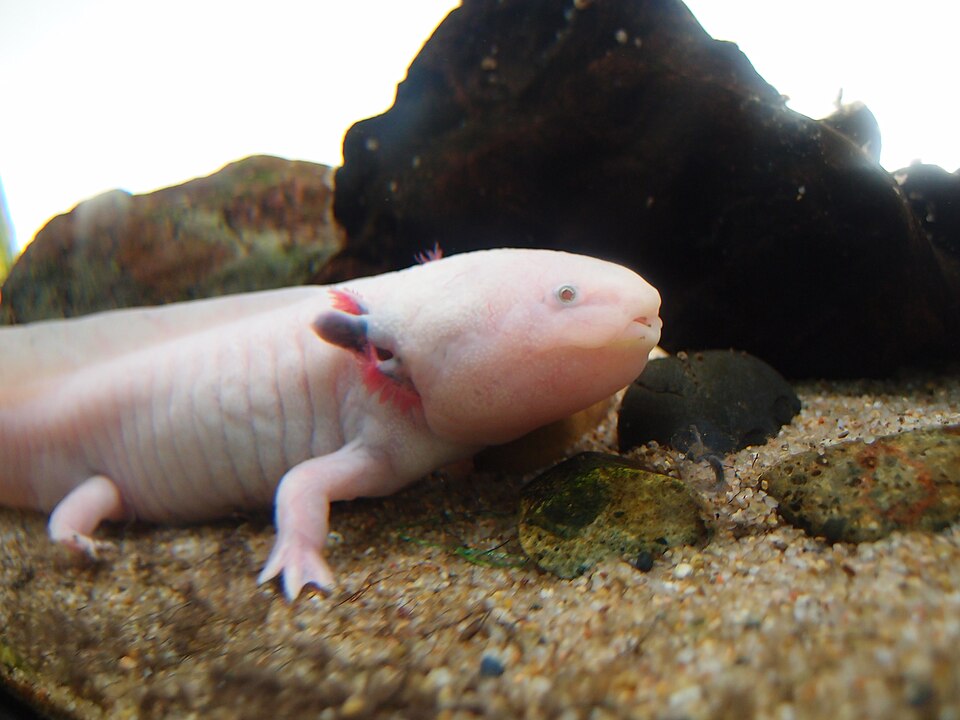
Photo: Guilhem Vellut - Wikimedia Commons, CC BY 2.0
Axolotl Size by Stage
| Stage | Typical age | Length | What changes |
| Young larva | 1.5-2 months | about 1 in (2.5 cm) | eats live food, snaps at anything that moves |
| Juvenile | a few months | 2 in (5 cm) and up | legs grown; house apart to stop toe and leg nipping |
| Sub-adult | well before a year | about 6 in (15 cm) | switch to larger 3/16 in pellets, whole worms |
| Sexually mature | about 12 months | close to adult length | can be sexed; dark toe tips on light morphs |
| Full adult | 18-24 months | 9-10 in (23-25 cm), some 12 in (30 cm) | growth slows to almost nothing |
Ages and lengths from the Ambystoma Genetic Stock Center guide to axolotl husbandry (University of Kentucky) and the axolotl.org biology page. These are averages; two axolotls from the same spawning can differ by inches at the same age.
How Fast Axolotls Grow
An axolotl grows fastest in its first year. Going from about 1 inch at 2 months to about 9 inches at full size is a ninefold increase in length; most of that happens before the first birthday, which is why juveniles eat daily and adults only 3-4 times a week. After maturity the axolotl keeps adding a little length and a lot of body mass until about two years old.
Fast is not always better. Axolotl.org mentions axolotls raised to 26 cm (about 10 inches) in just 7 months as an exceptional case. Pushing growth with warm water and heavy feeding gives a bigger young animal, but the warmth that speeds growth also raises stress and infection risk, so most keepers aim for steady growth at cool temperatures.
What Decides How Big an Axolotl Gets
- Food. Growth follows how much and how often the axolotl eats. Earthworms and quality sinking pellets build size; a diet of only bloodworms does not. See what axolotls eat for amounts by age.
- Temperature. The Stock Center keeps its animals at 15-18 C (60-65 F) and says never above about 22 C (72 F). Colder water slows growth; water warmer than that range stresses them.
- Crowding. In shared tanks the larger axolotls eat more and grow faster, while smaller ones lose gills and toes to bites and fall further behind. Mixed sizes can end in cannibalism.
- Genetics. Lines and individuals differ. Color does not set size: leucistic, wild type and golden axolotls reach the same range (compare morphs in axolotl colors).
- Health. Chronic stress from poor water, strong flow or swallowed gravel stunts growth.
Plan the Tank for the Adult Size
A 9-10 inch axolotl needs floor space more than height, which is why a 20 gallon long (about 30 x 12 inches) is the usual minimum for one adult and larger is better for two. A juvenile reaches adult size long before it is fully grown in weight, so buying the adult tank from day one saves an upgrade within months. Setup details, filters and substrate are in our axolotl tank setup guide, and the footprint of that tank is in 20 gallon tank dimensions.
When Small Size Is a Warning
A small axolotl is not a problem by itself if it eats well, has full fluffy gills and grows a little each month. Look closer if growth stops in a young animal, if it refuses food for several days, if the gills shrink and curl forward, or if it floats and cannot stay on the bottom. These usually point to water that is too warm, ammonia from an uncycled tank or swallowed substrate. Check temperature and water first, then ask an exotic-animal vet. Daily care basics are in our axolotl care guide; if you are buying in the US, check where axolotls are legal before ordering.