About & Origin
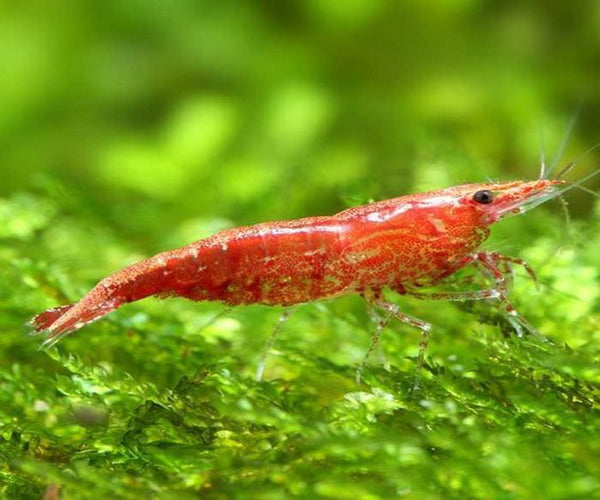
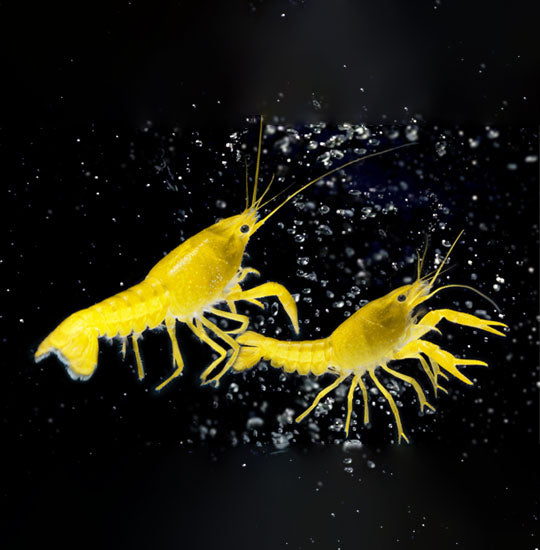
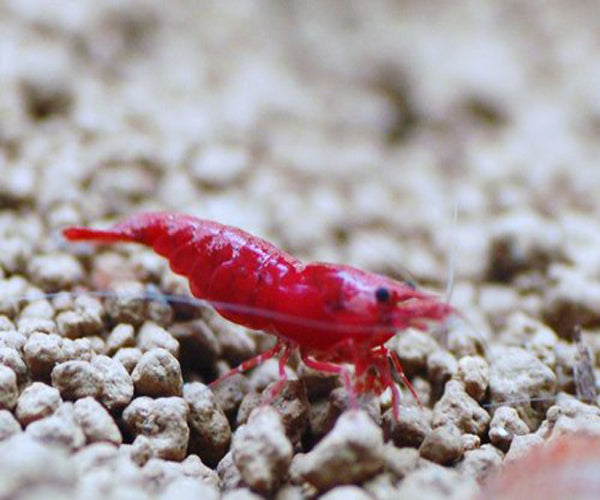
This dwarf shrimp is a colour strain of Neocaridina davidi, a small freshwater shrimp native to streams and ponds in Taiwan and southern China. Every colour form in the trade -- red cherry, yellow, black, blue, and many others -- is the same adaptable species, selectively bred over generations for stronger, more saturated colour; wild-type Neocaridina are a plain brownish colour.
They are peaceful algae and biofilm grazers that spend their time picking over plant leaves, decor, and substrate, and breed readily in a stable, mature tank -- females carry visible clusters of eggs under their tail ("berried") and release fully-formed miniature shrimp rather than a larval stage, so a settled colony grows steadily on its own.
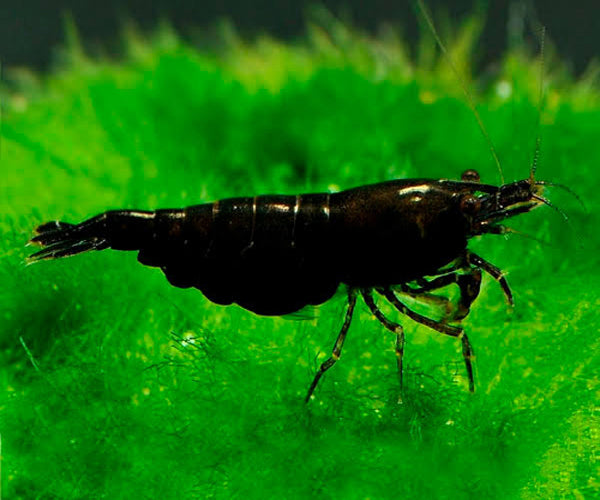
Black is one of the deepest, most solidly opaque colour forms bred in this species -- a genuinely well-coloured Black shrimp shows an even, matte-black shell with no translucent patches, distinct from the "black rilli" or "black diamond" style patterned lines also sold in the hobby, which show translucent windows or patches over the same base black colouring rather than full, uniform coverage. Because dark colouration stands out clearly against light gravel or sand, this strain tends to be one of the easier Neocaridina colours to actually observe and count in a planted tank, unlike more translucent or pale strains that can be hard to spot among plant growth. Adult size stays genuinely small, typically only 2–3cm at full maturity, with females noticeably larger and rounder-bodied than males, and a well-kept individual can live 1–2 years, with the colony itself persisting indefinitely through ongoing breeding once established, provided water quality is maintained and enough shrimp survive to adulthood each generation to sustain the population.
Requirements
Neocaridina shrimp are one of the easiest invertebrates in the hobby once a few basics are covered.
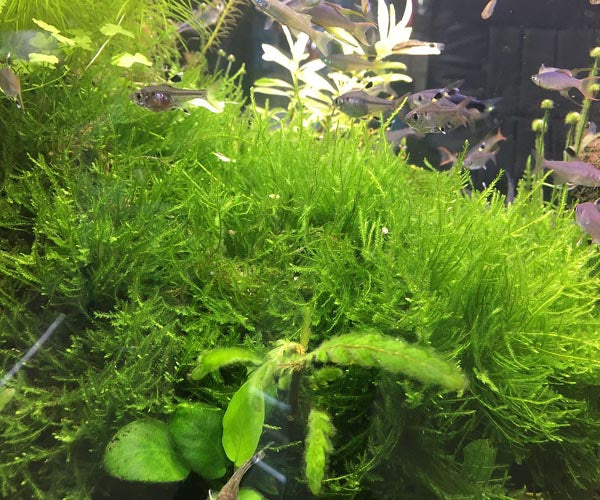
Tankmates matter more than usual: almost any fish large enough to fit a shrimp in its mouth will eat it, especially vulnerable newborn shrimp -- they do best in a species-only shrimp tank, or with only very small, peaceful fish (small tetras, otocinclus) and no larger predatory or semi-aggressive fish.
Stability over time: shrimp are more sensitive to sudden swings in water parameters than most fish, and are notably intolerant of ammonia/nitrite -- they belong in a fully cycled, mature tank, not a brand-new one.
Copper is lethal: many common fish medications and even some tap water sources contain trace copper, which is highly toxic to shrimp at levels that don't bother fish -- always check before medicating a tank that houses shrimp.
They graze on algae/biofilm continuously and appreciate a small supplemental feeding of shrimp-specific food or blanched vegetables a few times a week.
Colony growth and molting: a healthy Neocaridina colony grows steadily once established, roughly doubling every couple of months under good conditions -- shed exoskeletons ("molts") littering the tank floor are a completely normal part of growth, not dead shrimp, and are best left in the tank for a day or two since shrimp often eat their own molt for the calcium it contains.
Plant safety: unlike some larger snails, Neocaridina shrimp are not a threat to live plants -- they graze biofilm and algae off leaf surfaces without damaging the plant itself, making them one of the safest cleanup crew choices for a heavily planted tank.
Filtration: use a sponge filter or a filter intake covered with fine mesh/sponge guard -- standard power filter intakes are strong enough to pull in and kill small shrimp, especially newborns, and this is one of the most common preventable causes of colony losses.
Compatibility
Water & Care Conditions
Neocaridina shrimp are adaptable, but breed most successfully and show the strongest colour within a real comfort range:
- pH: 6.5–8.0
- Hardness: moderately hard, roughly 6–20 dGH (some mineral content supports healthy moulting)
- Temperature: 20–26°C (68–79°F) -- notably, they do better long-term slightly cooler than a typical tropical community tank; sustained high heat shortens their lifespan and can suppress breeding
- Oxygenation: appreciates good oxygenation and gentle flow; avoid strong current that fights their small size
Stable, mature water matters far more for shrimp than for most fish -- resist the urge to add them to a newly set up or recently disrupted tank.
Acclimation deserves extra care with shrimp compared to most fish -- a slow drip acclimation over 45-60 minutes or longer is worth the extra time, since shrimp are considerably more sensitive to sudden shifts in pH, hardness, and temperature than the average community fish, and rushed acclimation is one of the most common causes of early losses in newly purchased stock.
Keep an eye on general activity level and colour as ongoing health indicators: an active, deeply-coloured shrimp that continues grazing normally is a good sign, while one that goes pale, stops moving, or hides constantly away from the group is worth investigating for a water-quality issue rather than assumed to simply be resting or moulting.
Weekly partial water changes (10-15%, smaller and gentler than a typical fish-only tank) help keep parameters stable without the shock of a larger change, which shrimp tolerate poorly. Test kits for ammonia, nitrite, and GH/KH are worth having specifically for a shrimp tank, since visual symptoms often appear later than they would in fish, by which point a colony can already be in real trouble.