About & Origin
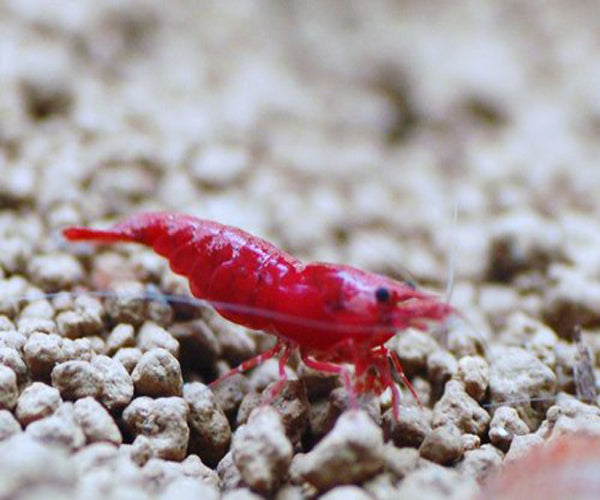
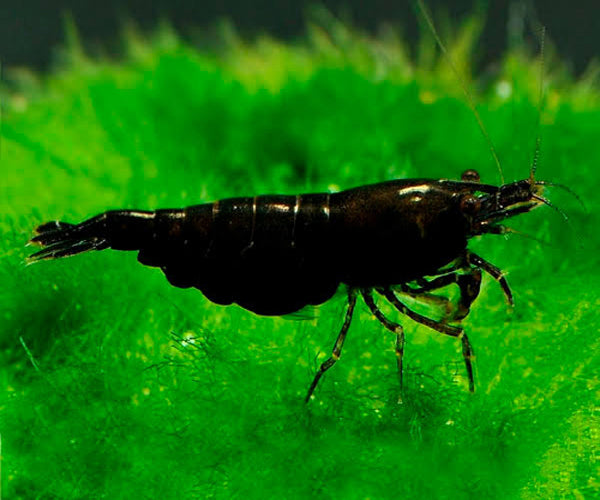
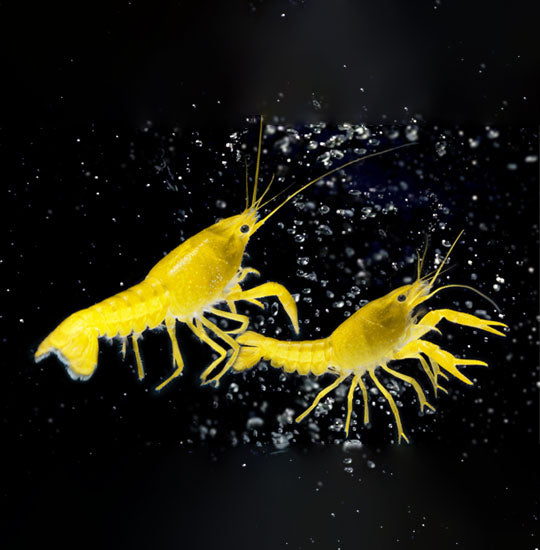
The Fire Red Shrimp is a colour strain of Neocaridina davidi, a small freshwater shrimp native to streams and ponds in Taiwan and southern China. Every colour form in the trade -- red cherry, yellow, black, blue, and many others -- is the same adaptable species, selectively bred over generations for stronger, more saturated colour; wild-type Neocaridina are a plain, unremarkable brownish colour, making the vivid red seen in this strain entirely a product of generations of targeted selective breeding rather than anything found in nature.
They are peaceful algae and biofilm grazers that spend their time picking over plant leaves, decor, and substrate, and breed readily in a stable, mature tank -- females carry visible clusters of eggs under their tail ("berried") and release fully-formed miniature shrimp rather than a larval stage, so a settled colony grows steadily on its own.
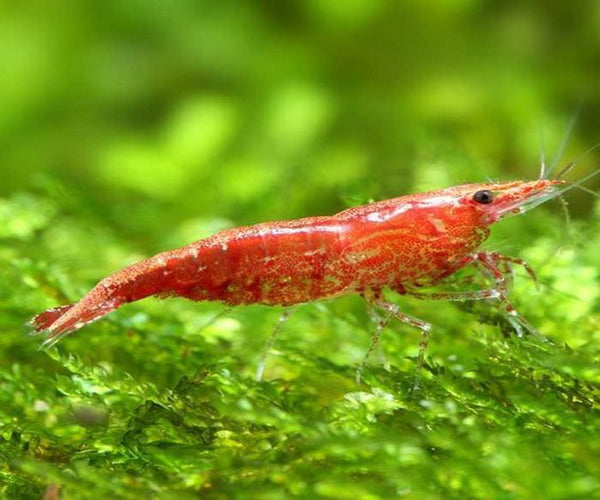
Fire Red sits a grade above standard Red Cherry Shrimp on the informal colour-intensity scale hobbyists use for red Neocaridina -- bred specifically for fuller, more opaque coverage with less of the translucent patchiness seen on lower grades. The scale generally runs from pale, mostly-clear "cherry" grade up through "sakura," "fire red," and finally the most solid, deepest "painted fire red" or "red rili" lines, with each step representing more selective breeding for solid, saturated colour across the entire body and legs, not just the back. Adult size stays small, typically 2–3cm at maturity, with females noticeably larger and rounder-bodied than males -- a useful way to sex a group at a glance once they've grown past the juvenile stage. Well-kept individuals typically live 1-2 years, with a healthy colony persisting well beyond that through continuous breeding.
Requirements
Neocaridina shrimp are one of the easiest invertebrates in the hobby once a few basics are covered.
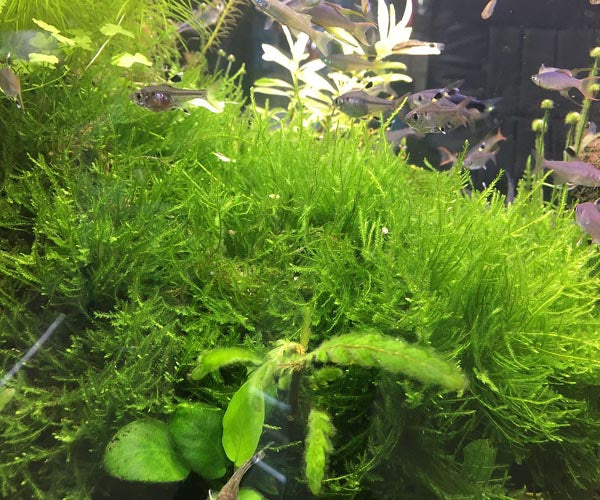
Tankmates matter more than usual: almost any fish large enough to fit a shrimp in its mouth will eat it, especially vulnerable newborn shrimp -- they do best in a species-only shrimp tank, or with only very small, peaceful fish (small tetras, otocinclus) and no larger predatory or semi-aggressive fish.
Stability over time: shrimp are more sensitive to sudden swings in water parameters than most fish, and are notably intolerant of ammonia/nitrite -- they belong in a fully cycled, mature tank, not a brand-new one.
Copper is lethal: many common fish medications and even some tap water sources contain trace copper, which is highly toxic to shrimp at levels that don't bother fish -- always check before medicating a tank that houses shrimp.
They graze on algae/biofilm continuously and appreciate a small supplemental feeding of shrimp-specific food or blanched vegetables a few times a week.
Maintaining grade over generations: if breeding rather than just keeping this strain, selectively removing the palest, least-coloured offspring from the breeding population over time (a practice called culling) is how breeders maintain or improve colour grade generation to generation -- left completely unmanaged, colour intensity in a mixed-grade colony tends to drift back toward the average rather than staying at the top grade.
Filtration: use a sponge filter or a fine mesh/sponge guard over any power filter intake -- standard intakes are strong enough to pull in and kill shrimp, especially newborns, and this is one of the most common preventable causes of colony losses.
Diet variety: alongside natural grazing, a rotation of shrimp-specific pellets, blanched vegetables (courgette, spinach), and occasional protein (a small piece of shrimp pellet or fish food) supports both general health and colour intensity better than relying on tank algae alone, especially in a newer or sparsely planted setup.
Compatibility
Water & Care Conditions
Neocaridina shrimp are adaptable, but breed most successfully and show the strongest colour within a real comfort range:
- pH: 6.5–8.0
- Hardness: moderately hard, roughly 6–20 dGH (some mineral content supports healthy moulting)
- Temperature: 20–26°C (68–79°F) -- notably, they do better long-term slightly cooler than a typical tropical community tank; sustained high heat shortens their lifespan and can suppress breeding
- Oxygenation: appreciates good oxygenation and gentle flow; avoid strong current that fights their small size
Stable, mature water matters far more for shrimp than for most fish -- resist the urge to add them to a newly set up or recently disrupted tank.
Acclimate new arrivals slowly -- a 45-60 minute drip acclimation is worth the extra time, since shrimp are considerably more sensitive to sudden shifts in pH, hardness, and temperature than most community fish, and rushed acclimation is a common cause of early losses.
Colour intensity itself is a genuine health indicator for this strain specifically: a Fire Red that suddenly looks paler or more translucent than usual, alongside reduced activity or appetite, is often showing an early water-quality problem rather than simply "losing colour" for no reason -- worth checking parameters over rather than dismissing, since colour loss usually shows well before more serious symptoms appear.
Weekly, modest water changes (10-15%, gentler than a typical fish-only tank) keep parameters stable without the shock of a larger change, which shrimp handle poorly. A dedicated shrimp tank with test kits for ammonia, nitrite, and GH/KH is worth the small extra investment for anyone planning to keep and breed this strain seriously rather than as an incidental addition to an existing fish tank alongside larger, more demanding species that require a different maintenance routine entirely.