


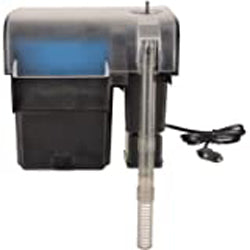
About & Function
A hang-on-back (HOB) filter clips onto the rim of the aquarium, with an intake tube dipping into the water and the filter body sitting outside the tank on the back edge. Water is drawn up, passed through the filter's media chamber, and returned to the tank as a steady flow over the rim — keeping the bulk of the filtration hardware out of the display area entirely.
The RS6000 sits in the middle-to-upper tier of the RS hang-on range, stepped up from the smaller RS1000/RS2000/RS3000 units toward tanks with more water volume or a heavier fish load. As with other hang-on filters, it typically combines mechanical filtration (a sponge or floss pad trapping debris and particles) with biological filtration (the media surface hosting beneficial bacteria that break down ammonia and nitrite).
Because almost the entire unit lives outside the tank, it's straightforward to lift out, open, and clean without disturbing decor, plants, or livestock — the main practical advantage of hang-on-back filtration over fully submerged internal filters.
Stepping up to the RS6000 from a smaller unit generally makes sense once a tank is either larger or more heavily stocked than the smaller models are rated for — more fish and more feeding means more waste to process, and biological filtration capacity scales with the amount of media surface area a filter carries, not just its flow rate. A filter that's undersized for its bioload will struggle to keep ammonia and nitrite at safe levels even if the water still looks visibly clear.
Chemical filtration is available too if the cartridge includes activated carbon: as water passes through it, dissolved organics, tannins, odors, and some discoloration are adsorbed onto the carbon's surface, keeping the water not just biologically safe but visually clear and neutral-smelling. This stage is optional and depletes over a few weeks, unlike the mechanical and biological stages which are ongoing as long as the media is present and healthy.
Requirements
The RS6000 runs on mains electricity and needs a nearby wall socket — as with any submerged/wet electrical appliance, it should be plugged in through a drip loop and ideally a residual-current (RCD/ELCB) protected socket.
It hangs directly on the tank's back or side rim, so an accessible open edge of suitable glass thickness is needed for the clip to sit securely; it isn't designed for fully enclosed rimless tanks without a proper lip. As a step up from the RS1000/2000/3000 models, its higher rated flow suits medium-sized tanks better than nano setups — oversizing flow for a small tank can create excessive current that stresses slow-swimming or fry fish, so match the unit to the tank rather than always choosing the biggest available.
On a new tank, run the filter for a day or two before adding fish to check for leaks and confirm steady flow, and remember that biological cycling — the beneficial bacteria colonising the media enough to safely process waste — takes several weeks regardless of how good the filter itself is.
Position it away from surface-dwelling fish that breathe partly from the surface (bettas, gouramis) if the return splash is strong, and consider a tank lid to contain splash and reduce evaporation from the constant surface agitation a filter this size produces.
As with the smaller units in the range, the media chamber should be loaded before first use and the intake tube primed with water so the motor starts drawing on power-up rather than running dry. Because the RS6000 moves noticeably more water than the entry-tier models, double-check the clip is seated firmly and level on the rim before filling — a unit under more flow-driven vibration is more likely to work itself loose over time than a smaller, gentler one.
Compatibility
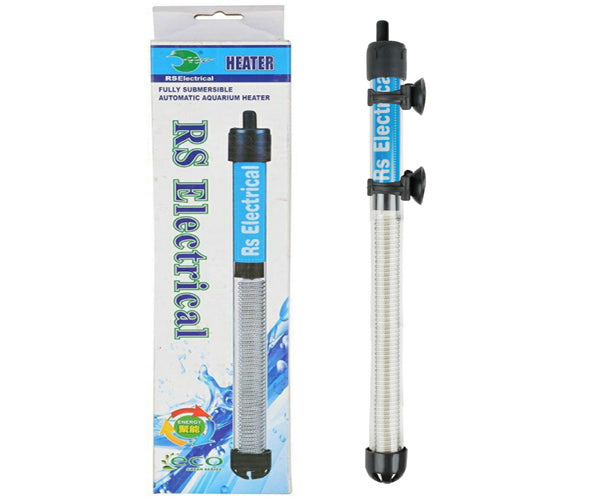
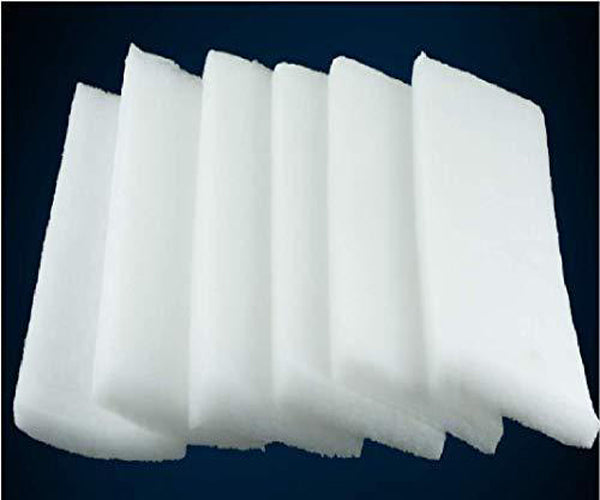

Specifications & Maintenance
Real-world specifications and upkeep:
- Power: mains electricity, output tier stepped up from the smaller RS1000/2000/3000 hang-on filters
- Suitable for: medium-sized freshwater or saltwater tanks with a moderate to fuller stocking level — check the exact rated litres/hour against your own tank's turnover needs
- Media/cartridge: rinse the sponge or floss pad in removed tank water (never tap water, which kills the beneficial bacteria) every 1–2 weeks, replacing worn media roughly every 4–6 weeks
- Impeller: check periodically for hair, debris, or snail shell fragments — the most common cause of reduced flow or a grinding/rattling noise
- Intake: use an intake guard or sponge pre-filter if keeping fry, shrimp, or small snails, since HOB intakes can otherwise draw them in
- Water level: keep the tank close to its normal level — a filter running with the intake partly exposed will lose flow and can run dry
- Noise: a steady quiet trickle from the return is normal; a sudden rattle or hum increase usually means the impeller needs clearing
- Priming: after a power cut or maintenance, flow may need re-priming rather than indicating a genuine fault
- Splash: a lid helps contain return splash and reduce evaporation from ongoing surface agitation
- Rim fit: confirm the clip sits securely and level on the tank's edge before filling, since a loose fit can allow the unit to shift or leak
- Staggered media changes: avoid replacing all the media at once if the cartridge combines mechanical, biological, and chemical portions in one piece — replacing everything together effectively resets the bacteria colony and can cause a small ammonia spike; rinse and reuse the biological portion where possible and swap only the chemical (carbon) portion on a regular schedule
- What to avoid: never clean media with hot tap water or soap/detergent — both kill the beneficial bacteria and can leave residue harmful to fish even after rinsing