Common Pleco Size: Why It Outgrows Most Tanks
Published: 2026-10-28 · FishyKart Blog
The fish sold as a common pleco is usually a sailfin or suckermouth armoured catfish of the genus Pterygoplichthys (sometimes Hypostomus), and its size is the one fact every buyer needs: a 3-inch baby can grow to 12-18 inches, sometimes over 20 inches, and live 10-15 years or more. That means a tank of 125 gallons at the very least, and ideally 150 gallons or more, for an adult. Most common plecos bought as algae eaters for small tanks end up stunted, sick or released.
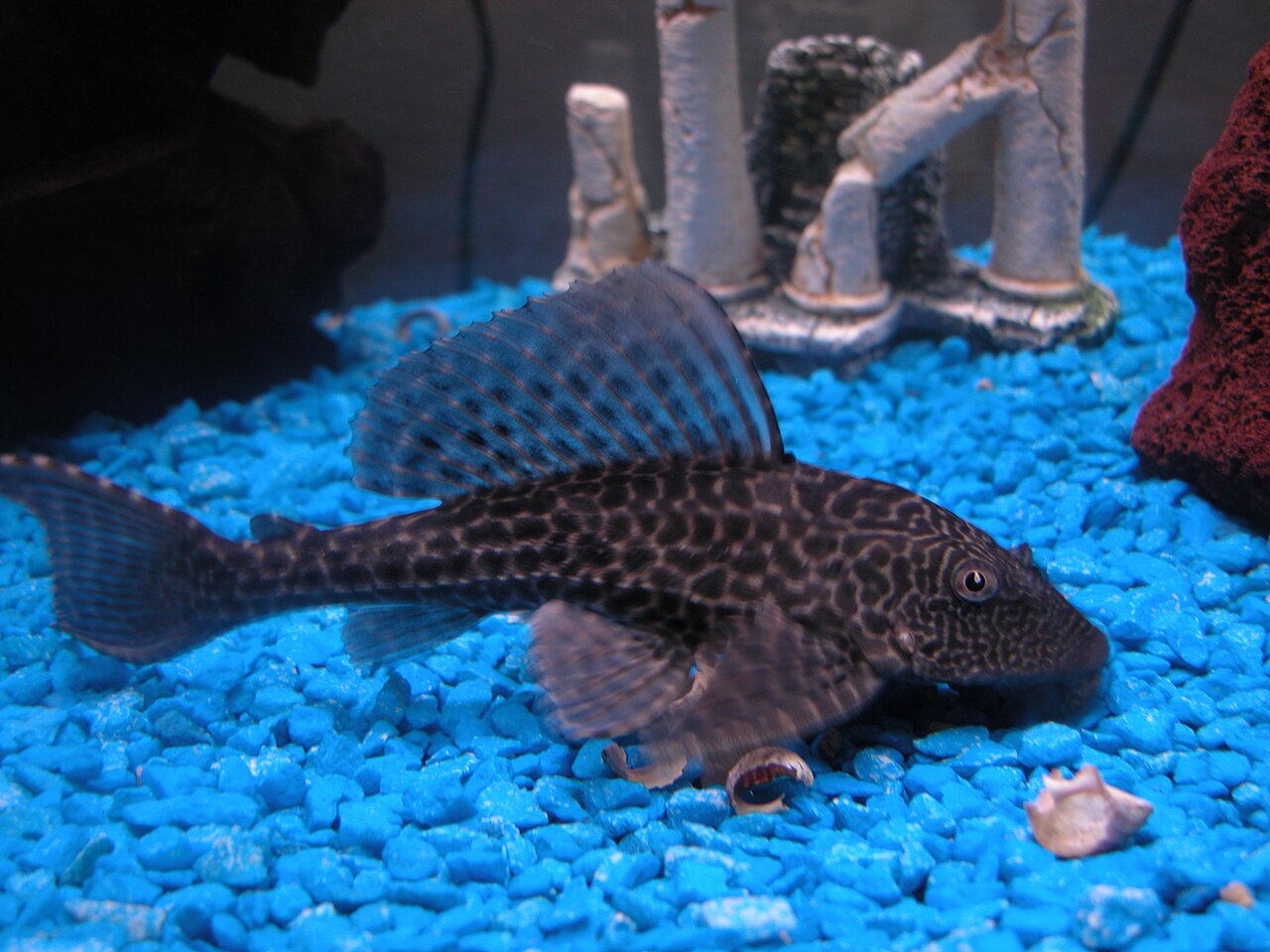
Photo: Ildar Sagdejev (Specious) - Wikimedia Commons, CC BY-SA 4.0
| Parameter | Value |
| Usual species | Pterygoplichthys spp. (sailfin plecos), sometimes Hypostomus |
| Origin | South America |
| Adult size | 12-18 in, can exceed 20 in |
| Lifespan | Often reported as 10-15+ years |
| Temperature | 72-82°F (22-28°C) |
| pH | 6.5-7.8 |
| Minimum tank | 125 gallons bare minimum; 150+ gallons recommended |
| Diet | Algae, wafers, vegetables, driftwood |
How Fast It Grows
A common pleco grows fastest in its first two years. Fed well in a large tank, a store-sized baby can pass 10 inches well before its third birthday. In a small tank it may grow slower, but that is stunting, not a smaller adult: the fish's organs keep growing while its body is restricted, which shortens its life.
Tank Size and Filtration
Size is only half of it. A big pleco produces a large amount of waste, so a tank of 125-150+ gallons also needs a strong filter, often a canister or sump, and regular large water changes. Give it a cave or a large piece of driftwood big enough to hide under, and secure heaters and decor, because an adult can push them around.
Diet
Common plecos graze algae but cannot live on it. Feed sinking algae wafers and vegetables such as zucchini, cucumber and peas, plus driftwood for fibre, and remove leftover food the next day. Larger adults may also take some protein such as bloodworms or shrimp pellets.
Common Pleco vs Smaller Alternatives
If you want an algae grazer for a normal community tank, a smaller species is the better buy:
- Bristlenose pleco: 4-5 inches, easy to keep and breed
- Otocinclus: 1.5-2 inches, for planted tanks, kept in groups
- Siamese algae eater: about 6 inches, for larger community tanks
Never Release a Pleco
Released sailfin plecos have established invasive populations in parts of the United States, including Florida (P. multiradiatus, P. disjunctivus) and Texas (P. anisitsi), where males dig burrows into banks and compete with native species. Releasing aquarium fish is illegal in many states. If a pleco outgrows your tank, contact local fish stores, aquarium societies or public aquariums to rehome it.
For tanks that can take a larger catfish, see our hi-fin plecos.