Neon Tetra — Complete Care Guide & Price in India
Published: 2026-04-10 · FishyKart Blog
The Neon Tetra (Paracheirodon innesi), also known as the neon fish or neon blue tetra, is a small freshwater schooling fish native to the blackwater streams of the western Amazon Basin in South America. It grows to 3–4 cm in length, lives for 5–8 years in a well-maintained aquarium, and requires a minimum 10-gallon (40-litre) tank, water temperature of 22–26°C, and pH of 6.0–7.0. In India, Neon Tetras are priced at ₹10–₹50 per fish depending on size and quality. They are one of the top five most popular aquarium fish in the world and an excellent choice for beginners.
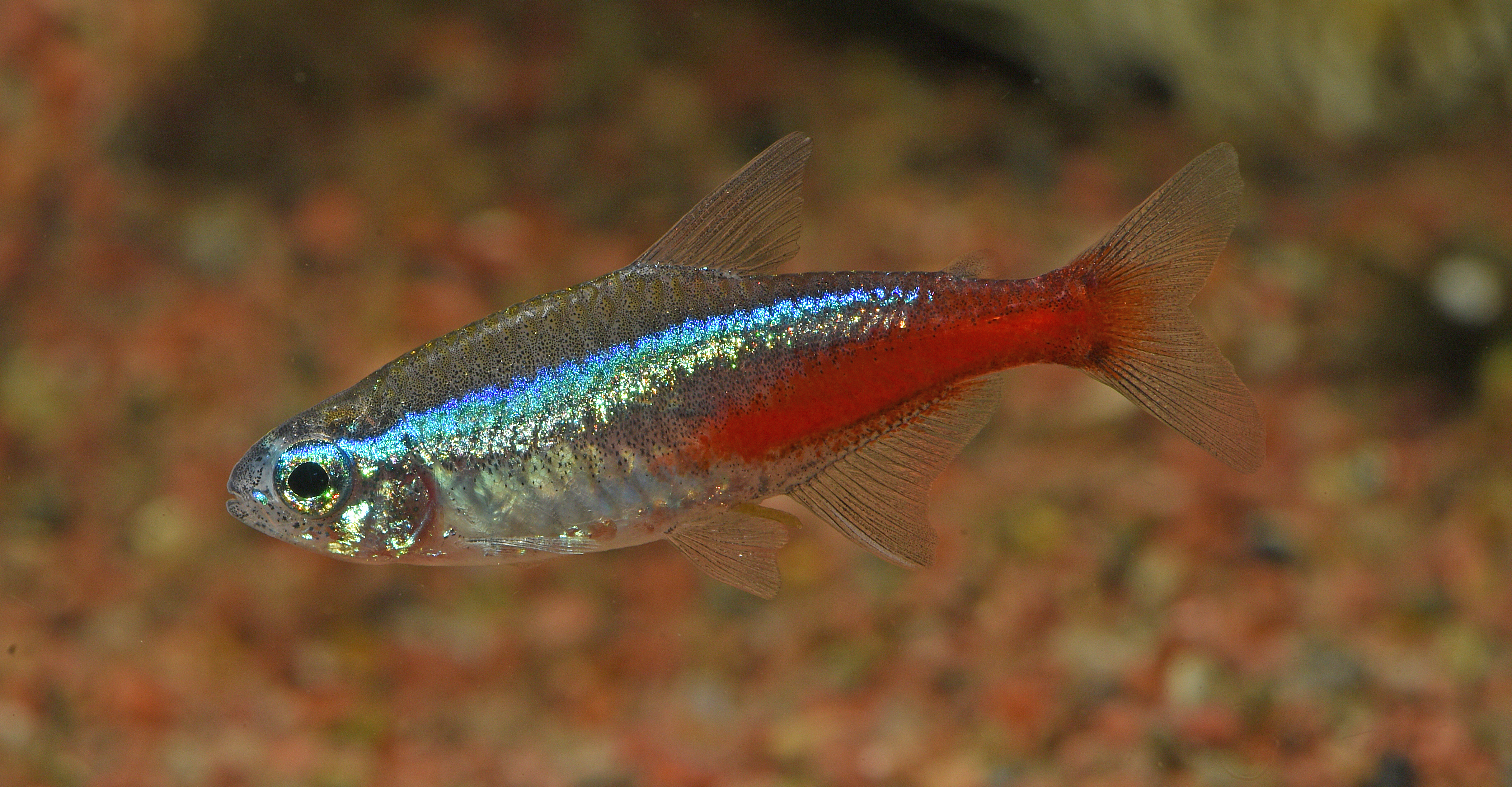
Quick Reference: Neon Tetra Care Parameters
| Parameter | Value |
|---|---|
| Scientific name | Paracheirodon innesi |
| Family | Characidae |
| Adult size | 3–4 cm (1.2–1.6 in) |
| Lifespan | 5–8 years |
| Minimum tank size | 10 gallons (40 litres) for 6 fish |
| Temperature | 22–26°C (72–79°F) |
| pH | 6.0–7.0 (ideal 6.5) |
| Water hardness | 2–10 dGH (soft to moderately hard) |
| School size | Minimum 6, ideally 10–15 |
| Price in India | ₹10–₹50 per fish |
| Difficulty | Beginner-friendly |
Tank Setup for Neon Tetras
Neon Tetras thrive in a heavily planted aquarium that mimics their natural Amazonian habitat. Use a dark substrate — fine black sand or dark gravel — which enhances the intensity of their iridescent blue stripe and red tail colouration. Dense planting with Vallisneria, Amazon sword, Ludwigia, and floating plants such as Salvinia provides cover and reduces stress. Neon Tetras are mid-water swimmers; leave open swimming space in the centre of the tank.
Water Parameters and Filtration
The ideal temperature range is 22–26°C — avoid temperatures above 28°C, which accelerates metabolism and shortens lifespan. pH should be maintained between 6.0 and 7.0; slightly acidic water at pH 6.5 is optimal. Use a gentle sponge filter or a hang-on-back filter with reduced flow — Neon Tetras come from slow-moving streams and strong currents cause chronic stress. Perform 20–25% water changes weekly. Ammonia and nitrite must always read 0 ppm; nitrate below 20 ppm.
Lighting Requirements
Moderate lighting suits Neon Tetras best. Bright, direct light washes out their colour and stresses the fish. Use a timer to maintain a consistent 10–12 hour light cycle. Floating plants naturally diffuse light and replicate the shaded canopy of Amazonian blackwater streams.

Feeding Neon Tetras
Neon Tetras are omnivores with a tiny mouth — they require micro-sized food. Their natural diet in the Amazon consists of small invertebrates, algae, and zooplankton. In the aquarium, feed 2–3 times per day in small amounts that are consumed within 2 minutes. Remove any uneaten food immediately to prevent ammonia spikes.
Best Foods for Neon Tetras
- Micro pellets — high-protein formula sized for small tetras (0.5–1 mm)
- Quality flake food — crushed finely between fingers before feeding
- Baby brine shrimp (live or frozen) — excellent protein source, triggers natural feeding behaviour
- Daphnia (water fleas) — live or frozen; aids digestion and colour enhancement
- Micro worms — ideal for very small juveniles
- Frozen bloodworms — occasional treat once or twice per week; do not overfeed
Neon Tetra Tankmates
Neon Tetras are peaceful schooling fish that coexist well with other small, non-aggressive species. They are not suitable for tanks with large cichlids, aggressive barbs, or any fish large enough to fit them in its mouth.
Compatible Tankmates
- Fancy Tail Guppies — peaceful, similar size and water requirements
- Cardinal Tetras (Paracheirodon axelrodi) — nearly identical care needs; look stunning together
- Harlequin Rasboras — share same mid-water swimming zone, peaceful
- Corydoras Catfish — bottom-dwelling cleaners, gentle and compatible
- Otocinclus Catfish — algae-eating, small, non-aggressive
- Ember Tetras — similarly sized, peaceful, striking orange contrast
- Dwarf Gouramis — upper-level swimmers, generally peaceful if not overcrowded
Fish to Avoid
- Oscar Fish — predatory, will eat Neon Tetras immediately
- Tiger Barbs — fin nippers, will stress and injure Neon Tetras
- Angelfish — often eat Neon Tetras once adult-sized
- Cichlids (most species) — too aggressive for peaceful tetras
- Betta Fish — unpredictable; some bettas are tolerant, others will shred fins

Neon Tetra Varieties and Similar Species
Cardinal Tetra vs Neon Tetra
The Cardinal Tetra (Paracheirodon axelrodi) is the most commonly confused species. The key difference: in Neon Tetras, the red colouration covers only the rear half of the body; in Cardinal Tetras, the red stripe extends the full length from nose to tail. Cardinal Tetras also prefer slightly warmer water (25–29°C) and are slightly more demanding in terms of water quality.
Green Neon Tetra
The Green Neon Tetra (Paracheirodon simulans) is the third member of the genus. It is smaller (2.5 cm), has a less prominent red band, and requires more acidic water (pH 5.5–6.5). It is less commonly available in Indian fish stores compared to the standard Neon Tetra.
Albino and Long-Fin Varieties
Captive-bred Albino Neon Tetras and Long-Fin Neon Tetras are available from specialist breeders. Albino variants lack the iridescent blue stripe and show a translucent body with red colouration only. Long-Fin varieties have extended finnage and are more delicate — avoid housing them with fin-nipping species.
Breeding Neon Tetras
Neon Tetras are egg scatterers that breed in soft, very slightly acidic water. Breeding in a community tank is rarely successful — a dedicated breeding tank of 5–10 gallons is required. Condition the breeding pair with high-protein live foods for 1–2 weeks before introducing them to the breeding tank.
Breeding Tank Setup
- Tank size: 5–10 gallons (20–40 litres)
- Water temperature: 24–26°C
- pH: 5.5–6.5 (use RO water mixed with tap water, or peat filtration)
- Hardness: below 4 dGH (very soft)
- Lighting: very dim or darkness during spawning — cover the tank with dark paper
- Substrate: fine-mesh spawning mop or Java moss to catch eggs
- No adult fish other than the breeding pair
Spawning and Fry Care
Spawning typically occurs in the early morning after a period of darkness. The female scatters 100–200 eggs among plants or the spawning mop; the male fertilises them simultaneously. Remove the adults immediately after spawning — they will eat the eggs. Eggs hatch in 24 hours; fry are free-swimming after 3–4 days. Feed infusoria or commercial fry food for the first week, then transition to baby brine shrimp nauplii.

Common Diseases and Health Issues
Neon Tetra Disease (NTD)
The most serious and species-specific illness is Neon Tetra Disease, caused by the microsporidian parasite Pleistophora hyphessobryconis. Symptoms include loss of colour (the blue stripe fades and becomes patchy), body cysts, curved spine, and bloating. There is no cure — infected fish must be humanely euthanised and removed immediately to prevent spread. Prevention: always quarantine new fish for 2–4 weeks before adding to the main tank, and never feed live tubifex worms (a known vector).
Ich (White Spot Disease)
Ichthyophthirius multifiliis presents as white spots the size of salt grains across the body and fins. Treat with a commercial ich treatment or slowly raise the temperature to 28°C (do not exceed this) combined with aquarium salt at 1 tablespoon per 5 gallons. Remove carbon from the filter during treatment.
Fin Rot
Bacterial fin rot appears as ragged, disintegrating fin edges, often with a white border. Caused by poor water quality (high ammonia or nitrite). Perform an immediate 30–40% water change, identify and fix the root cause, and treat with a broad-spectrum antibiotic medication if erosion is severe.
Neon Tetra Price in India
Neon Tetras are widely available across India in local fish markets, pet shops, and online fish stores. Pricing varies by size and source:
- Juvenile (1–2 cm): ₹10–₹20 per fish
- Sub-adult (2–3 cm): ₹20–₹35 per fish
- Adult (3–4 cm): ₹35–₹50 per fish
- Long-Fin or Albino varieties: ₹80–₹150 per fish
Buying in groups of 10 or more from a reputable online source like FishyKart typically offers better pricing and ensures healthier, disease-free stock compared to local street markets.

