Tetra's & Rasbora's
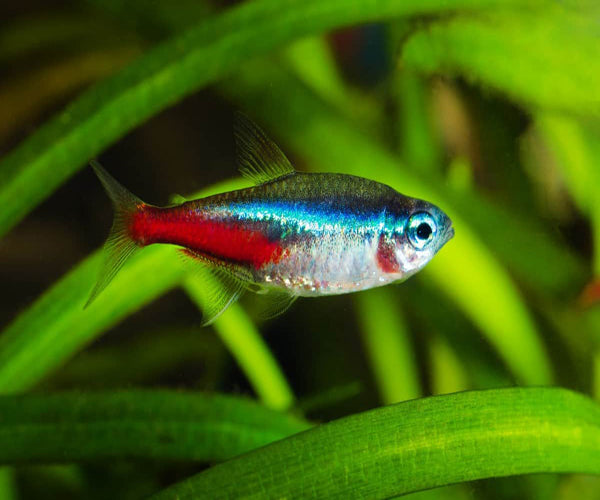
Tetra Fish — Care Guide & Buy Online
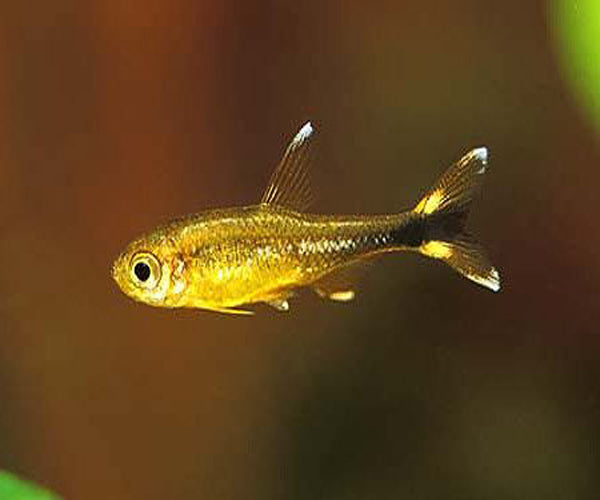
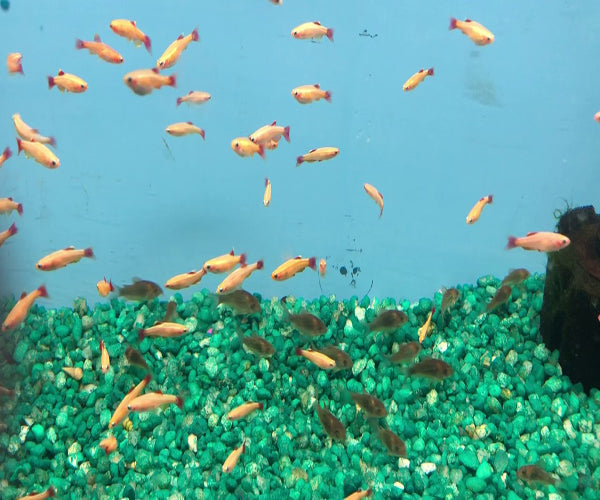
Tetras are small schooling freshwater fish belonging primarily to the family Characidae, native to the rivers and streams of South America and Africa. They are the most popular community tank fish globally due to their peaceful temperament, vivid colouration, and ease of care. Tetras must be kept in groups of 6 or more of the same species — solitary or small-group keeping causes chronic stress, colour fading, and immune suppression. A minimum 20-gallon (75-litre) planted tank with soft, slightly acidic water replicates their natural habitat and brings out maximum colouration. FishyKart stocks Neon Tetra, Cardinal Tetra, Black Skirt Tetra, Ember Tetra, and more — delivered live across India.
Popular Tetra Species
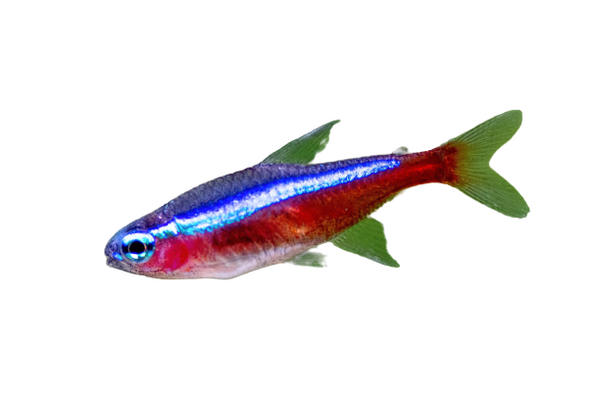
- Neon Tetra (Paracheirodon innesi): The most widely kept freshwater fish in the world. Reaches 3–4 cm; characterised by an iridescent blue horizontal stripe from nose to adipose fin and a red stripe covering the lower half of the body from mid-section to tail. Requires groups of 8+ for natural schooling behaviour. Temperature 20–26 °C, pH 5.5–7.0, TDS 50–150. Sensitive to ammonia and nitrite — must be added only to a fully cycled tank. Lifespan: 5–10 years in optimal conditions.
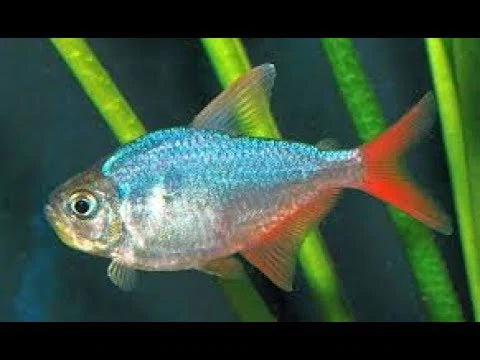
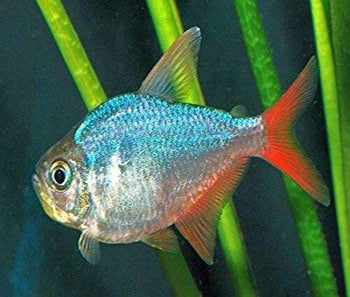
- Cardinal Tetra (Paracheirodon axelrodi): Closely related to the Neon Tetra but larger (up to 5 cm) and more vivid — the red stripe extends the full length of the body rather than just the rear half. Requires softer, more acidic water than Neon Tetra (pH 4.5–6.5, TDS 30–100) and is slightly more demanding. The definitive tetra for a South American biotope aquarium alongside Discus and Angelfish. Temperature 24–29 °C.
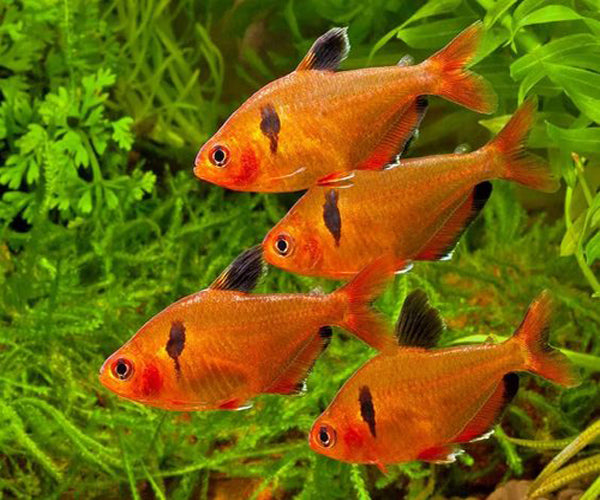
- Black Skirt Tetra (Gymnocorymbus ternetzi): A larger, hardier tetra reaching 6 cm with distinctive black vertical bands and flowing black anal and dorsal fins. More tolerant of a wider pH range (6.0–7.5) and temperature range (20–26 °C). Known to nip the fins of slow-moving long-finned fish (Betta, Angelfish, Guppy) — avoid mixing with such species. Available in long-fin and albino variants.
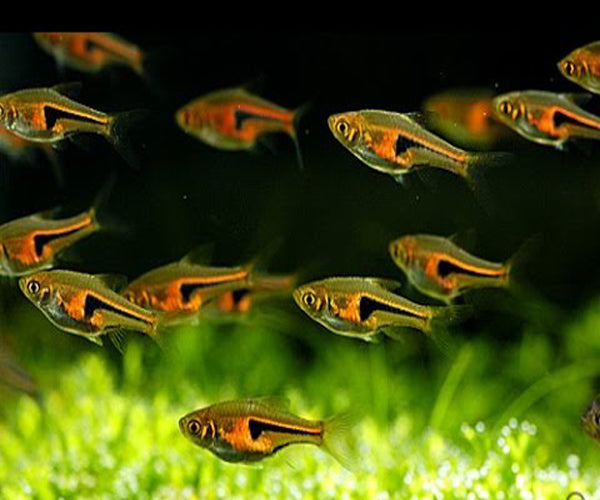
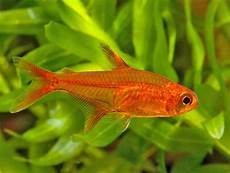
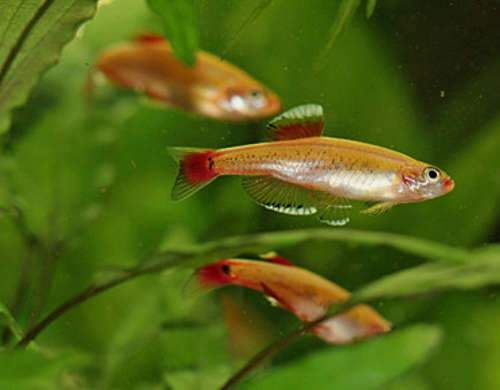
- Ember Tetra (Hyphessobrycon amandae): A nano tetra reaching only 2 cm, displaying brilliant orange-red colouration that intensifies under warm-spectrum LED lighting. Ideal for planted nano tanks of 20 litres+. Peaceful with all tank mates including shrimps and small rasboras. Temperature 23–29 °C, pH 5.5–7.0. One of the best choices for a small fish tank.
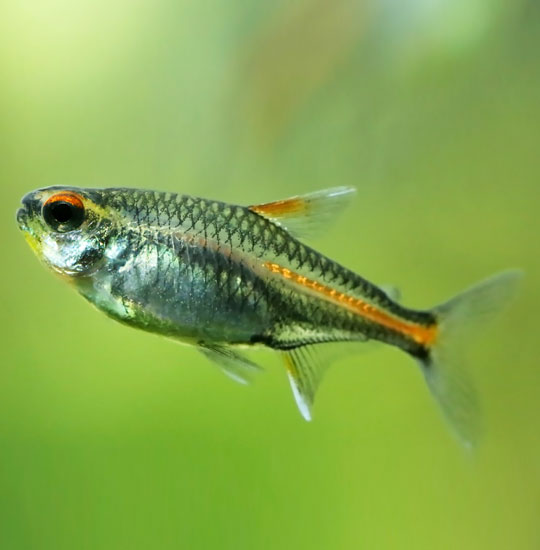
- Black Neon Tetra (Hyphessobrycon herbertaxelrodi): Slender tetra reaching 3–4 cm with a striking black horizontal band topped by a thin iridescent white-green stripe. Hardy and adaptable (pH 5.5–7.5, temperature 22–28 °C). An excellent alternative to Neon Tetra for harder water conditions.
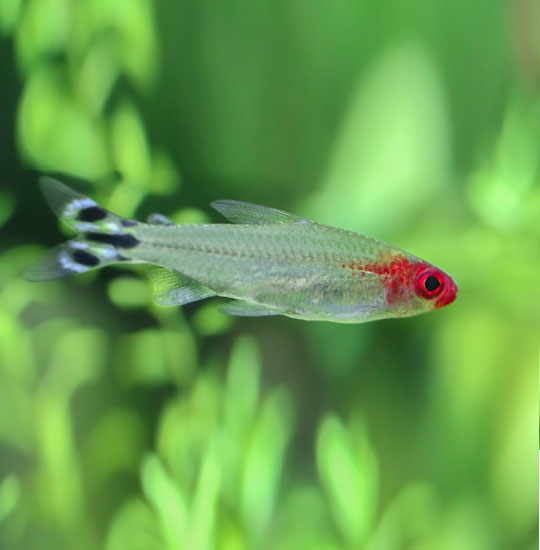
- Rummy Nose Tetra (Hemigrammus rhodostomus): Instantly recognisable by its vivid red nose and black-and-white striped tail. A sensitive species that requires pristine water quality — the red colouration fades noticeably when nitrates exceed 20 ppm, making it a useful water quality indicator fish. Temperature 24–28 °C, pH 5.5–7.0.
Tank Requirements
Most tetras originate from blackwater rivers (Rio Negro, Amazon tributaries) characterised by soft, acidic water stained brown with tannins from decaying leaf litter. Replicating these conditions maximises colour and breeding behaviour.
- Tank size: 75 litres (20 US gallons) minimum for a school of 8–10 small tetras; 150+ litres for mixed tetra communities
- Temperature: 22–28 °C depending on species — Cardinal and Ember Tetras prefer the warmer end
- pH: 5.5–7.0 for most species; Black Skirt Tetra tolerates up to 7.5
- Hardness: 1–12 dGH (soft to moderately hard) — avoid hard alkaline water common in some Indian cities without pre-treatment
- Filtration: Sponge filter or low-flow HOB; tetras are small and can be sucked into powerful intakes — use a pre-filter sponge
- Substrate: Dark sand or fine gravel — tetras display more vivid colouration against dark substrates
- Plants: Dense background planting (Amazon Sword, Vallisneria, Cryptocoryne); floating plants to diffuse light; open swimming space in the foreground
- Lighting: Subdued or warm-spectrum LED; strong direct light causes colour fading and increases stress in sensitive species
Feeding
Tetras are omnivores with a strong insectivore bias in the wild, consuming microinsects, zooplankton, and small crustaceans. Their small mouths require appropriately sized food particles.
- Staple: High-quality micro pellet or fine tropical flake — Sera Micro Granules, Hikari Micro Wafers — twice daily
- Supplements (3×/week): Baby brine shrimp (fresh or frozen), micro bloodworms, daphnia, cyclops — all sized for small mouths
- Colour enhancement: Foods containing astaxanthin and beta-carotene intensify red pigmentation in Neon, Cardinal, and Ember Tetras
- Quantity: Only what fish consume in 2 minutes; uneaten food in small tanks causes rapid ammonia spikes
Best Tank Mates
Tetras are peaceful community fish compatible with most non-aggressive species of similar size. The key rule: no fin-nippers with long-finned fish, and no large predators that can swallow a 3 cm tetra whole.
- Ideal companions: Corydoras catfish (Corydoras sterbai, C. panda), Dwarf Gouramis (Trichogaster lalius), small Rasboras (Trigonostigma heteromorpha), Cherry Shrimp, Otocinclus catfish, Pencilfish (Nannostomus sp.)
- Compatible cichlids: Angelfish (with caution — will eat Neon Tetras once large enough), Apistogramma dwarf cichlids in larger tanks
- Avoid: Tiger Barbs (fin nippers), Oscar fish, Flowerhorn, large aggressive cichlids, Goldfish (different temperature requirements)
Why Buy from FishyKart?
FishyKart sources tetras from specialist breeders and importers to ensure healthy, parasite-free fish. Neon Tetras, Cardinal Tetras, and Ember Tetras are among our top-selling species, available year-round. We recommend purchasing a school of 10+ for natural schooling behaviour — contact us for group discounts. All tetras are quarantined before dispatch and shipped in oxygen-sealed bags with a live arrival guarantee across India.