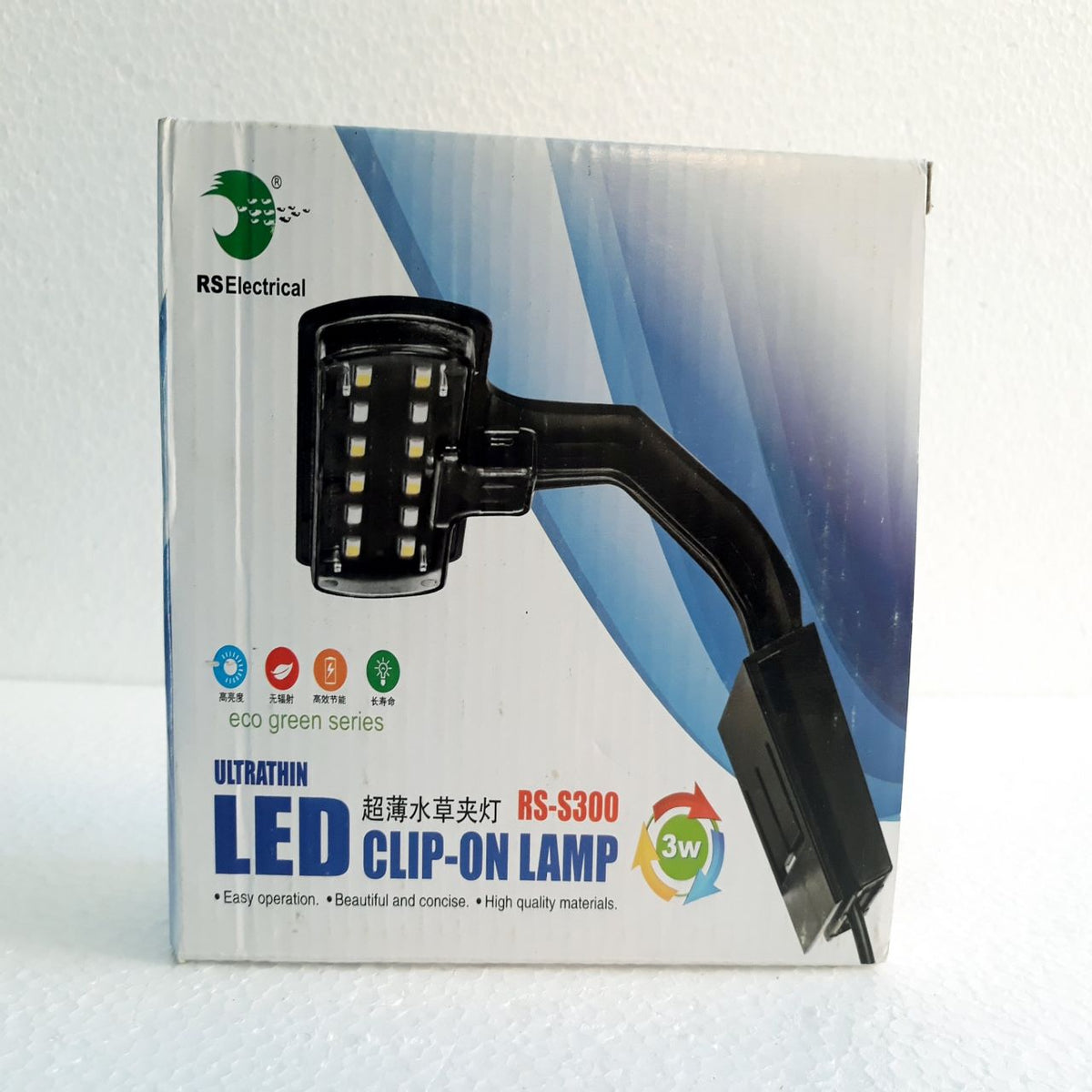
About This Product
The RS300 is a clip-on aquarium light -- a compact LED fixture that mounts directly onto the tank's rim or glass edge with a spring clip, rather than sitting inside a full hood or resting across the top like a standard light bar. This style is popular for nano tanks, bowls, open-top tanks without a lid, and rimless or unconventional tank shapes where a full-width light fixture doesn't fit or isn't wanted.
Beyond making the tank actually viewable (colours, fish behaviour, and plant detail are all much harder to appreciate in a dim tank), a light like this matters directly if there are any live plants in the setup -- light is the energy source plants use for photosynthesis, and even undemanding species need a real daily light period to grow rather than decline.
Being clip-mounted rather than integrated into a hood also makes it easy to reposition, angle, or move between tanks, which is a practical advantage for anyone running more than one small setup.
LED technology (which the RS300 uses, in line with most modern aquarium lights) runs considerably cooler and more energy-efficiently than older fluorescent or incandescent aquarium lighting, and typically lasts many thousands of hours before the LEDs themselves noticeably dim.
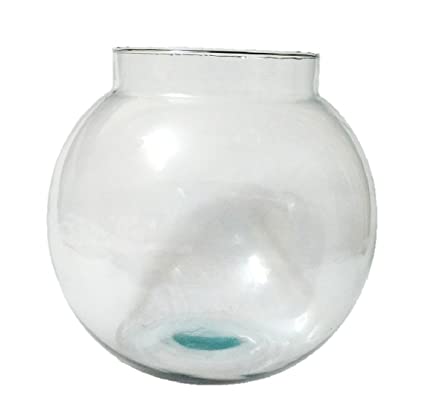
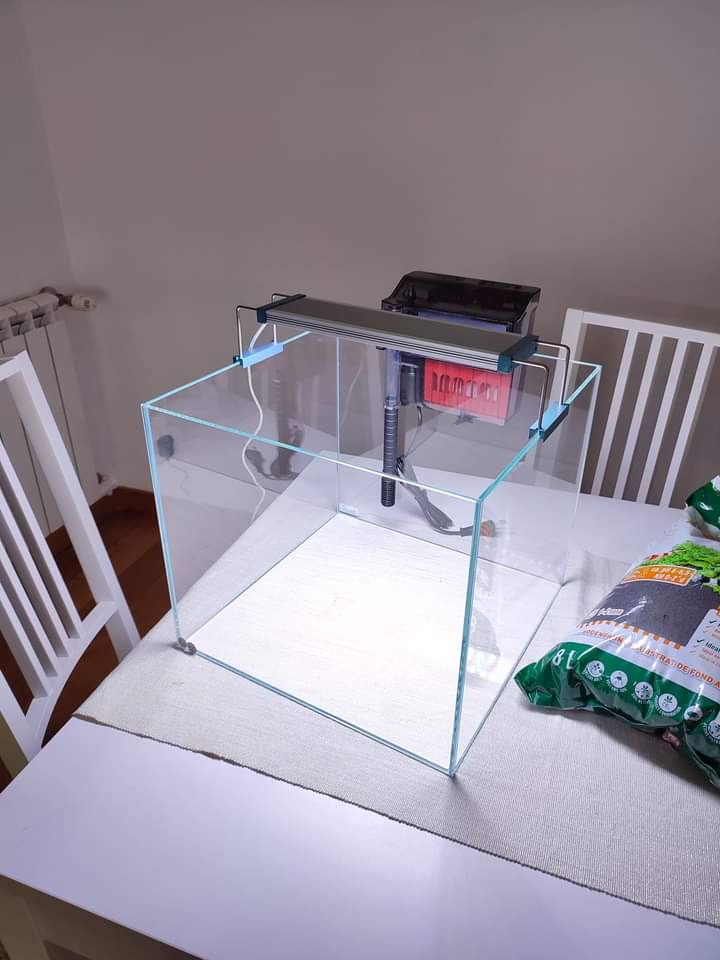
The clip-on form factor also solves a specific problem full hoods and rigid light bars can't: it works on tanks that don't have a standard rectangular rim to rest a fixture across, including bowls, cylindrical tanks, and rimless glass builds where a conventional light simply has nothing to sit on. The spring-loaded clip mechanism is designed to grip a range of glass/rim thicknesses within its rated limit, giving one fixture flexibility across several different tank shapes rather than being tied to one specific hood cutout.
Most fixtures in this class use a mix of white and blue LEDs (sometimes with a small proportion of red) tuned to look bright and natural to the human eye while still providing usable light for plant photosynthesis -- not a specialist high-PAR grow light for demanding aquascapes, but perfectly serviceable for low-to-moderate light plants, casual viewing, and general tank illumination.
Requirements
The RS300 runs on standard mains power via its adapter and needs an accessible outlet near the tank; a drip loop on the cable (a small downward dip before the plug) is good practice near any water. The spring clip needs a rim or glass edge of a compatible thickness to mount securely -- worth checking against the tank before purchase if the tank has an unusually thick or thin rim.
Light coverage from a single clip-on fixture is naturally more concentrated/directional than a full-width hood light, so it suits smaller footprints (nano tanks and bowls) better than it would evenly cover a long, wide tank -- for a larger tank, more than one unit or a full-length fixture would give more even coverage.
Aim for roughly 8-10 hours of light per day for general viewing, or more precisely-timed hours if live plants are present, since irregular lighting schedules tend to encourage algae rather than healthy plant growth. A simple plug-in timer makes this consistent with no daily effort.
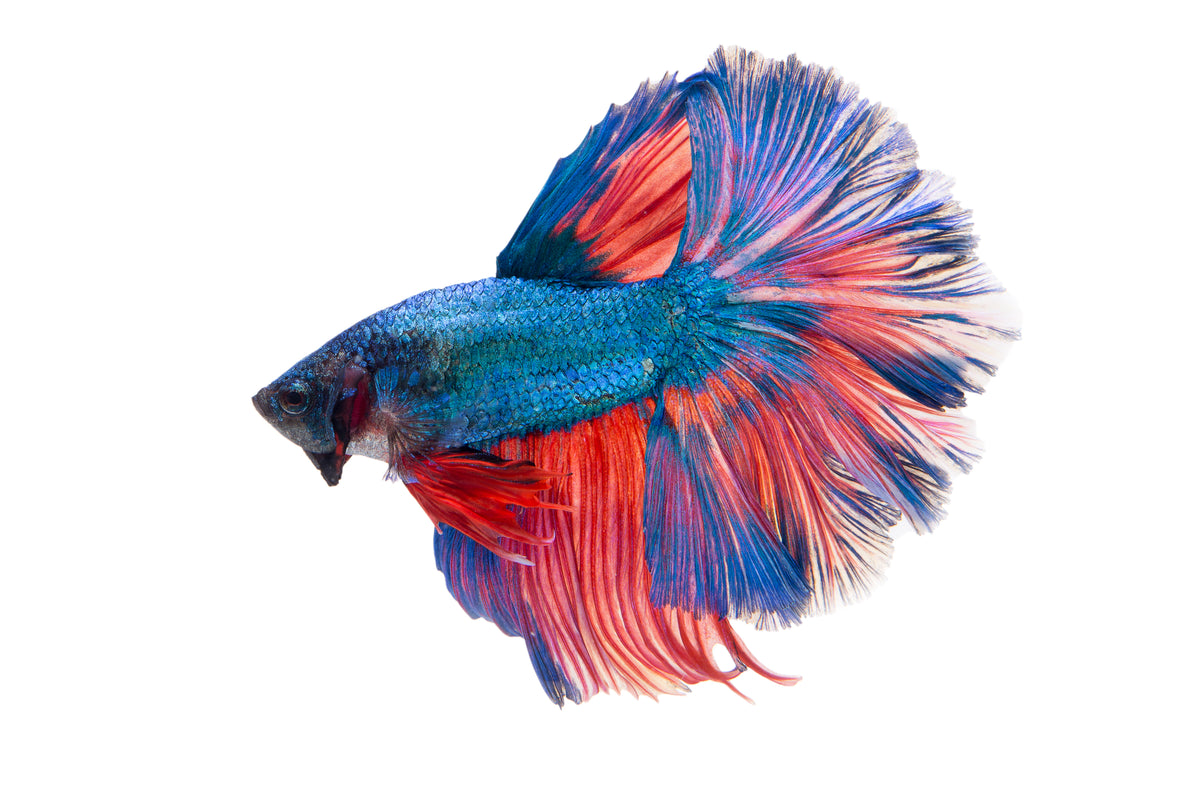
Because it clips onto the rim rather than sealing the tank top, an open-top setup with this light still needs separate consideration for jumping-prone fish (like many bettas) -- a mesh cover or partial lid alongside the light is worth adding for species known to leap.
Positioning matters for even illumination: mounted too close to the water's surface, the light pool can look concentrated in one corner with darker edges elsewhere in the tank; angling the head and mounting it slightly further back or higher (within the clip's adjustable range) generally spreads the light more evenly across a small footprint. Keep the electrical housing and cable connections clear of direct water contact -- splashes from filter outflow or an active fish are the main real-world risk for a fixture mounted this close to the waterline.
If the goal is genuinely healthy plant growth rather than just visibility, pair the light with a consistent daily schedule from day one rather than leaving it on erratically -- inconsistent lighting is one of the most common triggers for nuisance algae blooms in an otherwise healthy small tank.
Compatibility
Specifications & Maintenance
- Power: mains electricity via AC adapter, standard plug-in operation
- Mounting: spring clip attaches to tank rim/glass edge -- check thickness compatibility before purchase for unusual tank shapes
- Coverage: best suited to nano tanks and bowls; larger/longer tanks may need more than one unit for even coverage
- Cleaning: wipe the housing and lens with a dry or lightly damp cloth periodically to remove dust and any water splash residue; keep the electrical housing itself dry
- Lighting schedule: 8-10 hours/day is a solid default; a plug-in timer keeps this consistent, which matters more than total intensity for avoiding algae issues
- LED lifespan: LED fixtures of this type typically run for many thousands of hours before noticeable dimming, needing far less frequent replacement than older bulb-based lights
- Jumping-prone fish: pair with a mesh cover or partial lid if housing species known to leap, since a clip light alone doesn't seal the tank top
- Positioning: adjust the clip's angle and height to spread light more evenly across a small footprint rather than leaving it pooled in one corner
- Water safety: keep the housing, cable, and adapter away from splashes and direct contact with tank water at all times
- Timer use: a basic mechanical or digital plug-in timer removes the daily manual step and keeps the light cycle consistent even when away from home
- Replacement outlook: if the fixture ever fails, it's almost always the driver/adapter rather than the LEDs themselves at this stage of the technology's lifespan -- worth checking the adapter/connection before assuming the whole unit needs replacing
- Multi-tank use: the clip mount makes it easy to move the light between a quarantine tank, a small breeding setup, and the main display as needed, rather than being a permanent fixture on one tank