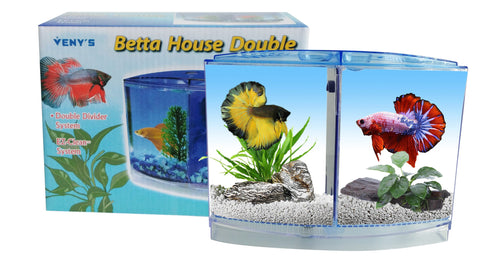
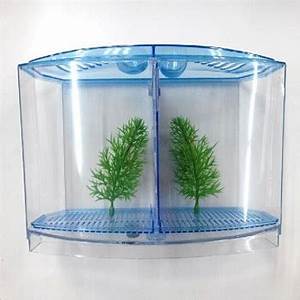
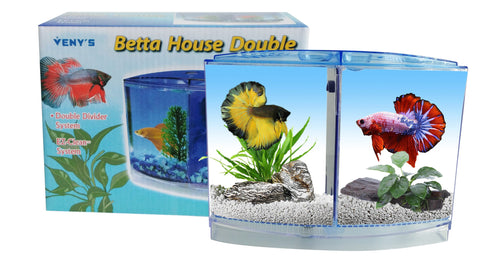
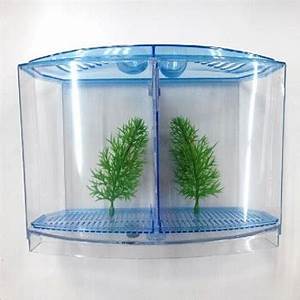
easy to clean and maintain
perfect viewing
best for two bettas with divider
Material : Plastic
About & Origin
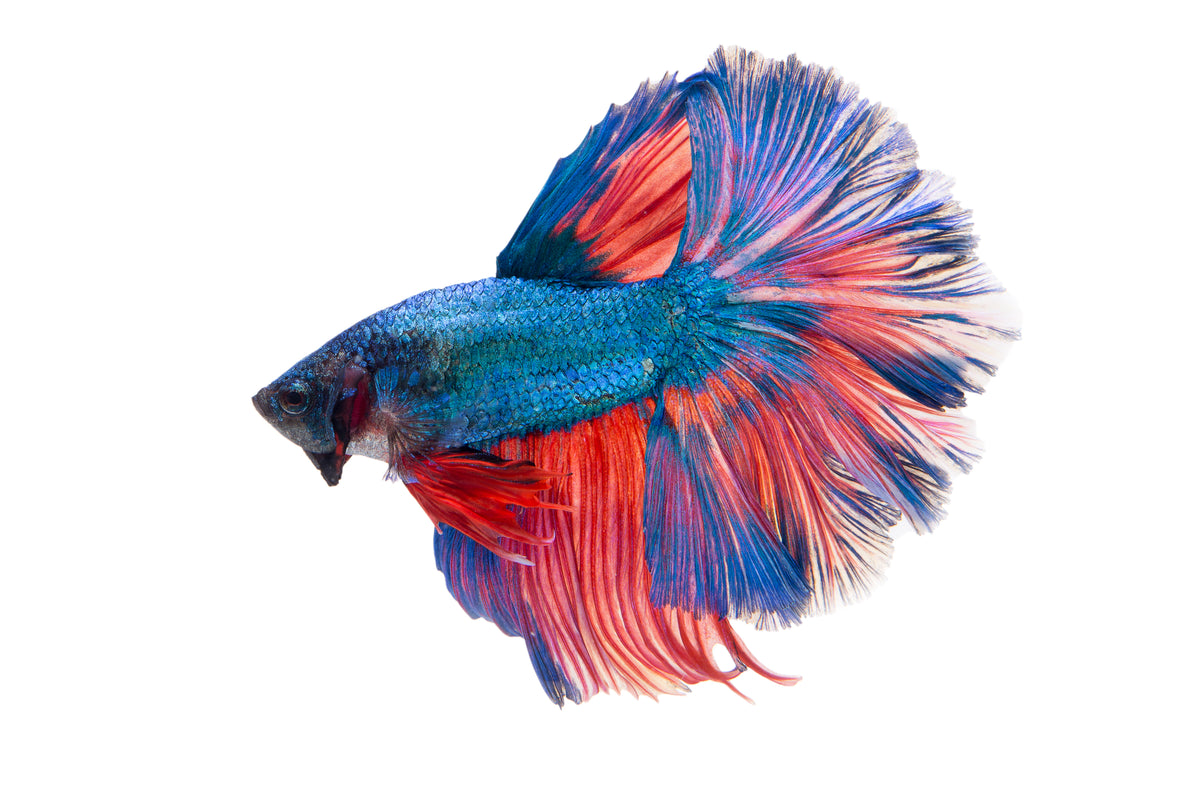
The Taiyo Betta Dual House is a small, purpose-built double tank designed to house two betta fish side by side, visually separated by a divider, in a single compact unit -- essentially two small enclosures in one box, sold as "double n box" packaging.
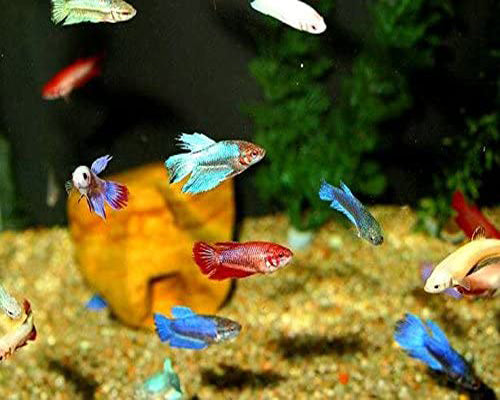
This product exists because of a very specific, important fact about bettas: male bettas (and often females too) are aggressive toward their own kind and cannot be kept together in shared, undivided water without serious risk of fighting and injury. A dual house like this lets a keeper display two bettas near each other -- which can even provide some visual enrichment, since bettas often flare and display at a rival seen through a divider or glass -- without ever letting them physically share water or make contact.
Products like this are popular in the betta-keeping hobby specifically because bettas are commonly sold and kept individually (unlike most schooling community fish), and a dual house is a space-efficient way to keep two on a single shelf or desk footprint rather than running two entirely separate tanks.
Given the low price point and compact "box" format, this is a small-format product aimed at simple betta housing rather than a planted or community setup.
Taiyo is a brand that appears elsewhere in this catalogue on other small aquarium/betta-keeping products, generally positioned at an accessible, entry-level price point -- consistent with this product's low cost and simple, functional "box" packaging aimed at straightforward betta housing rather than an aquascaped display.
Requirements
Each side of a dual house like this is necessarily small -- typically only a few litres per compartment, which is broadly in line with how bettas are commonly (if minimally) housed in the hobby, though more generous housing per betta is always better for their wellbeing where space allows.
CRITICAL: the divider between the two compartments must be secure and intact at all times. If it fails or has gaps a betta can squeeze through, the two fish will very likely fight, since this is exactly the scenario the divider exists to prevent. Check it regularly.
No power is required for the housing itself, but a small compartment this size will still benefit from a tiny filter or at minimum frequent water changes, since a few litres of undisturbed water fouls quickly with fish waste. A small heater may be needed per side if your room runs cool, since bettas are tropical fish -- check whether this product includes any heating element or if that needs to be sourced separately.
Keep it out of direct sunlight and somewhere stable, since a small volume of water changes temperature quickly with any nearby draught or heat source.
Because each compartment is small, water quality can deteriorate faster than a keeper used to larger tanks might expect -- keep a closer eye on the water's clarity and smell than you would with a full-size aquarium, and treat any cloudiness or odour as a sign to do an immediate water change rather than waiting for the next scheduled one.
Compatibility


Setup & Maintenance
Because each compartment in a dual betta house is small, maintenance needs to be more frequent than in a larger tank:
- Water changes: small volumes foul fast -- plan on partial water changes several times a week rather than the weekly schedule that suits a larger tank
- Temperature: bettas are tropical fish and do best around 24-27°C; a small volume of water swings temperature quickly, so keep it away from cold draughts and direct sun alike
- Divider checks: inspect regularly for any gap, crack, or looseness that would let the two bettas make contact
- Water quality: without much dilution volume, ammonia from waste and uneaten food builds up fast -- don't overfeed, and remove any uneaten food promptly
- Cleaning: a full or near-full water change with a gentle wipe-down of each compartment is often more practical at this scale than trying to run a full nitrogen cycle in such a small volume
- Betta selection: if buying two bettas for this house, males are the more commonly kept solo species -- confirm what you're buying, since two males either side of even a solid divider can still stress each other by constant visual sparring, which is worth being aware of even though it doesn't lead to physical injury
- Enrichment: a little floating plant cover or a small ornament per side gives each betta somewhere to retreat from the sight of its neighbour if it seems stressed by the constant visual contact
- Water source: always use dechlorinated water (tap water conditioner) for both top-ups and full changes -- chlorine/chloramine in untreated tap water is harmful to fish, and matters even more in such a small volume
- Observation: check on both bettas daily -- in such a small, closely monitored setup, changes in behaviour, colour, or fin condition are usually noticed (and treatable) early
A dual house like this works well as compact housing for two bettas kept safely apart, provided the smaller volume is managed with more frequent attention than a full-size tank needs.