Rainbows & Gouramis
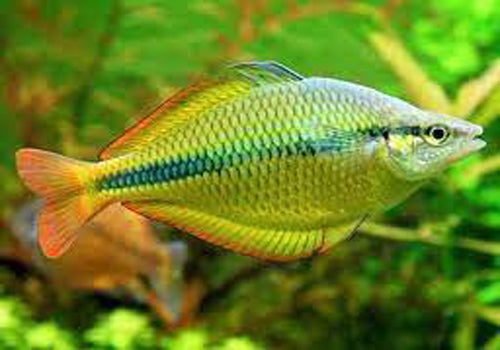
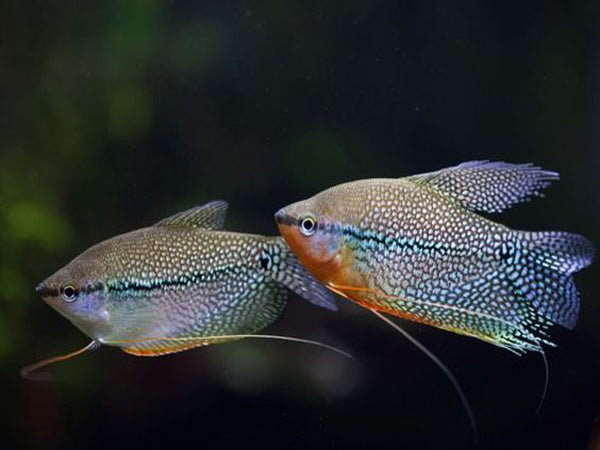
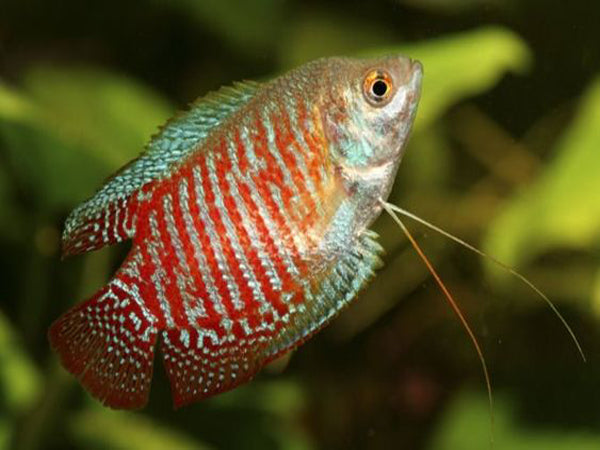
Rainbowfish & Gouramis — Care Guide & Buy Online
Rainbowfish (family Melanotaeniidae, native to Australia and New Guinea) and Gouramis (family Osphronemidae, native to South and Southeast Asia) are two of the most visually striking groups of peaceful community fish available to aquarium hobbyists. Rainbowfish are active, schooling fish that display their full colour only in large groups (8+) in well-lit planted tanks — males intensify in colour during spawning displays. Gouramis are labyrinth fish (like Bettas) that breathe atmospheric air via a labyrinth organ, making them tolerant of lower oxygen levels. Both groups thrive in a 30-gallon (115-litre) planted community tank at 24–28 °C, pH 6.5–7.5, and are compatible with Tetras, Corydoras, Rasboras, and Livebearers. FishyKart delivers live Rainbowfish and Gouramis across India.
Rainbowfish Species
- Boesemani Rainbowfish (Melanotaenia boesemani): The most popular rainbowfish in the hobby. Adult males display a dramatic two-tone colouration: electric blue-purple on the front half of the body and vivid orange-yellow on the rear half. Reaches 10–12 cm. Requires a group of 8+ (more males than females) and a tank of 150+ litres for full colour display. Temperature 24–28 °C, pH 7.0–8.0. Endemic to the Ajamaru Lakes of West Papua, Indonesia — a species of conservation concern; only buy captive-bred specimens.
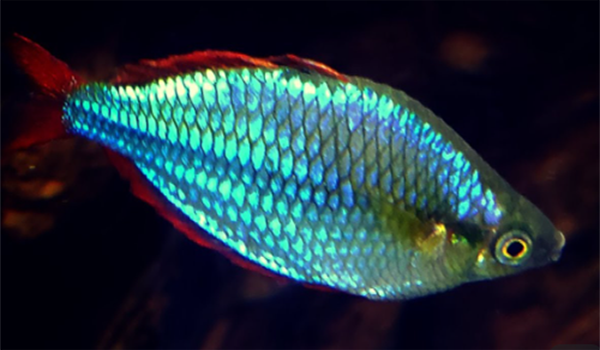
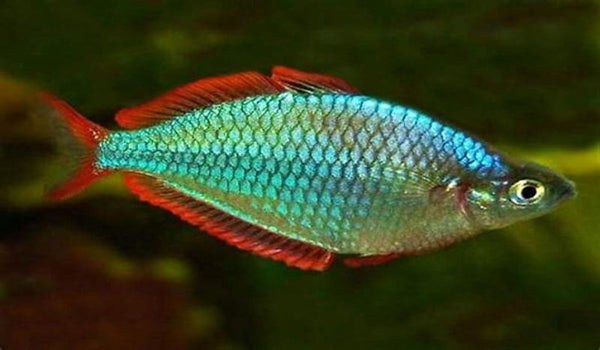
- Neon Rainbowfish (Melanotaenia praecox): A smaller rainbowfish reaching 5–6 cm, displaying iridescent blue-green body scaling with red fins in males. One of the few rainbowfish suitable for tanks under 100 litres (minimum 80 litres for a school of 8). Temperature 22–28 °C, pH 6.5–7.5. Active and peaceful; compatible with most community species including Tetras and Dwarf Gouramis.
- Turquoise Rainbowfish (Melanotaenia lacustris): A Lake Kutubu endemic reaching 12 cm; males display electric turquoise-blue body colouration that deepens with age and water quality. Requires 150+ litres; temperature 24–27 °C, pH 7.0–8.0. One of the most vividly coloured rainbowfish species available.
- Threadfin Rainbowfish (Iriatherina werneri): A nano rainbowfish reaching only 4 cm, males developing extraordinary filamentous extensions on their dorsal and anal fins. Requires a calm, planted tank (50+ litres); incompatible with fin-nippers. Temperature 24–28 °C, pH 6.0–7.5.
Gourami Species
- Dwarf Gourami (Trichogaster lalius): The most popular Gourami for community tanks. Reaches 5–6 cm; males display vivid red-orange and blue vertical striping; females are silver-grey. Available in Flame, Neon Blue, Powder Blue, and Robin colour variants. Requires a tank of 40+ litres; temperature 24–28 °C, pH 6.0–7.5. Note: Dwarf Gourami Iridovirus (DGIV) is widespread in commercially bred fish — buy from reputable sources only.
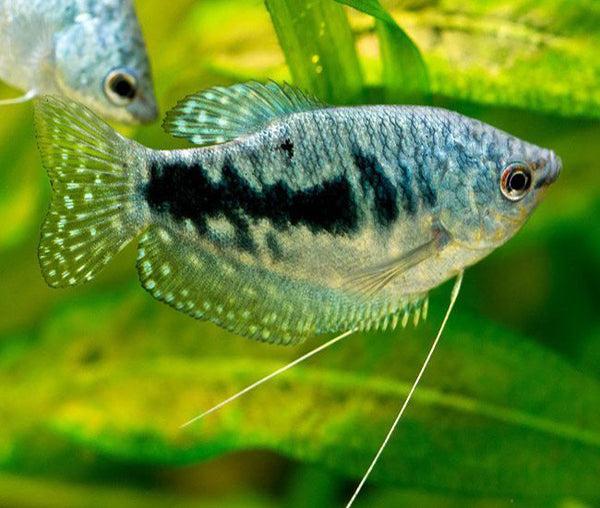
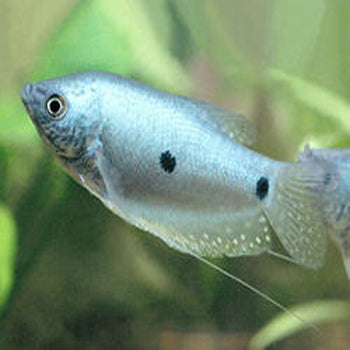
- Pearl Gourami (Trichogaster leerii): An elegant, larger Gourami reaching 12 cm, covered in pearl-white spots over a brown-orange body with a distinctive black horizontal stripe. One of the most peaceful Gourami species — suitable for community tanks with medium and large tetras. Temperature 24–28 °C, pH 6.0–8.0. Requires a tank of 100+ litres.
- Kissing Gourami (Helostoma temminckii): Named for the "kissing" lip-locking behaviour between males (a dominance display, not affection). Reaches 20–30 cm — much larger than most Gouramis; requires a tank of 200+ litres. Available in wild-type green and pink/albino variants. An algae grazer that constantly forages on tank surfaces.
- Honey Gourami (Trichogaster chuna): A small, gentle Gourami reaching 4–5 cm; males develop golden-orange colouration with a black throat during breeding. Ideal for nano community tanks of 40+ litres. More sensitive to water quality than Dwarf Gourami — requires a cycled, stable tank.
Tank Requirements
- Tank size: 115 litres (30 US gallons) for a mixed Rainbowfish/Gourami community; larger for Boesemani or Pearl Gourami
- Temperature: 24–28 °C — both groups are tropical; Rainbowfish tolerate the slightly cooler end
- pH: 6.5–7.5 suits both groups; Rainbowfish from alkaline lakes (Boesemani, Turquoise) prefer 7.0–8.0
- Hardness: 5–15 dGH; moderate hardness acceptable for most species
- Filtration: Moderate flow HOB or canister; Gouramis do not tolerate strong surface agitation as it interferes with their labyrinth organ breathing
- Plants: Dense planting with tall background plants (Vallisneria, Amazon Sword) and floating plants (Frogbit, Water Sprite) — Gouramis build bubble nests at the surface under floating plants
- Lighting: Bright lighting brings out maximum colour in Rainbowfish; Gouramis prefer moderate lighting with shaded areas
Feeding
- Staple: High-quality tropical flake or small pellet — twice daily for both groups
- Rainbowfish supplements: Frozen brine shrimp, daphnia, small bloodworms; spirulina flake to enhance blue and green colouration
- Gourami supplements: Frozen bloodworms, brine shrimp; vegetable wafers (Kissing Gourami); blanched spinach and zucchini
- Quantity: Only what fish consume in 3 minutes; both groups are not greedy feeders
Tank Mates
Rainbowfish and Gouramis are among the most community-compatible fish in the hobby, making them ideal anchors for a peaceful planted community tank.
- Ideal companions: Neon Tetra, Cardinal Tetra, Ember Tetra, Rummy Nose Tetra, Corydoras catfish, Otocinclus, Cherry Shrimp, small Rasboras, Platies, Mollies
- Avoid with Gouramis: Other male Gouramis of the same species (territorial), Betta (labyrinth fish aggression), Tiger Barbs (fin nippers)
- Avoid with Rainbowfish: Very small fish under 2 cm (may be eaten), extremely slow-moving species
Why Buy from FishyKart?
FishyKart stocks Boesemani Rainbowfish, Neon Rainbowfish, Dwarf Gourami (multiple colour variants), Pearl Gourami, and Honey Gourami sourced from reputable breeders. All fish are quarantined and health-screened before dispatch. We ship in oxygen-sealed, insulated packaging with a live arrival guarantee across India. Contact us for current availability of rare species including Turquoise Rainbowfish and Threadfin Rainbowfish.