Black Molly Fish Care Guide
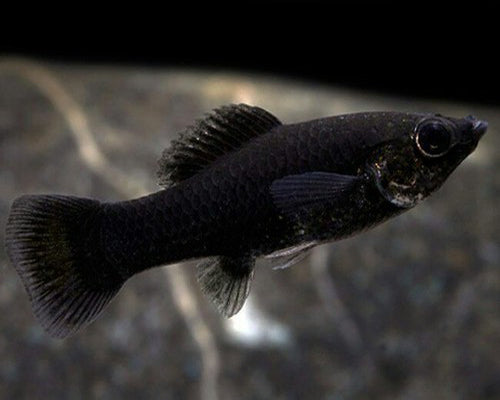
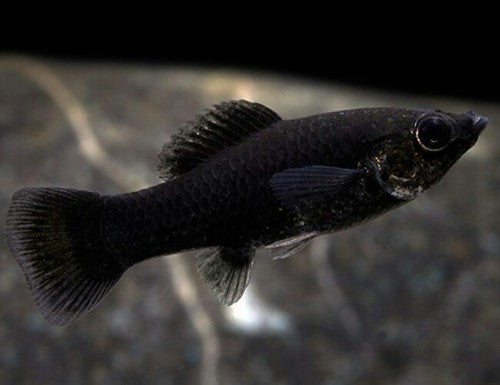
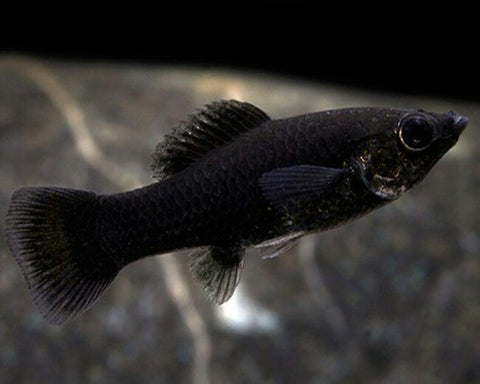
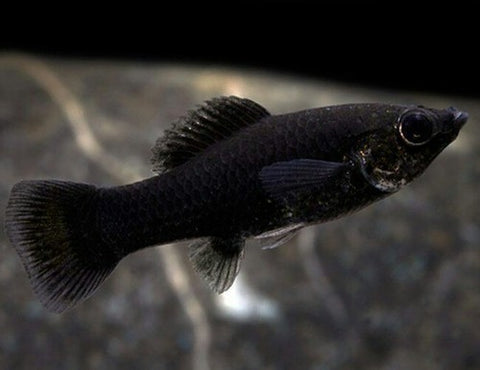
The Black Molly (Poecilia sphenops, melanistic morph) is a fully black freshwater livebearer and one of the most popular beginner fish in the aquarium hobby. Unlike wild-type sailfin and shortfin mollies that display silver-grey and speckled colouration, the Black Molly fish is a selectively bred melanistic variety with uniform jet-black colouration across the entire body, fins, and tail. This dramatic, all-black colouration is caused by overexpression of melanin — the same pigment responsible for dark colouration in most vertebrates. FishyKart stocks healthy, tank-bred Black Mollies ready for immediate delivery across India.
Black Molly Fish Care Basics
Proper Black Molly fish care starts with understanding that mollies are livebearer fish — they give birth to free-swimming fry rather than laying eggs. They are hardy, adaptable, and can even tolerate brackish water conditions, making them one of the most forgiving freshwater fish for beginners.
- Tank size: 60 litres (15 gallons) minimum for a small group; 80–100 litres for a colony
- Temperature: 24–28 °C — Black Mollies are tropical fish that require consistent warmth
- pH: 7.0–8.5 — they prefer slightly alkaline conditions; add crushed coral to buffer pH if needed
- Hardness (GH): 15–30 dGH — hard water significantly improves Black Molly health and colouration
- Salt tolerance: Highly salt-tolerant; 1 tablespoon of aquarium salt per 10 litres reduces stress and prevents common diseases
- Filtration: Moderate; sponge filter or HOB filter. Avoid strong currents — mollies are not strong swimmers
Feeding Black Molly Fish
Black Mollies are omnivore-herbivore leaning fish — they consume algae, plant matter, and small invertebrates in the wild. In captivity, a plant-rich diet maintains the depth of black colouration.
- Staple: Quality flake food or small pellets with high vegetable content (spirulina-based foods work well)
- Vegetables: Blanched spinach, zucchini, and algae wafers — feed 3–4× per week to support digestive health
- Protein: Frozen or live daphnia, baby brine shrimp, and micro-worm — 1–2× per week
- Algae grazing: Black Mollies naturally graze on soft algae; a lightly algae-covered tank reduces supplemental feeding needs
Black Molly Breeding — Livebearer Basics
Molly fish breeding is straightforward — one of the reasons this species is recommended for beginners wanting to experience fry-rearing. Key facts:
- Gestation period: 28–40 days; females store sperm and can produce multiple batches of fry from a single mating
- Brood size: 20–100 fry per birth, depending on female size and age
- Fry care: Fry are born free-swimming and fully formed at 5–10 mm. They can eat crushed flake food and baby brine shrimp immediately
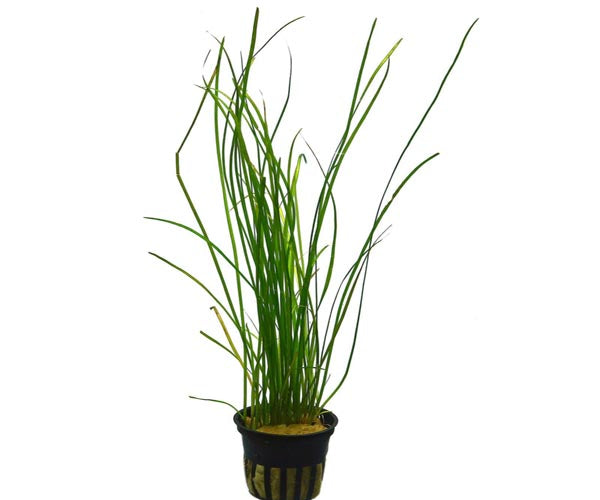
- Separating fry: Adult mollies, including the mother, will eat fry. Use a breeding box or heavily planted tank with Java Moss and Hornwort for fry to hide in
- Male-to-female ratio: Keep 1 male per 2–3 females to reduce male harassment; males constantly pursue females
Black Molly Tank Mates
Black Mollies are peaceful community fish. Ideal Black Molly tank mates share similar water parameters and temperament:
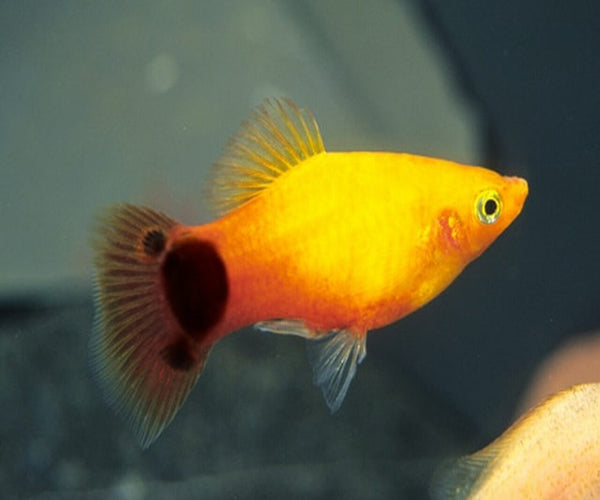
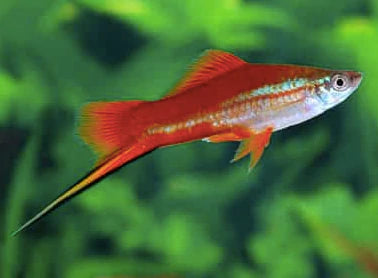
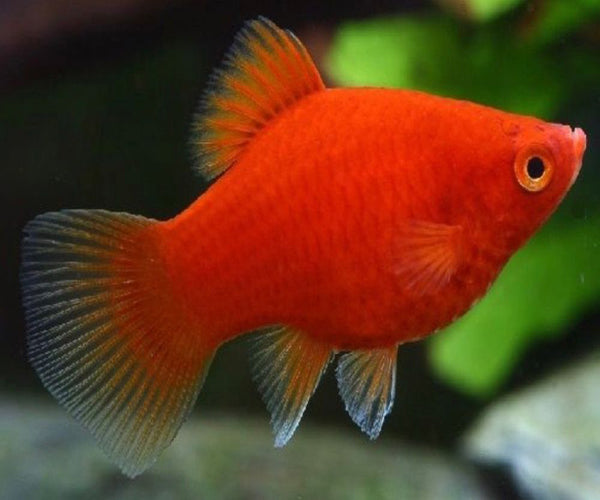
- Compatible: Guppies, Platies, Swordtails (all livebearers with similar water requirements), Corydoras catfish, peaceful tetras (Neon Tetra, Black Skirt), Dwarf Gouramis
- Avoid: Aggressive cichlids, large fin-nippers (Tiger Barbs), and predatory species that can swallow a 5 cm molly
- Note on hybridisation: Black Mollies will cross-breed with other Poecilia species (Guppies, other Molly varieties) — if keeping pure Black Mollies, separate from related species
Why Buy from FishyKart?
FishyKart stocks tank-bred Black Molly fish from verified breeders. All fish are quarantined, health-checked, and shipped in oxygen-filled bags with temperature-buffering packaging. We deliver healthy, active Black Mollies across India with a live arrival guarantee. Internal links: Goldfish | White Lobster Crayfish | All Live Fish.
Frequently Asked Questions
How big do Black Molly fish get?
Black Molly fish reach 5–8 cm (2–3 inches) at full adult size. Females are typically larger than males. Growth rate depends on water temperature, feeding frequency, and tank volume — mollies in well-maintained 80-litre tanks reach full size faster than those in smaller, crowded setups.
Do Black Mollies need a heater?
Yes, Black Mollies require a heater. They are tropical fish that need stable water temperatures of 24–28 °C. Temperatures below 20 °C cause immune suppression and make them highly susceptible to ich and fin rot. A reliable aquarium heater with a thermostat is essential for Black Molly care.
How often do Black Mollies breed?
Black Mollies breed every 28–40 days once males and females are housed together. Females can store sperm from a single mating and produce multiple batches of fry over 6+ months without another mating event. Each brood contains 20–100 fry, making population management an important consideration in community tanks.
Can Black Mollies live in saltwater?
Black Mollies can tolerate brackish water conditions and are sometimes transitioned to full marine setups as an introduction to saltwater fishkeeping. They thrive best in hard, slightly alkaline freshwater with 1 tablespoon of aquarium salt per 10 litres — this reduces stress, enhances colouration, and prevents common bacterial infections.
What are the best tank mates for Black Mollies?
The best tank mates for Black Mollies are peaceful community fish sharing similar water parameters: Guppies, Platies, Swordtails, Corydoras catfish, Neon Tetras, and Dwarf Gouramis. Avoid aggressive cichlids, large fin-nippers like Tiger Barbs, and any species that can swallow a 5 cm fish.
About & Origin
The Black Molly is a solid-black colour form of Poecilia sphenops, the short-finned molly, one of the most widely kept livebearer fish in the aquarium hobby. Its wild ancestors are native to fresh, brackish, and coastal waters across Central America, from Mexico down through parts of Colombia and Venezuela, and even into the southern United States in places.
Unlike the balloon-bodied variants, the Black Molly retains the standard, more streamlined molly body shape -- an active, fast-swimming fish that spends much of its time grazing algae and biofilm off surfaces alongside general omnivorous feeding.
As a livebearer, it gives birth to free-swimming young rather than laying eggs, and it breeds readily and often in a mixed-sex aquarium -- one of the reasons mollies are such a staple beginner fish, since new keepers frequently get to watch the full life cycle without any special intervention.
The solid black colouring is a fixed, selectively-bred trait rather than something that shifts with mood or age, though very young fry are sometimes born a lighter grey and darken fully to black as they mature over the first few weeks of life. Given appropriate hard, alkaline water, this is one of the more consistently long-lived and disease-resistant livebearers commonly available, typically reaching 3-5 years.
Requirements
Mollies are hardy, easy livebearers, but a few details make a real difference to their long-term health.
Hard, alkaline water: unlike most tropical community fish, mollies genuinely do better with harder, more alkaline water than soft/acidic conditions -- this is the single biggest difference from typical "tropical community" fishkeeping advice.
Aquarium salt tolerance: mollies naturally inhabit water ranging from fresh to brackish in the wild, and many keepers add a small amount of aquarium salt to their water, which mollies tolerate well and some breeders feel benefits them -- though it isn't a strict requirement in freshwater.
Group size and sex ratio: keep in groups with more females than males (roughly 2–3 females per male) -- males persistently pursue females for mating, and an all-male or male-heavy group causes real stress.
Breeding: mollies are livebearers that give birth to free-swimming fry regularly and often unintentionally -- have a plan (dense plant cover, a breeding trap, or acceptance of population growth) before keeping mixed-sex groups.
Tank size: comfortable from around 75cm/30 inches upward for a small group, more for larger adult mollies (sailfin types can reach 12–15cm).
Diet: mollies are genuinely omnivorous grazers -- a quality flake or pellet as a base, supplemented with regular vegetable matter (blanched courgette, spirulina-based foods, or a bit of algae wafer) keeps their digestion healthy, since they naturally spend a lot of time grazing algae and plant matter in the wild.
Fry survival: in a mixed community tank, most molly fry are eaten by adult tankmates (including their own parents) before reaching a noticeable size -- this naturally caps population growth for many keepers without any active intervention needed, though dense floating plants or a breeding box will let more fry survive if that's the goal.
Filtration: standard, well-maintained filtration is sufficient -- mollies are not unusually demanding on flow, but do appreciate good oxygenation and consistent water quality given their relatively high bioload for their size.
Compatibility
Water & Care Conditions
Mollies stand out among common community fish for preferring harder, more alkaline water rather than the soft/acidic conditions many tropical species want.
- pH: 7.5–8.5 (alkaline)
- Hardness: moderately hard to hard, roughly 15–30 dGH -- soft water is a genuine mismatch for this species long-term
- Salinity: tolerates freshwater through to brackish; a small addition of aquarium/marine salt is well tolerated and sometimes used to support fin and overall health
- Temperature: 24–28°C (75–82°F)
- Oxygenation: appreciates good filtration and water movement; not unusually demanding beyond standard community-tank levels
- Water changes: weekly 20-25% partial changes help manage the relatively high bioload of an active, fast-breeding livebearer group
- Stability: mollies tolerate a wide range within their preferred hard/alkaline chemistry, but sudden swings -- especially a drop into soft, acidic water -- are a common, avoidable stressor and a frequent hidden cause of unexplained health decline in this otherwise hardy species
Mollies are also notably prone to a stress-related condition sometimes called "shimmying" -- a side-to-side swaying motion without actually swimming forward -- when kept outside their preferred hard, alkaline chemistry or exposed to cold or fluctuating temperatures. This is a genuinely useful early warning sign: if seen, check and correct water hardness and temperature stability before assuming a more serious illness is the cause. With correct water chemistry maintained, mollies are among the hardier and more disease-resistant livebearers in the hobby.
If your tank is set up soft and acidic for species like tetras or dwarf cichlids, mollies are not a great long-term match -- they're better paired with other hard-water-tolerant livebearers.
A gently sloped, buffered substrate (crushed coral or aragonite sand mixed into a standard substrate) is a common, low-effort way to help maintain the harder, more alkaline water this species prefers over the long term, particularly in regions where tap water runs naturally soft.