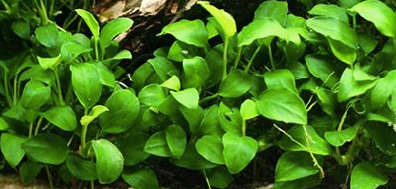
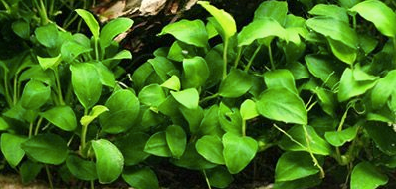
Anubias nana is a short plant with broad leaves.
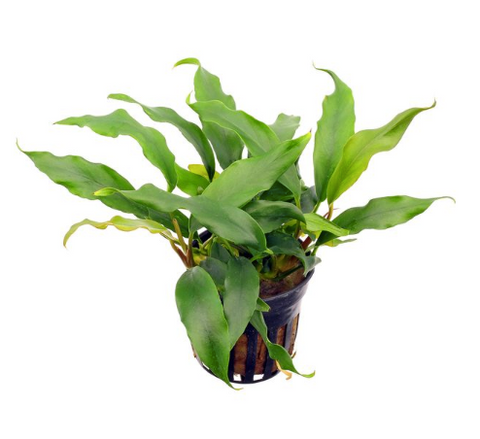
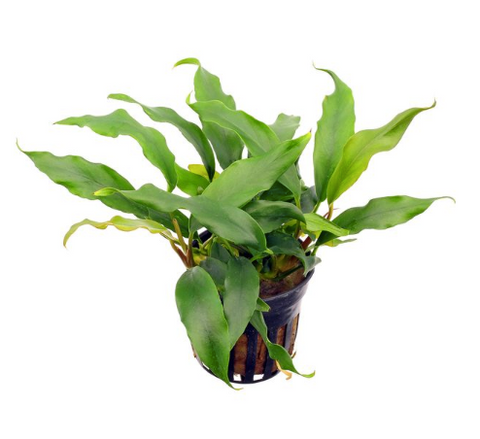
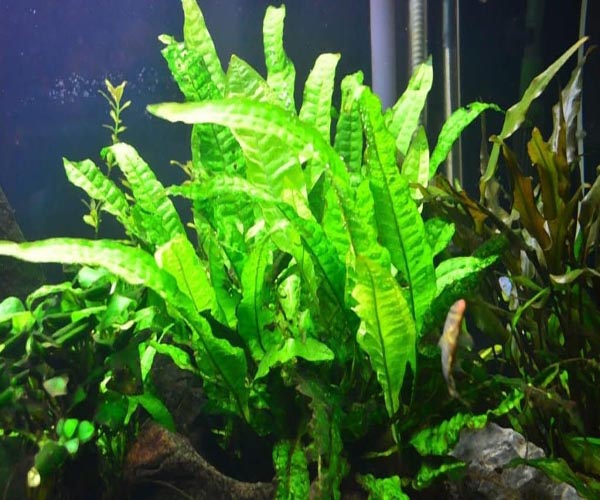
Anubias Barteri Glabra is a variant in the Anubias family that is of medium size. Hailing from streams in the rainforest of West Africa, there are many varieties of Anubias Glabra. This aquatic plant features narrow and wavy lanceolate leaves with the signature green hue that is common with this species.
About & Origin
Anubias barteri var. glabra is a broad-leaved rhizome plant native to streams and riverbanks in the rainforests of West Africa, where it grows both fully submersed against rocks and driftwood and emersed along the water's edge. It's one of the most widely kept aquarium plants in the hobby, prized for being nearly indestructible.
The "glabra" variety has slightly narrower, wavier lance-shaped leaves than the common Anubias barteri, with the same tough, dark green, glossy foliage the genus is known for. Like all Anubias, it grows from a thick horizontal rhizome that creeps slowly across whatever surface it's attached to.
Growth is very slow compared to stem plants, which is exactly why it's such a popular choice for low-maintenance and low-tech tanks — it simply doesn't need constant trimming and replanting. A single new leaf can take several weeks to unfurl, and a rhizome may only put out a handful of leaves a year in a modest low-tech setup, but each leaf is thick, tough, and long-lived once it appears, often lasting a year or more before it's naturally shed.
Anubias barteri as a species covers a whole spread of named varieties in the trade beyond glabra — nana, coffeefolia, caladiifolia and others — differing mainly in leaf size and shape, all sharing the same rhizome growth habit and general care needs. That toughness and slow, undemanding growth is also why Anubias leaves are a favourite target for algae-eating shrimp and snails, and why the leaves are commonly chosen for spawning fish (like some killifish and Corydoras) that prefer broad, sturdy surfaces to lay eggs on rather than delicate foliage.
Above the waterline, Anubias will also grow as a paludarium or terrarium plant given consistently high humidity, producing the same tough, glossy leaves in emersed form — a reflection of how naturally amphibious the genus is along its native riverbanks, where water levels rise and fall with the seasons.
Requirements
Anubias is one of the most forgiving aquarium plants available, and asks for very little.
Attachment, not planting: the rhizome must never be buried in substrate — if covered, it will rot. Instead, tie or glue it to driftwood or rock, where it will anchor itself with fine roots over time.
Light: thrives in low to moderate light and is one of the few popular aquarium plants genuinely happy under weak lighting; strong light without matching nutrients tends to encourage algae growth on its slow-growing leaves rather than helping the plant itself.
CO2: not required. Anubias grows perfectly well in a non-CO2, low-tech setup, which is a large part of its popularity.
Placement: works well attached low on hardscape in the foreground/midground, or even used as a background accent on larger driftwood, since it tolerates shade from taller plants without issue.
Attaching it: cotton thread, fine fishing line, or plant-safe glue (cyanoacrylate gel, the kind sold for aquascaping) all work to hold the rhizome in place while it roots in over the following weeks to months; once anchored, the thread/line can usually be left in place or removed as it will have grown into the wood or rock by then.
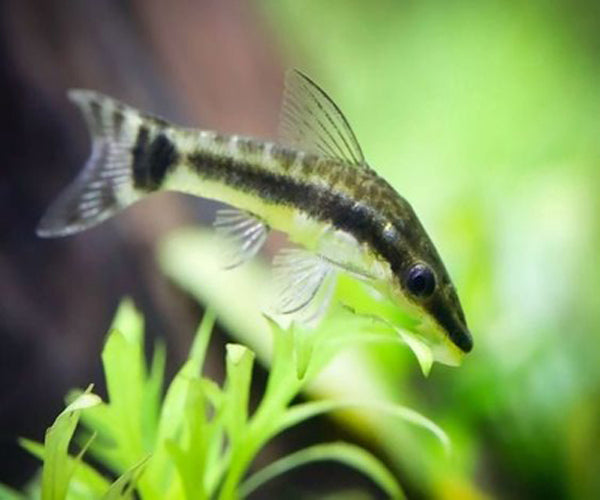
Algae control: because the leaves are so long-lived, they're also more prone to accumulating algae over their lifetime than fast-turnover stem-plant leaves — keeping light moderate rather than intense, and adding algae-eating shrimp, snails, or otocinclus to the tank, does more for leaf cleanliness here than any amount of manual wiping.
Division: the only real "propagation" step most keepers ever do is cutting the rhizome into sections with a sharp blade once it's grown long enough, each section with a few leaves and healthy roots becoming a new plant in its own right.
Patience: the single most common mistake with Anubias is treating it like a fast stem plant and expecting quick visible progress — judge it over months, not weeks, and resist the urge to move or replant it repeatedly while waiting to see growth.
Compatibility
Water & Care Conditions
Anubias barteri glabra tolerates a genuinely wide range of aquarium conditions, which is a large part of why it's so popular:
- pH: 6.0–7.5
- Hardness: soft to hard water, roughly 3–15 dGH
- Light: low to moderate; avoid very intense light, which mainly encourages algae on the leaves rather than faster plant growth
- Temperature: 22–28°C (72–82°F)
- Oxygenation: not demanding; normal community-tank water movement is more than sufficient
It's tolerant enough that most "problems" with Anubias trace back to one thing: a buried rhizome. Kept attached to hardscape rather than planted, it's remarkably hard to kill.
Beyond rhizome rot, the other common issue is "Anubias leaf melt" or spotting after a plant is first introduced to a new tank — a stress response to the change in water chemistry, light, or being handled/transported, and usually cosmetic rather than fatal. Affected leaves can be trimmed off once they've fully browned, and healthy new growth typically follows within a few weeks as the plant settles in.
It's also one of relatively few common aquarium plants that copes reasonably well in brackish or slightly saline conditions for a limited time, which is occasionally useful for keepers running a species tank that needs a touch of aquarium salt, though it's still fundamentally a freshwater plant and won't thrive long-term in anything beyond mild salinity.
Because growth is so slow, nutrient deficiencies tend to show up gradually rather than suddenly — a general liquid fertiliser dosed at a light, infrequent rate is usually plenty, and pushing high-dose fertilisation on Anubias mainly just raises the risk of feeding algae rather than measurably speeding the plant itself along.
Regular water changes still matter for overall tank health even though Anubias itself is fairly indifferent to short-term parameter swings — its tolerance is really about the plant surviving, not a reason to neglect the water quality that its tankmates depend on.