About & Origin
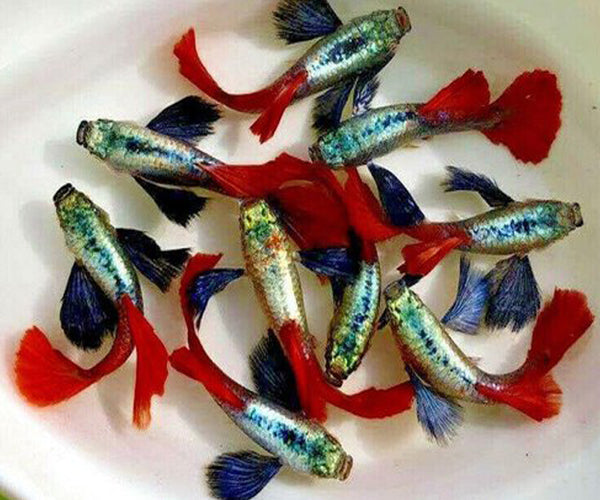
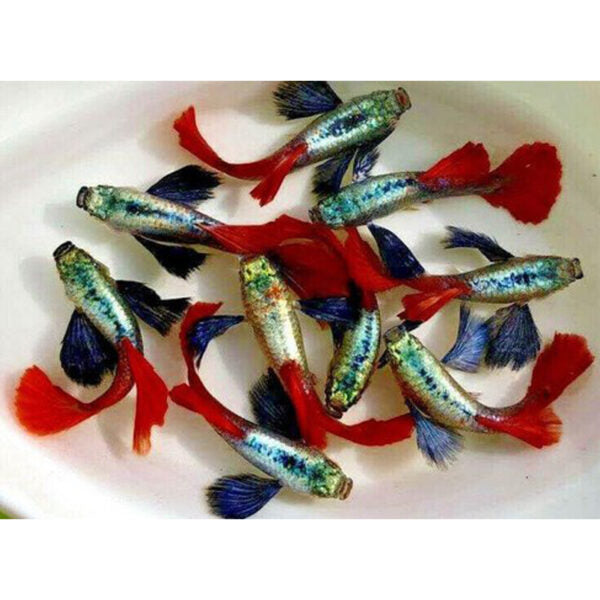
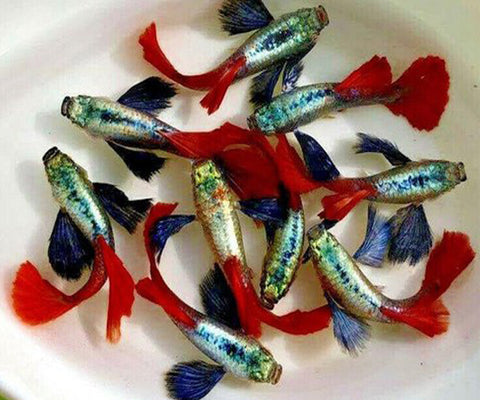
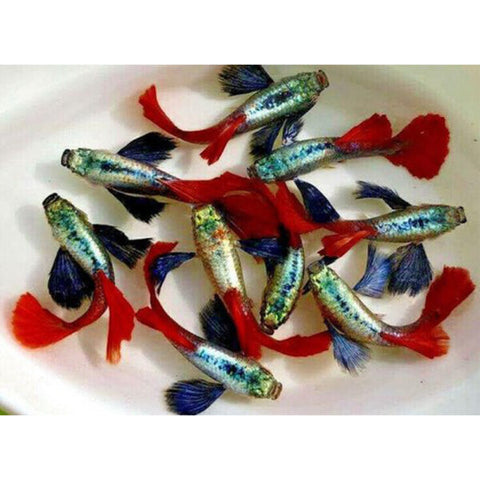
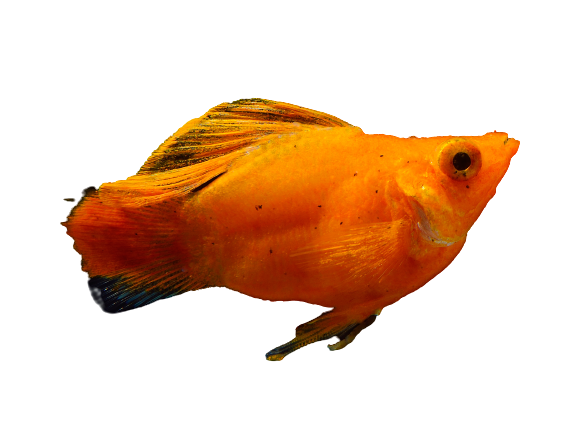
The Big Dumbo Ear Guppy is a fancy guppy strain (Poecilia reticulata) selectively bred for oversized, wing-like pectoral fins that flare out from just behind the gills — the "dumbo ear" look. Guppies themselves originate from streams, ponds, and coastal waters across Venezuela, Trinidad, Guyana, and northern Brazil, where wild populations are famous for adapting to an enormous range of water conditions.
In the wild, guppies live in shallow, warm, often nutrient-rich water and are famous among biologists for how fast they adapt to local conditions — including to predators, which has made them one of the most studied fish in evolutionary biology. In the aquarium hobby, that same adaptability is exactly what makes guppies such a reliable beginner fish.
The Big Dumbo Ear Guppy strain sold here is bred and raised for the aquarium trade specifically for its coloring and finnage; its care, temperament, and water needs are identical to any other guppy variety.
fishykart.com ships healthy, actively-colored stock, not fish pulled straight from a wholesale feeder tank.
"Dumbo ear" (also called "big ear") finnage isn't a separate species or even a fixed genetic line the way some guppy colour strains are -- it's a pectoral-fin trait that shows up across many colour varieties, so a Big Dumbo Ear Guppy can appear in solid, mosaic, or multi-colour patterns depending on which breeding line it comes from. What sets it apart visually is purely the fin shape: the pectoral fins sit noticeably larger and more forward than a standard guppy's, giving the fish a distinctive silhouette when viewed head-on or from above, especially as the male matures over several months and the fins fill out to their full, flared size.
Requirements
The oversized pectoral fins are what make this strain worth keeping properly, so the usual guppy advice comes with a couple of extra points aimed specifically at protecting them.
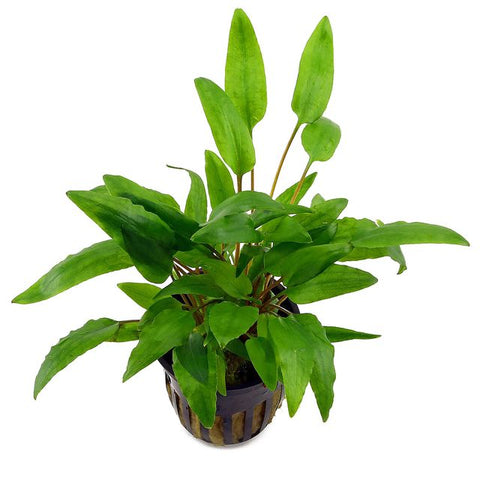
Decor and tankmates: those flared "ear" fins snag much more easily on rough ornaments, sharp rockwork, or coarse plastic plants than a standard guppy's fins do, and boisterous or nippy tankmates will target them first. Smooth silk or live plants, rounded decor, and calm tankmates matter more here than for a plain-finned guppy.
Tank size: 10 gallons (38 litres) upward for a group, roughly 2 litres per adult once filtration and other stock are factored in. Keep them in groups of 6 or more — guppies are shoaling fish and a lone Dumbo Ear looks and behaves worse than one with company.
Sex ratio: males court relentlessly, and a single female will be harassed nonstop. Run a female-only or female-heavy group (2-3 females per male) unless you actively want fry.
Diet and water flow: an omnivorous flake or micro-pellet staple works fine, topped up with brine shrimp or daphnia for condition and colour. Avoid strong current — big pectoral fins drag more in fast-moving water and tire the fish out, so gentle-to-moderate flow suits this strain better than a powerful filter outlet aimed straight across the tank.
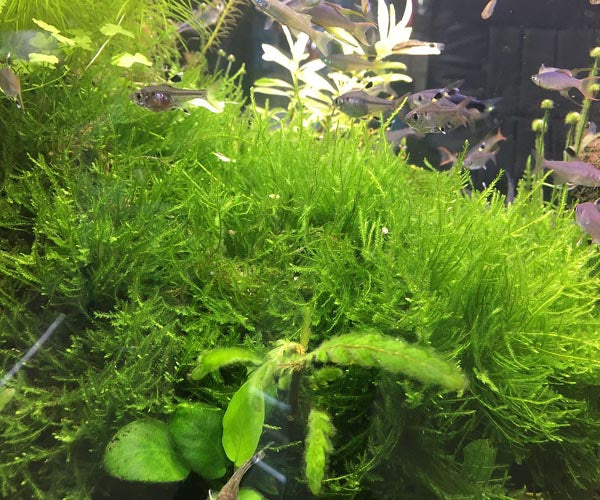
Fry cover: dense floating or fine-leaved plants (duckweed, java moss, hornwort) give newborns somewhere to hide, since adults eat fry given the chance. A tight-fitting lid is worth having too — guppies jump when startled.
Breeding: females give birth to free-swimming fry roughly every 4-6 weeks, broods from a handful up to 30+ depending on her size and condition — plan for regular rehoming or keep a female-only group if you don't want the population to keep growing.
Compatibility

Water & Care Conditions
- pH: 6.8–7.8
- Salinity / hardness: freshwater, moderately hard (10–20 dGH); a light dash of aquarium salt is well tolerated and used by many keepers as a mild preventative
- Temperature: 24–28°C (75–82°F) — strictly tropical, never an unheated tank
- Oxygenation / flow: moderate surface agitation is enough; keep current gentle rather than strong, since large pectoral fins work harder against fast-moving water than a standard guppy's do
Consistency matters more than precision — a stable reading slightly outside these ranges beats a "correct" number that swings around. Big Dumbo Ears in particular show stress through their fins before anything else: watch for clamping, fraying edges, or a fin held tighter to the body than usual, since these often show up before other illness signs would.
Weekly 20-25% water changes keep colour and finnage looking their best and cut down on fin rot and ich, both usually tied to inconsistent water quality rather than bad luck. Acclimate new stock slowly — a 20-30 minute drip acclimation beats a quick dump, since sudden parameter shock is a common cause of early losses.
This strain is captive-bred for the aquarium trade and generally copes fine with ordinary tap water once it's been dechlorinated and matched roughly to these ranges — treat the numbers above as a target for peak fin condition and colour, not a hard survival line. Well-kept guppies typically live 2-3 years, sometimes a bit longer.
Because the fin surface area is so much larger on this strain, it's also worth checking for fin nipping damage specifically rather than assuming any tattered edge is disease -- a clean tear or notch usually points to a tankmate, while ragged, discoloured, or receding fin edges point toward fin rot needing a water-quality fix and possibly treatment.