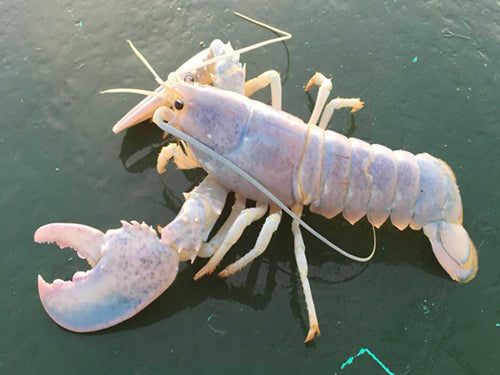
White Lobster (Albino Crayfish) Care Guide
The White Lobster, scientifically known as Procambarus clarkii albino morph, is a striking freshwater invertebrate that has gained enormous popularity among US aquarium hobbyists. This albino crayfish — also called white crayfish or albino crawfish — is a naturally occurring pigment-free colour variant of the Red Swamp Crayfish. Unlike the wild-type orange-red form, the albino morph carries no melanin, producing a clean white-to-cream body with distinctive red eyes. FishyKart delivers healthy, captive-bred white lobsters across India with a live arrival guarantee.
Tank Setup for White Lobster
A proper freshwater lobster tank setup is essential for the health and longevity of Procambarus clarkii albino. These crustaceans are territorial and need structured hiding spots to feel secure and moult safely.
- Minimum tank size: 80 litres (20 gallons) for a single specimen; 150+ litres for a pair with a divider
- Substrate: Sandy or fine-gravel substrate to allow natural burrowing behaviour
- Hiding spots: PVC pipes (3–4 cm diameter), ceramic caves, coconut shells — at least one hide per crayfish
- Plants: Use tough, fast-growing species attached to hardscape — Java Fern (Microsorum pteropus), Anubias (Anubias barteri) — as white crayfish care requires accepting that soft plants will be consumed
- Filtration: Canister or sponge filter rated 5× tank volume per hour; avoid hang-on-back filters with accessible intakes
- Lid: Tight-fitting lid is mandatory — albino crayfish are escape artists and will exploit any gap
Water Parameters
Stable water chemistry is the single most important factor in white crayfish care. The albino morph is slightly more sensitive to parameter swings than wild-type red swamp crayfish.
- Temperature: 18–24 °C (64–75 °F) — cooler end preferred; sustained temps above 26 °C reduce lifespan
- pH: 7.0–8.0 — alkaline conditions support healthy exoskeleton formation
- Hardness (GH): 8–16 dGH — calcium and magnesium are critical for moulting success
- Ammonia / Nitrite: 0 ppm at all times — crayfish have no tolerance for nitrogenous waste spikes
- Nitrate: Below 20 ppm; perform 25% water changes weekly
Feeding the White Lobster
Procambarus clarkii albino is an omnivore with strong scavenging instincts. A varied diet keeps colouration bright and supports healthy moulting cycles.
- Sinking pellets: High-quality cichlid or shrimp pellets as a staple (30–40% protein)
- Blanched vegetables: Zucchini, spinach, peas, and cucumber slices 2–3× per week
- Protein: Frozen bloodworm, daphnia, or brine shrimp once weekly
- Calcium supplement: Cuttlebone placed in the tank continuously; supports exoskeleton hardening post-moult
Feed once daily, removing uneaten food within 24 hours to prevent ammonia spikes. Increase feeding frequency slightly during active growth phases (juveniles moult every 2–4 weeks).
Tank Mates for White Lobster
The white lobster is semi-aggressive and will prey on slow-moving or bottom-dwelling fish. Safe tank mates are fast, mid-to-top-water species that cannot fit in the crayfish's claws.
- Compatible: Giant Danio (Devario aequipinnatus), Rainbow Fish (Melanotaenia sp.), large Rainbowfish — fast, top-water swimmers
- Avoid: Corydoras, loaches, slow-moving gouramis, shrimp, snails, small tetras — all are at risk of predation
- Best option: Species-only tank, or a species-specific white lobster display tank with only same-size individuals separated by dividers
Moulting — What to Expect
Moulting (ecdysis) is the process by which Procambarus clarkii sheds its exoskeleton to grow. Juveniles moult every 2–4 weeks; adults every 2–3 months. A freshly moulted white lobster is completely soft and vulnerable — do not disturb for 48–72 hours. Never remove the shed shell from the tank; the crayfish will eat it to reclaim minerals. If moulting problems occur (stuck shed), check calcium levels and GH hardness first.
Why Buy from FishyKart?
FishyKart sources captive-bred albino crayfish from verified breeders. Every white lobster is quarantined, health-checked, and packed in breathable, insulated bags before dispatch. We offer same-day processing, a live arrival guarantee, and delivery across India — including Mumbai, Delhi, Bangalore, Hyderabad, and Kolkata. For US hobbyists researching the species, our care resources are written by aquarium professionals with hands-on white crayfish care experience.
Frequently Asked Questions
How big do white lobsters get?
White lobsters (Procambarus clarkii albino) reach 10–12 cm (4–5 inches) at full adult size, measured from rostrum tip to tail end. Females are typically smaller than males. Growth rate depends heavily on feeding frequency and water temperature — juveniles kept at 22 °C and fed daily can reach adult size in 5–8 months.
What do white lobsters eat in an aquarium?
White lobsters are omnivores that eat sinking pellets, blanched vegetables (zucchini, spinach, peas), and occasional protein like frozen bloodworm or brine shrimp. Feed once daily and supplement with cuttlebone in the tank for continuous calcium supply, which is critical for healthy moulting and exoskeleton development.
Can white lobsters live with fish?
White lobsters can coexist with fast, mid-water fish that cannot fit in their claws — giant danios and large rainbowfish are suitable. Avoid slow-moving bottom dwellers, corydoras, loaches, shrimp, and snails, as all are at high risk of predation. A species-only tank is the safest and most recommended setup for Procambarus clarkii albino.
How long do white lobsters live?
White lobsters live 2–5 years in captivity with proper care. Lifespan is significantly shorter when water temperatures consistently exceed 26 °C or when water quality is poor. Females generally live slightly longer than males. Providing stable parameters, a calcium-rich diet, and stress-free moulting conditions maximises their lifespan.
How often do albino crayfish moult?
Juvenile albino crayfish moult every 2–4 weeks during active growth phases. Adult specimens moult every 2–3 months. After moulting, the crayfish is completely soft for 48–72 hours — never disturb it during this period. Leave the shed shell in the tank for the crayfish to consume and reclaim essential minerals for the new exoskeleton.
What tank size do I need for a white lobster?
A single white lobster requires a minimum tank size of 80 litres (20 gallons) with a tight-fitting lid and adequate hiding spots. For a pair, use at least 150 litres with a divider to prevent territorial conflict. Larger tanks are always better, as Procambarus clarkii albino is active and needs space to forage and establish a territory.
About & Origin
Freshwater "lobsters" sold in the aquarium trade, including this White Lobster, are almost always crayfish (family Cambaridae) rather than true lobsters, which live only in the sea. This pale, near-translucent white colour form is a selectively bred freshwater crayfish variety, most commonly linked to Procambarus species originally from the southeastern United States.
It's a hardy, active invertebrate that spends much of its time digging, foraging along the substrate, and reshaping its tank's décor to suit itself. Like all crayfish, it periodically moults its exoskeleton to grow, appearing especially pale and soft-shelled for a short vulnerable period right after each moult.
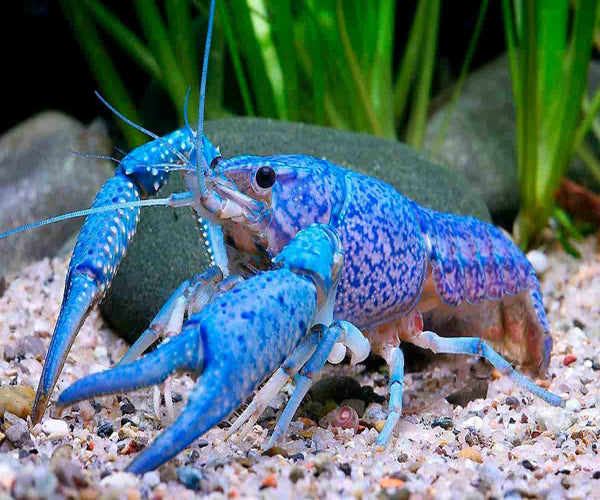
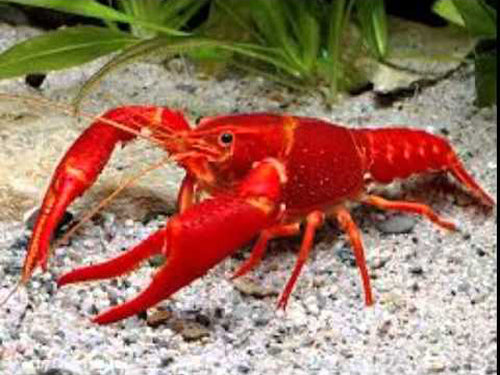
Because the shell is already pale to begin with, this colour form is one of the harder crayfish varieties to visually judge for stress or poor condition by colour alone compared to a more strongly pigmented strain like blue or red — behaviour (activity level, appetite, willingness to come out of hiding) is a more reliable day-to-day health indicator here than shell colour.
Crayfish are opportunistic omnivores in the wild, eating whatever combination of plant matter, detritus, small invertebrates, and carrion they encounter while foraging — a diet breadth that translates directly into how easy they are to feed in captivity, since they'll readily accept almost anything offered rather than needing a narrow, specific diet.
Requirements
White (sometimes sold as ghost) is a paler colour form of the same freshwater crayfish, with identical care needs: 20+ gallons for one adult, a secure lid against its climbing/escaping habit, solo or species-only housing to avoid moult-time fighting, and digging-friendly decor like driftwood or a pot. Diet is the standard crayfish omnivore mix -- sinking pellets, blanched vegetables, occasional protein, plus calcium to support the new shell after each moult.
Escape-proofing: crayfish are genuinely capable climbers and will use any filter tubing, plant stem, or decor piece that reaches near the waterline as a ladder out of the tank — a tight-fitting lid with no meaningful gaps is not optional, and a surprising number of crayfish losses in the hobby are simply escapes discovered too late rather than any health problem.
Post-moult vulnerability: for the day or two after moulting, the new shell is genuinely soft and this crayfish is far more vulnerable to injury or predation than usual — if kept with any tankmates at all (not generally recommended), extra hiding cover matters most during this specific window.
Don't remove or discard a shed exoskeleton found in the tank — crayfish commonly eat their own old shell over the following day or two to reclaim the minerals in it, and pulling it out prematurely removes a genuinely useful calcium source rather than tidying up debris.
Compatibility
Water & Care Conditions
Same range as other crayfish colour forms: pH 7.0-8.0, moderately hard water, 20-24C, good oxygenation. Because a pale/white strain usually comes from selective breeding rather than true albinism, it doesn't typically carry extra light sensitivity -- but moderate lighting and shaded hiding spots are still worth providing, since stress colouration shows up more visibly against a light shell than a dark one. As with any crayfish, stability around moulting matters more than hitting an exact number.
Calcium and mineral supply: a hardening new shell after each moult draws heavily on dissolved calcium and other minerals in the water, so moderately hard water isn't just tolerated but genuinely needed here — very soft water can lead to slow, incomplete, or failed moults over time, one of the more common preventable health issues in captive crayfish.
Provide a piece of cuttlebone or a calcium supplement in the diet if local water hardness runs on the low side, as a reliable extra source beyond whatever mineral content the water itself supplies.
Well-maintained crayfish of this type commonly live 2-4 years, occasionally longer, with a stable diet and consistent water quality being the two biggest factors in reaching the longer end of that range rather than any single water parameter in isolation.