About & Origin
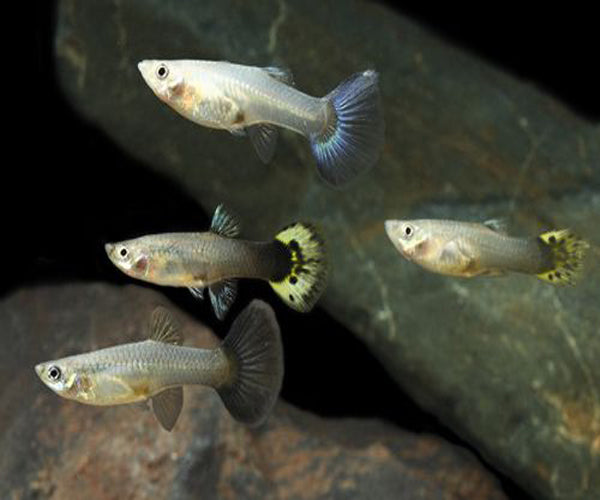
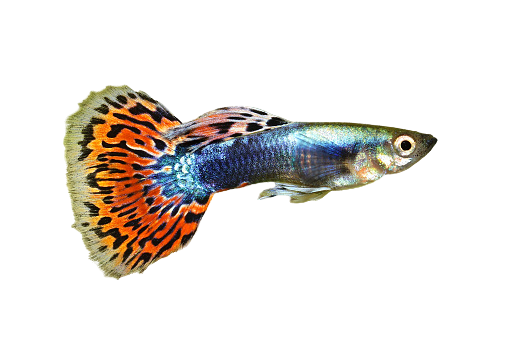
Female guppies, Poecilia reticulata, are the same widely kept livebearer species as any other guppy strain, native to streams, ponds, and coastal waters across Venezuela, Trinidad, and northern South America. Where males are bred and prized for bright colour and elaborate tails, females are the plainer, larger, rounder-bodied half of the species — usually silvery-grey or muted in colour, with a shorter, less ornate tail.
Females are noticeably bigger than males, sometimes close to twice the size, and as livebearers they carry developing young internally rather than laying eggs — a pregnant ("gravid") female develops a visibly boxy, swollen abdomen and a darkened patch near the vent (the "gravid spot") as she nears giving birth to fully-formed, free-swimming fry.
Because guppies breed so readily, females sold on their own are commonly bought either to rebalance an existing group's sex ratio (adding more females relative to males, which reduces harassment overall) or to start a new breeding group alongside a chosen male colour strain, since the mother's genetics contribute just as much to the fry's eventual appearance as the father's.
A single litter of guppy fry can range from a handful to 50 or more, depending on the size and age of the female, and litter size and frequency both tend to increase as a female matures — an older, well-fed female in good condition typically produces larger, more frequent broods than a young or recently-mated first-time mother.
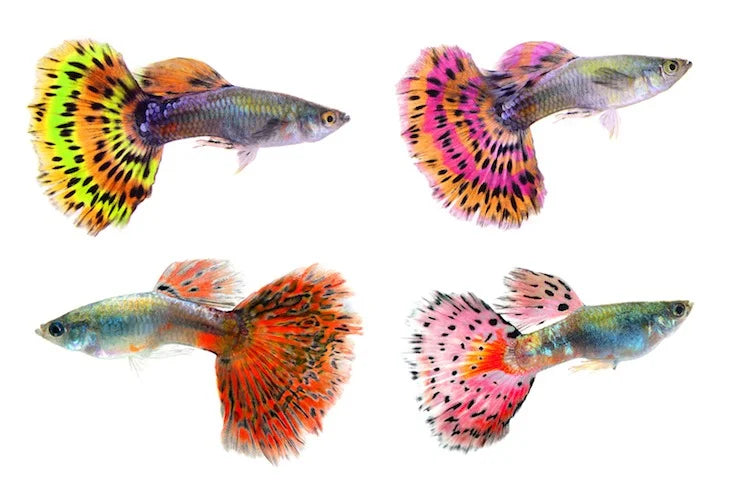
Because colour and pattern genetics in guppies are inherited from both parents, buying females is often just as important to a breeding project as choosing a striking male — a plain-looking female can still carry genes for elaborate colour or finnage that only show up in her offspring, so appearance alone doesn't tell the whole genetic story.
Requirements
Female guppies have the same basic needs as guppies generally, with a few points specific to their role in a mixed-sex group and to their reproductive biology.
Sex ratio: keeping two or more females per male is the standard recommendation — a single female with multiple males will be pursued and stressed almost constantly, since male guppies court persistently and don't coordinate with each other to give a female a break.
Tank size: a small group is comfortable in 40 litres (roughly 10 gallons) and up, with more room helping keep water parameters stable as any resulting fry add to the tank's population over time.
Breeding: a female guppy can store viable sperm from a single mating internally and continue producing successive broods of fry every few weeks for months afterward, even with no male present at all — worth knowing if you're adding females to a currently male-only or previously empty tank and don't want unplanned breeding to start immediately.
Fry survival: adult guppies, including the mother herself, will eat newborn fry given the opportunity — dense planting or floating plants give fry somewhere to hide if you want a reasonable number to survive to adulthood in a mixed-age community setup.
Diet: omnivorous and easy to feed — a good flake or small pellet as a daily staple, with occasional live or frozen foods for extra nutritional condition, which is especially valuable for a pregnant female's health and for producing a strong, well-developed brood.
Signs of an imminent birth: as a female nears giving birth, she'll often seek out a sheltered spot among plants or decor and become noticeably less active — providing that kind of cover in the tank gives her somewhere to retreat, which can reduce stress during the birthing process itself.
Compatibility
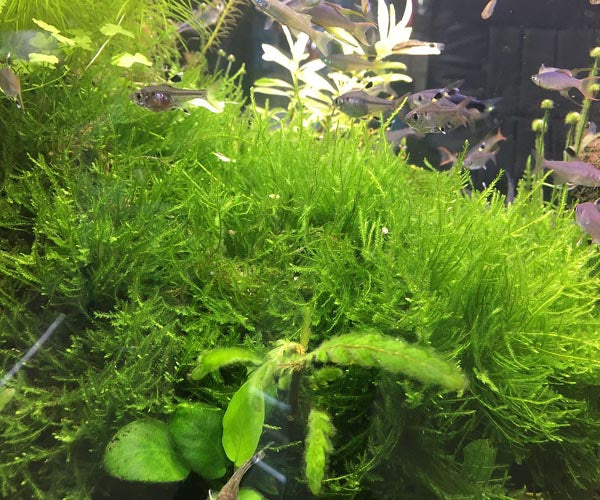
Water & Care Conditions
Female guppies tolerate a wide range of conditions, the same as guppies generally:
- pH: 6.8–7.8
- Hardness: moderate to hard, roughly 8–20 dGH — guppies generally do better in neutral-to-hard water than very soft, acidic conditions
- Temperature: 22–28°C (72–82°F)
- Oxygenation: standard community-tank filtration and surface movement is sufficient
Stable water matters more than any single parameter being exact — sudden swings are more likely to cause visible stress or miscarried/stillborn fry in a pregnant female than water that's simply a little outside the ideal range but consistently steady from day to day.
A weekly or fortnightly partial water change of around 20-25% is a sensible routine, adjusted upward as a tank's population grows from ongoing breeding. Keeping an eye on overall stocking density is worth doing in any tank with breeding females, since a guppy population left entirely unchecked can outgrow a tank's filtration and swimming space faster than it might seem at first.
Females carrying fry benefit from especially stable conditions in the days around birth — avoid large water changes, new tankmates, or other disruptions right around when a female looks close to giving birth, since added stress at that point can affect both her and the size/health of the resulting brood.
A well-conditioned, unstressed female is also simply a healthier long-term fish — repeated pregnancies in poor conditions or an overcrowded tank can visibly wear a female down over time, so giving her adequate space and stable water isn't just about the fry, it's about her own wellbeing across what can be a fairly long reproductive life for such a small fish.
Regular water testing (ammonia, nitrite, nitrate) is worth doing periodically in any guppy tank, but especially one with actively breeding females and a growing population, since bioload rises steadily as fry mature into adults and a tank that was comfortably stocked a few months ago may need more frequent maintenance as the population expands.