Jewel Cichlid (Hemichromis bimaculatus) — Care Guide & Buy Online
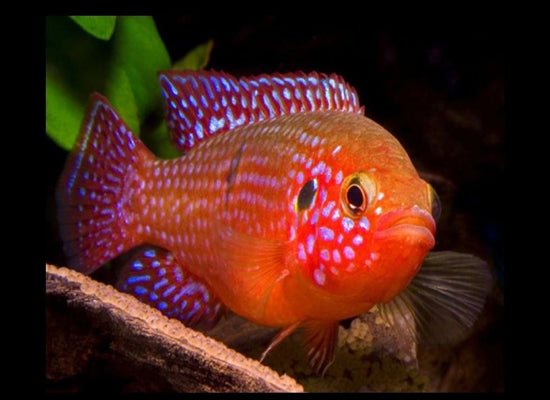
The Jewel Cichlid, scientific name Hemichromis bimaculatus, is a West African freshwater cichlid also called the African Jewel Fish or Two-Spot Jewel Cichlid. It is one of the most vividly coloured cichlids in the hobby — the body is brilliant red to orange-red, covered in rows of iridescent blue-green spots across the flanks, head, and fins. Colouration intensifies dramatically during breeding, when both sexes become even more vivid. Hemichromis bimaculatus reaches 12–15 cm, requires a minimum 40-gallon (150-litre) tank, water temperature of 24–28 °C, and pH 6.5–7.5. It is monogamous, forms strong pair bonds, and practises biparental brood care — one of the most behaviorally fascinating cichlids available to hobbyists. FishyKart delivers live Jewel Cichlids across India with a live arrival guarantee.
Tank Requirements
A mated pair of Jewel Cichlids requires a minimum of 150 litres (40 US gallons); a community setup with additional fish needs 200+ litres to accommodate the pair's breeding territory. Tank length is more important than height — provide at least 90 cm of floor space.
- Temperature: 24–28 °C (75–82 °F) — stable temperature is more important than the exact value; sudden drops trigger disease
- pH: 6.5–7.5; tolerates up to 7.8 in moderately hard tap water
- Hardness: 5–19 dGH — one of the most parameter-tolerant African cichlids, adaptable to most Indian tap water conditions
- Filtration: Canister or HOB filter rated 4–6× tank volume per hour; Hemichromis produce moderate bioload — weekly filter media rinsing in old tank water recommended
- Substrate: Fine sand preferred — Jewel Cichlids dig actively, especially during breeding; fine sand is also softer on their barbels than gravel
- Décor: Flat stones and broad-leaved plants (Amazon Sword, Anubias) provide spawning surfaces; caves and driftwood create territory boundaries that reduce aggression between pairs
- Water changes: 20–25% weekly, keeping nitrates below 30 ppm; high nitrates suppress breeding behaviour and intensify aggression
Feeding
Hemichromis bimaculatus is an opportunistic omnivore in the wild, consuming insects, small crustaceans, worms, and plant matter from riverbed substrates. A varied diet is essential for maintaining the species' characteristic colour intensity and reproductive fitness.
- Staple: High-quality cichlid pellet or flake containing astaxanthin (a carotenoid pigment precursor that directly enhances red colouration) — feed once or twice daily
- Protein supplements (3×/week): Frozen bloodworms, brine shrimp, daphnia, chopped earthworms — live or frozen both accepted
- Vegetable component (1–2×/week): Blanched spinach, spirulina wafers, or zucchini — supports immune function and reduces long-term aggression
- Feeding quantity: Only what fish consume in 2–3 minutes; remove uneaten food immediately to prevent ammonia spikes in the spawning territory
- Avoid: Tubifex worms (high disease vector risk); feeder fish (thiaminase toxicity, parasite introduction risk)
Behaviour & Breeding
Jewel Cichlids are monogamous — pairs form strong, lasting bonds and defend a shared territory aggressively against all intruders. Outside the breeding period, a mated pair can coexist with similarly-sized robust fish in a large tank (200+ litres). During spawning, the pair's aggression escalates significantly and all other tank inhabitants should be removed or separated.
Breeding Hemichromis bimaculatus:
- Spawning trigger: Raise temperature to 27–28 °C and perform a 30% water change with slightly cooler water — replicates the onset of the rainy season in the fish's native habitat
- Egg laying: Eggs are deposited on a cleaned flat stone, broad leaf, or the tank floor in a compact cluster; a single spawn produces 200–500 eggs
- Parental care: Both parents are exceptional — the male guards the territory perimeter while the female fans and tends the eggs; unfertilised eggs are removed within hours; fry are moved to pre-dug pits in the substrate
- Incubation: 48–72 hours at 27 °C; fry become free-swimming 5–7 days after hatching
- Fry food: Baby brine shrimp, micro-worms, and finely crushed flake from day one; fry grow rapidly under parental care
Tank Mates
Jewel Cichlids are moderately aggressive outside breeding periods and highly aggressive when spawning. Tank mate selection must account for both phases.
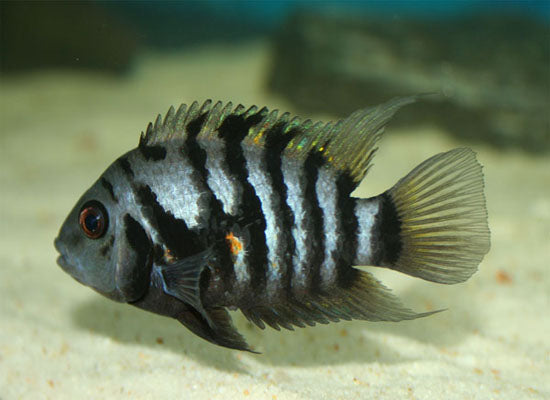
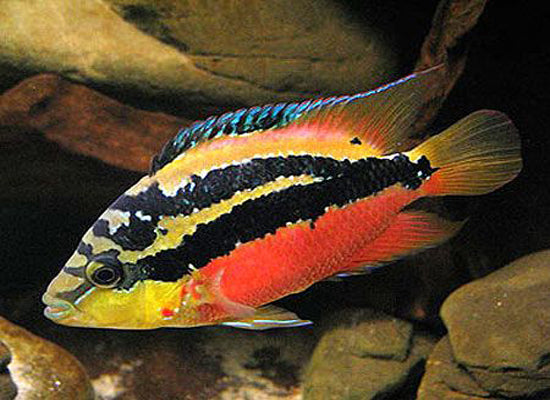
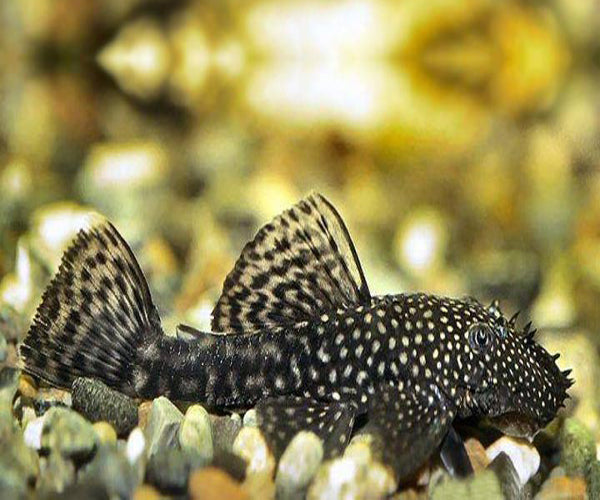
- Compatible outside breeding: Medium-sized robust fish of similar size (10+ cm) — other West African cichlids (Kribensis Pelvicachromis pulcher), large Corydoras (C. sterbai, C. duplicareus), robust tetras (Congo Tetra Phenacogrammus interruptus), Bristlenose Pleco (Ancistrus sp.)
- Avoid permanently: Small fish under 5 cm (will be eaten or harassed), slow-moving long-finned fish (Betta, fancy Guppy), other territorial cichlids of the same size
- During breeding: Remove all tank mates or use a tank divider — the pair will attack and potentially kill any fish that approaches their spawning site, regardless of size
- Pair housing: Two males together will fight severely; always keep one male per tank
Common Health Issues
- Ich (Ichthyophthirius multifiliis): White spot disease triggered by temperature drops below 22 °C or stress during transport. Treatment: raise temperature to 29–30 °C; add aquarium salt (1 tsp/10L); treat with malachite green or formalin-based medication for 7 days.
- Hole-in-the-Head Disease (HITH): Small pits forming around the lateral line and head — caused by Hexamita sp. parasites, compounded by chronic nitrate exposure above 40 ppm and vitamin C/D deficiency. Treatment: Metronidazole (400 mg/10L) combined with water quality correction and dietary improvement.
- Fin Rot (Aeromonas / Pseudomonas spp.): Fraying and darkening of fin margins caused by bacterial infection, usually secondary to aggression wounds or poor water quality. Correct water parameters first; treat with API Furan-2 or equivalent if tissue recession is active.
- Bloat: Abdominal swelling from internal bacterial infection or constipation. Fast fish for 3 days; offer high-fibre foods (daphnia, blanched peas); treat with Metronidazole if swelling persists beyond 5 days.
Why Buy from FishyKart?
FishyKart stocks Hemichromis bimaculatus — the African Jewel Cichlid — sourced from established breeders producing fish with strong, stable red colouration rather than the washed-out specimens common in bulk wholesale. All fish are quarantined and health-screened for a minimum of 7 days before dispatch. We ship across India in oxygen-sealed, insulated packaging with a live arrival guarantee. Jewel Cichlids available as juveniles (3–5 cm), sub-adults (7–10 cm), and proven breeding pairs — contact us for current stock and pricing.
About & Origin
The Jewel Cichlid is a brightly coloured West African cichlid species (Hemichromis bimaculatus and closely related species sold under the same name), coming from West African rivers and lakes, where it's named for the scattering of iridescent blue-green spots ("jewels") across a base colour that intensifies to a deep red during breeding condition — one of the most dramatic colour transformations of any commonly kept cichlid.
It's a moderately sized, robust fish, reaching around 12–15 cm (5–6 inches), that has a long-standing reputation in the hobby for aggression — particularly as a breeding pair, where both parents will fiercely defend eggs and fry against anything that approaches, tankmates and hands alike.
That intensity is exactly why experienced cichlid keepers are often drawn to it: watching a jewel cichlid pair raise a brood is one of the more genuinely dramatic breeding displays in the freshwater hobby.
The "jewel cichlid" trade name actually covers several closely related, hard-to-distinguish West African Hemichromis species and their hybrids, since the group has a long history of interbreeding both in the wild and in commercial breeding operations. Most fish sold under this name share the same essential red-and-blue-spangled look, aggressive breeding-pair behavior, and moderate size, so the differences matter more to species purists than to a typical hobbyist choosing a hardy, colourful cichlid.
Outside of breeding condition, colouration is more muted — often an olive-brown to tan base with the characteristic blue spots still visible — and the vivid all-over red flush is specifically a hormonally-driven breeding display, not the fish's baseline everyday appearance. A jewel cichlid that suddenly "lights up" bright red is very likely gearing up to spawn.
The species has also developed something of a mixed reputation outside its native range: because it's so hardy and prolific, escaped or released jewel cichlids have established invasive populations in warm waterways in parts of the southern United States and elsewhere, echoing the same pattern seen with several other hardy, easy-breeding cichlid species popular in the trade. It's another reason unwanted aquarium fish should always be rehomed responsibly rather than released outdoors.
Requirements
150+ litres (40+ US gallons) for a pair, more if keeping it alongside other robust fish, given how territorial this species becomes.
Temperament: aggressive, especially as an established or breeding pair. Often best kept species-only, or with other similarly large, robust, thick-skinned cichlids that won't be bullied to death — not with small or timid community fish. Even outside of breeding, jewel cichlids hold and defend a home territory more assertively than many similarly-sized cichlids.
Diet: not fussy — quality cichlid pellets, supplemented with live or frozen food, especially useful for conditioning a breeding pair. Live or frozen bloodworm and brine shrimp in the weeks before an expected spawn noticeably improves egg quality and parental condition.
Décor: flat rocks or a cave for spawning, plus robust rockwork — this species will dig and rearrange substrate around a chosen spawning site. Provide multiple potential spawning sites spaced apart if keeping more than one pair, since rival pairs will fight over a single favoured location.
Breeding and fry care: a bonded pair spawns readily on a cleaned flat surface and both parents guard eggs and fry with real intensity, often relocating the wriggling fry between several pre-dug pits as they develop — genuinely absorbing behavior to observe, but also a strong reason to keep this species away from smaller, more vulnerable tankmates that would be treated as threats.
Compatible tankmates: other robust, similarly-sized West or Central American/African cichlids that won't be bullied, along with hardy armoured catfish like larger plecos or bristlenose. Avoid small tetras, livebearers, dwarf shrimp, or any slow, delicate, or long-finned fish that would read as easy prey or an intruder to a territorial jewel cichlid.
A note on pairing: unpaired or mismatched individuals can show significant aggression toward each other before a genuine bond forms, so introducing several juveniles together and letting a natural pair emerge is often more reliable than trying to force-pair two adults directly.
Compatibility
Water & Care Conditions
Adaptable across a fairly wide range, reflecting its varied West African river habitats:
- pH: 6.5–8.0
- Water hardness: soft to moderately hard, roughly 5–15 dGH
- Temperature: 23–27°C (73–81°F)
- Oxygenation: standard strong filtration; no unusual requirement beyond keeping up with a territorial, active fish's waste output
- Water changes: 20-25% weekly is a solid baseline, adjusted upward during and after a spawn when waste output and organic load both rise
Water chemistry is rarely the limiting factor with this species — its temperament and space needs are what really drive the setup. Jewel cichlids hail from a range of West African river systems with naturally varied mineral content, which is part of why they tolerate such a wide window of pH and hardness compared to more geographically-restricted rift-lake specialists.
That said, stability still matters more than any single "ideal" number — swings in pH or sudden cold snaps stress even this hardy species, and a stressed pair is more likely to turn aggression on tankmates or, in some cases, on each other. A dependable heater and consistent maintenance schedule go further toward keeping a jewel cichlid pair calm and healthy than chasing an exact textbook parameter.
Filtration should be sized generously for this species' bioload — jewel cichlids are active, food-driven fish that produce meaningfully more waste than a similarly-sized peaceful community fish, and a filter undersized for the eventual adult pair (plus any fry) is one of the more common preventable causes of poor water quality and stalled growth in this species. A canister or hang-on-back filter with generous flow, paired with a consistent weekly water-change routine, is the simplest and most reliable way to keep colours vivid and behavior calm over the long term.