About & Origin
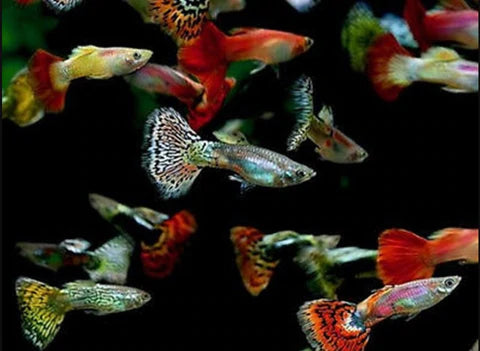
The guppy (Poecilia reticulata) is a small livebearing fish native to freshwater streams, ponds, and coastal drainages across Venezuela, Trinidad, Guyana, and parts of Brazil, from where it has been introduced (sometimes deliberately, for mosquito control) to warm-climate waterways worldwide. Wild guppies are modestly coloured; virtually every ornamental strain sold today, including this one, is the product of over a century of selective breeding for fin shape and colour, not a different species. The name "guppy" itself honours Robert John Lechmere Guppy, a naturalist who submitted specimens from Trinidad to the British Museum in the 1860s, though the species had already been described slightly earlier under a different name. Today guppies are bred commercially on a vast scale across Southeast Asia, Eastern Europe, and elsewhere, and a mixed, unsorted pack like this one reflects that everyday commercial breeding stock rather than a single hobbyist-curated show strain.
Guppies are livebearers: females are fertilised internally and give birth to free-swimming fry rather than laying eggs, and a single mature, previously-mated female can produce a new batch of fry roughly every 4-6 weeks without a male present, since she can store sperm. This is exactly why guppies remain one of the most widely bred and easily available fish in the hobby.
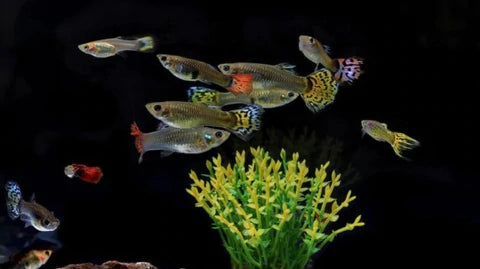
This particular listing is a pack of 10 males, sold unsorted for colour/pattern (a genuine grab-bag of whatever strains are on hand) rather than a single named strain. Male guppies are the more visually striking sex in essentially every guppy variety — they carry the bulk of the fin length and colour saturation, while females stay larger-bodied and comparatively plain, since in the wild it's the males that need to attract a mate. Buying males-only is a deliberate choice for two common reasons: stocking a colourful display group without triggering the constant breeding a mixed-sex tank produces, or adding fresh males to an existing female-heavy group to refresh genetic diversity without overcrowding the tank with more breeding pairs than intended.
Requirements
Guppies are famously easy but do have a few things worth knowing before stocking a group.
Sex ratio and breeding: males constantly court females, which can stress females kept 1:1 -- a ratio of roughly 2-3 females per male (or an all-male or all-female group) makes for a calmer tank. If you keep both sexes together, expect regular fry unless you specifically plan not to breed them.
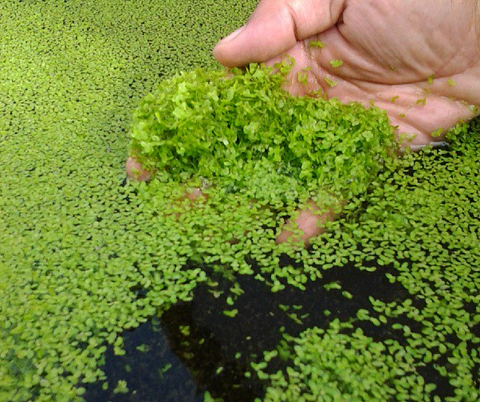
Tank size and cover: a 40-60cm tank suits a small group comfortably; floating plants or dense planting give fry (and stressed females) somewhere to hide from adults, which will otherwise eat newborn fry given the chance.
Diet is easy -- a good flake or micro-pellet staple, with occasional live/frozen foods (brine shrimp, daphnia) for conditioning and colour. They are unfussy eaters and one of the most beginner-friendly fish available.
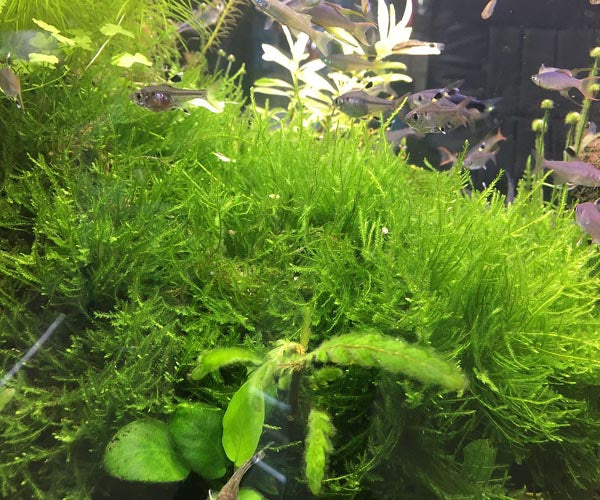
All-male groups specifically: ten males together will establish a loose social pecking order and occasionally chase or nip at each other's fins, especially in a tank that's too small or under-planted — this is normal guppy behaviour rather than a sign of incompatibility, and settles down once the group has enough space and visual cover to establish territory. A tank in the 40–60cm range with some planting gives an all-male group room to spread out and reduces the fin-nipping that can otherwise happen in a crowded, bare setup. Because the pack is unsorted for colour, expect real variety — different strains, tail shapes, and colour intensities mixed together — which makes for a visually varied display group even without picking a single named strain. If any of the group later turn out to have been mis-sexed by the supplier (an occasional, if uncommon, real-world mix-up with juvenile guppies), keep an eye out — an unplanned pregnant female showing up in what was sold as an all-male group is the usual giveaway.
Compatibility
Water & Care Conditions
Guppies are adaptable, but genuinely do best -- with the strongest colour, fullest fins, and best breeding success -- in water on the harder, more alkaline side, unlike many soft-water tetras:
- pH: 7.0–8.0
- Hardness: moderately hard to hard, roughly 8–25 dGH; a small pinch of aquarium salt is tolerated well and sometimes used to support fin health, though it isn't required
- Temperature: 22–28°C (72–82°F)
- Oxygenation: not demanding; comfortable in gentle to moderate flow
They tolerate a wider range than the ideal above, but colour, fin condition, and fry survival rates are noticeably better in clean, moderately hard, well-cycled water.
Weekly water changes of 20–25% keep colour and finnage at their best and reduce the risk of fin rot, to which unsorted, mixed-strain males can be marginally more prone if kept in a group with fin-nipping tendencies. A secure lid matters more than it looks like it should — guppies are surprisingly good jumpers, particularly when startled. Well-kept guppies of any sex typically live 2–3 years, with males often showing their full colour and fin development by around 3 months of age. Fin rot and ich are the two most common issues to watch for, and both are far more often triggered by unstable water conditions or temperature swings than any inherent fragility in the fish — a stable, cycled tank with consistent maintenance prevents most problems a new keeper is likely to encounter. Because this pack is unsorted, individual fish may vary somewhat in exact hardiness depending on which strain they descend from, but as a group they should be treated with the same baseline water-quality standards as any commercially bred guppy. Quarantining new arrivals for a couple of weeks before adding them to an established tank is good general practice, particularly with a mixed, unsorted batch sourced from commercial breeding stock rather than a single closed line.