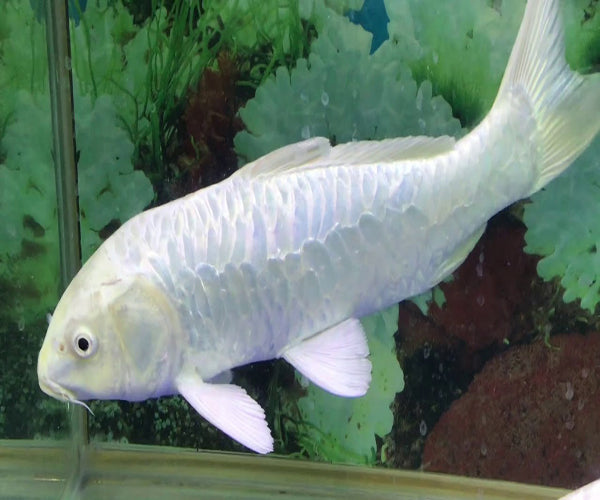
Milky White Koi Fish Care Guide
White Koi fish — including the Milky White (Shiro Utsuri), Platinum Ogon, and Kohaku varieties with dominant white base colouration — are among the most prized ornamental fish in both pond and large aquarium settings. Koi (Cyprinus carpio var. koi) are domesticated ornamental variants of the Common Carp, selectively bred in Japan over 200+ years for colour, pattern, and body conformation. The Milky White Koi specifically refers to specimens with an opaque, bright-white base colouration that appears almost luminescent in clean water — a trait achieved through selective breeding of the Shiro (white) gene line. FishyKart delivers premium White Koi across India, suitable for both garden ponds and large display aquariums.
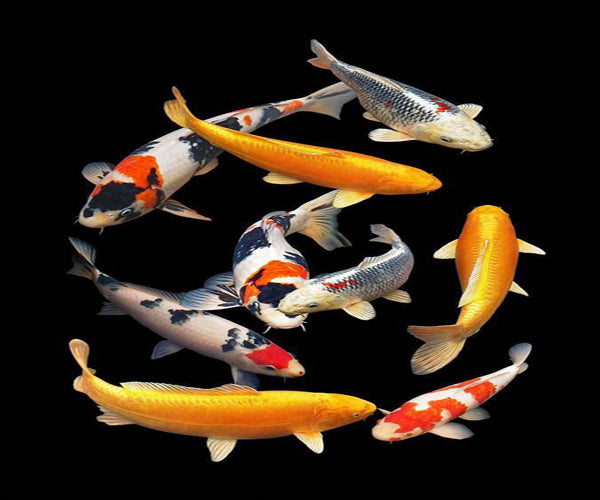
White Koi Varieties
Several distinct white koi varieties exist within the Cyprinus carpio koi classification system:
- Platinum Ogon: Solid metallic platinum-white koi with no other markings. One of the most striking and easiest to appreciate varieties — the white scales have a mirror-like metallic lustre
- Shiro Utsuri: Black-and-white koi with white as the dominant colour; black Sumi markings appear as patches or lacework over the white body
- Kohaku (white base): White body with red (Hi) markings — the most traditional koi variety in Japanese Nishiki-goi. Quality Kohaku are judged by the clarity of the white (Shiroji) between the red patches
- Shiro Bekko: White body with black Tsubo (tortoiseshell) spots; white must be pure and unblemished
- Tancho: White body with a single red circle on the head — resembling the Japanese Tancho crane, hence highly symbolic and valued
Pond vs Aquarium Setup for White Koi
Koi pond setup and koi aquarium requirements differ substantially. Understanding the distinction helps buyers choose the right environment:
- Pond minimum volume: 5,000 litres (1,300 gallons) for 3–5 koi; koi reach 45–90 cm at full adult size and require enormous space
- Pond depth: Minimum 120 cm to prevent temperature extremes and provide security from predators (herons, cats)
- Pond filtration: Mechanical pre-filter + biological filter (moving bed or bead filter) rated for 3× pond volume per hour minimum; koi produce extreme bioload
- Aquarium (display/juvenile): 500–1,000 litres for juvenile White Koi up to 25 cm; large aquaria with powerful external canister filtration are viable for display purposes
- Note: Long-term aquarium keeping of adult koi is not recommended — pond life is superior for the fish's wellbeing and growth potential
Water Parameters for White Koi
Koi fish care requires consistent water quality — white koi are particularly sensitive to poor water conditions, as ammonia and nitrite cause visible stress markings and colouration fading on the white body:
- Temperature: 15–25 °C optimal; koi are cold-water fish tolerating 5–30 °C but breeding and peak activity occurs at 18–24 °C
- pH: 7.0–8.5 — stable pH is more important than the exact value; fluctuations of more than 0.5 per day cause stress
- Ammonia / Nitrite: 0 ppm — zero tolerance; koi are highly sensitive and white colouration yellows and becomes streaked when water quality degrades
- Nitrate: Below 40 ppm in ponds (40 ppm acceptable due to volume); below 20 ppm in aquaria
- Dissolved Oxygen: 6+ mg/L — koi require high oxygen levels; use waterfall, air stones, or venturi aeration
- Water changes: 10–15% weekly in ponds; 25–30% weekly in aquaria
Feeding White Koi
Koi are opportunistic omnivores in nature. Proper koi fish care feeding maintains the bright white base colouration that defines quality White Koi:
- Staple: High-quality koi pellets (wheat-germ based in winter below 15 °C; high-protein during growth season)
- Colour-enhancing food: Spirulina and carotenoid-rich foods support the contrast between white and red in Kohaku; avoid in Platinum Ogon if pure white is desired
- Treats: Watermelon, lettuce, orange slices, and cooked rice are relished by koi and help with hand-taming
- Feeding in cold water: Below 10 °C, stop feeding entirely — koi's metabolism slows to near standstill and undigested food causes internal infections
Why Buy from FishyKart?
FishyKart sources premium White Koi fish — including Platinum Ogon, Shiro Utsuri, and Kohaku — from quality breeders. All koi are size-graded, health-checked, and shipped in oxygen-filled bags with full temperature regulation. We offer live arrival guarantee and delivery across India. Internal links: Goldfish | Flowerhorn Cichlid | All Live Fish.
Frequently Asked Questions
How big do White Koi fish get?
White Koi (Cyprinus carpio koi) reach 45–90 cm (18–36 inches) at full adult size in pond conditions. Jumbo-grade koi (Tosai and Nisai varieties) can exceed 90 cm in optimal Japanese mud-pond growing conditions. Aquarium-kept koi typically reach 30–45 cm due to space constraints limiting full growth potential.
Can koi fish live in an aquarium?
Juvenile White Koi can live in large aquariums (500+ litres) up to approximately 25 cm in size. Long-term aquarium keeping of adult koi is not recommended — they require the swimming space, depth, and filtration capacity of a dedicated koi pond to reach their full size and lifespan of 20–30 years.
What do White Koi eat?
White Koi eat high-quality koi pellets as a staple, supplemented with wheat-germ pellets in cooler months (below 15 °C), and occasional treats of watermelon, lettuce, and orange slices. Stop feeding entirely when water temperature drops below 10 °C, as koi's metabolism cannot process food at low temperatures.
How long do koi fish live?
Koi fish live 20–30 years in well-maintained ponds, with some Japanese Koi (notably the famous Hanako) documented to live over 200 years. Most hobbyist pond koi reach 15–25 years with proper care. Water quality, diet, and pond size are the primary factors determining lifespan.
What is the difference between White Koi varieties?
Platinum Ogon koi are solid metallic white with no other markings. Kohaku are white with red Hi patches — the most traditional variety. Shiro Utsuri are white with black Sumi markings. Tancho are white with a single red circle on the head. All are Cyprinus carpio koi — the distinction is purely in colour pattern genetics.
About & Origin
Koi are a large, ornamental coldwater pond fish — a domesticated form of carp (Cyprinus rubrofuscus), developed over centuries in East Asia and refined most extensively in Japan, where selective breeding produced the huge range of colour patterns ("Nishikigoi") koi are famous for today. This Milky White variety shows a soft, pearly-white body colour. Among the many named Nishikigoi varieties — Kohaku, Showa, Ogon, and dozens of others — an all-white form like this one is prized for its clean, understated look and works especially well as a contrast fish alongside more heavily patterned koi in a mixed pond display.
Koi trace back to common carp introduced to Japan from China, with selective breeding for colour mutations beginning in earnest in the early 1800s in the Niigata region — a hobby that grew from a local farming curiosity into a globally traded ornamental industry, with exceptional show-quality individuals fetching prices well into six figures at auction. Koi are also unusually long-lived and intelligent for a fish — many owners report their koi learning to recognise the person who feeds them and gathering at the water's surface when someone approaches the pond, a level of interaction rarely associated with fish generally.
Koi are hardy, intelligent, long-lived fish — commonly living several decades with good care, with some well-documented individuals living far longer — and they're traditionally pond fish, bred and displayed outdoors where their colours and swimming show best from above.
Important to know before buying: koi sold small for a tank or bowl are juveniles. Adult koi commonly reach 60–90cm (24–36in) or more and are simply not suited to permanent life in an indoor aquarium — they're pond fish that will outgrow any tank setup, usually within one to two years of steady growth.
Requirements
Be realistic about where a koi is headed before buying one.
Long-term housing: a mature koi needs a pond — ideally 1,000+ gallons (several thousand litres) with real depth, not an indoor tank. A tank or large bowl is only ever a temporary home for a young fish.
Filtration: koi are heavy waste producers even as juveniles — strong filtration and frequent water changes are essential at any life stage. A pond system typically needs mechanical filtration for debris plus biological filtration for ammonia and nitrite conversion, sized generously rather than to the bare minimum given how much a mature koi eats. UV clarifiers are also common in koi pond setups, keeping the water clear enough to actually see and appreciate the fish, which is, after all, most of the point of keeping ornamental koi in the first place.
Growth rate: koi grow quickly with good feeding and water quality — plan for the move to a pond well before the fish outgrows its current home, not after.
Diet: omnivorous — quality koi pellets as a staple, happy to take a wide variety of foods including vegetables, fruit, and occasional protein treats.
Companionship: koi are naturally social and do best kept in groups rather than alone, which is another reason a proper pond (able to comfortably house several adult fish) is the realistic long-term plan rather than a single-fish indoor tank.
Seasonal care: in temperate climates, feeding should taper off and stop as water temperature drops toward winter, since a koi's metabolism slows dramatically in cold water and undigested food can cause real harm during dormancy. As temperatures warm again in spring, feeding should resume gradually rather than all at once, giving the fish's digestive system time to catch back up.
Compatibility
Water & Care Conditions
Koi are cold-hardy and adaptable, which is part of why they thrive in outdoor ponds year-round in many climates:
- pH: 7.0–8.5, leaning neutral to slightly alkaline
- Water hardness: moderately hard water is well tolerated
- Temperature: very wide tolerance, from near-freezing (dormant, in a deep pond) up to around 30°C (86°F); best growth around 20–25°C (68–77°F)
- Oxygenation: needs strong filtration and good aeration — koi are large, heavy feeders and produce substantial waste relative to their size
These parameters describe a healthy adult koi's needs in appropriate pond housing — the same fish kept long-term in an indoor tank will struggle regardless of water chemistry, simply from lack of space. On a pearly-white fish, water clarity and quality genuinely show — algae bloom, cloudiness, or debris are all far more visually obvious against a milky-white body than on a heavily patterned koi, which can act as a useful early visual check on pond conditions overall. A well-kept koi is exceptionally long-lived, with healthy individuals commonly reaching 25–35 years and some documented cases living considerably longer, making this a genuinely multi-generational pet for many owners. Predators such as herons and raccoons are a real concern for outdoor ponds, and a pale, high-visibility colour like Milky White can be more exposed to aerial predators than a darker, more camouflaged pattern — netting or overhead cover is worth considering for open ponds, and this is a genuine, common cause of loss for outdoor koi that many first-time keepers underestimate. A deep section (at least 1–1.5m) also gives koi somewhere to retreat from both predators and temperature extremes, and is considered standard rather than optional in a well-designed koi pond, particularly in climates with cold winters where fish need enough depth to stay below the ice line.