About & Origin
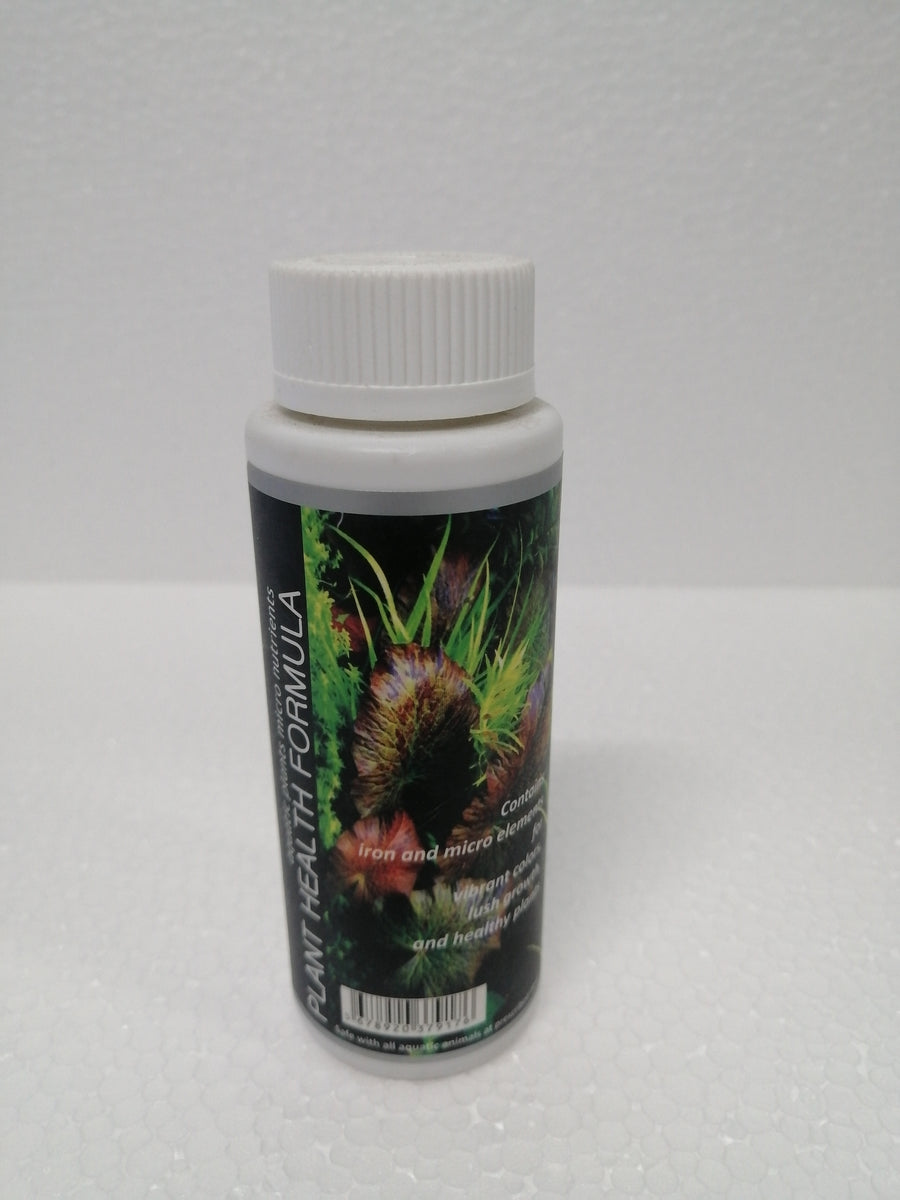
Plant Nutrician Food is a liquid nutrient supplement for live aquarium plants, providing the trace elements and micronutrients that plants need in small but essential amounts alongside their main macro-nutrient diet.
Where a general plant fertilizer focuses on the bulk nutrients (nitrogen, potassium, phosphate), a nutrient-food product like this typically leans toward the smaller-dose trace elements — iron in particular, which is a very common limiting factor for good leaf colour, along with manganese, magnesium, and similar micronutrients that plants use in tiny but non-negotiable quantities.
A visible iron/trace deficiency often shows up first as new growth coming in pale or yellowish while older leaves stay green — a classic sign that a plant is running short on something it needs in only small amounts, which this kind of product is aimed at correcting.
Iron in particular is often the single most limiting trace nutrient in a planted tank, since it's needed for chlorophyll production but is also easily bound up and made unavailable by certain substrates or high pH water -- which is why red/colourful stem plants especially (which need extra iron for their pigmentation) often respond very visibly to a trace-element supplement even when the tank already has decent macro-nutrient dosing.
Deficiency symptoms can sometimes be mistaken for a lighting problem, since both show up as pale or stunted new growth -- if increasing light doesn't help, a trace-element deficiency is worth ruling out next.
Trace elements are needed in tiny amounts compared to the bulk macro-nutrients, but "tiny" doesn't mean unimportant -- plants can't substitute one micronutrient for another, so even a trace-level shortfall of iron or manganese specifically will show up as a specific, recognisable symptom regardless of how well-fed the plant is on nitrogen and potassium.
Different plant genera vary in how visibly they respond: fast-growing red/colourful stem plants (Rotala, Ludwigia) tend to show trace-element effects most dramatically since their pigmentation is directly iron-dependent, while green, slower-growing species may need a closer look at new-leaf colour to spot the same underlying deficiency.
Requirements
Dosing frequency: trace-element supplements are typically dosed a couple of times a week, similar to a general fertilizer, since actively growing plants use them up steadily.
Pair with a general fertilizer: this kind of product usually complements rather than replaces a general N-P-K plant food — the two together cover both the bulk nutrients and the trace elements plants need.
Iron and staining: iron-rich supplements can occasionally tint water slightly if overdosed; stick to the recommended dose and this shouldn't be noticeable.
As with any plant fertilizer, it works best in a tank that also has adequate light — nutrients without enough light for the plant to use them productively mostly just end up feeding algae instead.
Consistency matters more than quantity: because trace elements are used in small amounts but continuously, regular smaller doses tend to give steadier, better results than a large infrequent dose -- stick to a routine (e.g. after each water change) rather than dosing heavily once in a while.
High-pH/hard-water tanks: iron and some trace elements become less bioavailable to plants in high-pH or very hard water, meaning a tank in that range may need supplementing more consistently than the bottle's baseline suggests to see the same visible results.
Not a substitute for light or CO2: if growth is slow despite good trace-element dosing, check light intensity/duration and CO2 availability before assuming more supplement is the answer -- all three factors need to be in reasonable balance.
New-tank ramp-up: in a freshly set up planted tank, start at a light dose and increase gradually as plant mass builds, the same way you would with a general fertilizer -- an uncycled tank with few established plants has little demand for trace elements yet.
Compatibility

Dosage & Usage Guidelines
Dose 2–3 times a week per the ratio on the bottle, ideally alongside a general plant fertilizer for full nutrient coverage.
- Targets: trace elements/micronutrients, iron in particular
- Watch for: pale new growth as a sign of deficiency this addresses
- Safe for: fish and shrimp at recommended doses
- Storage: cool, dark place, tightly sealed
- Especially useful for: red/colourful stem plants, which need extra iron for pigmentation
- Consistency over quantity: regular smaller doses work better than infrequent large ones
- High-pH tanks: iron becomes less available to plants at high pH, so hard-water tanks may need slightly more consistent dosing
- Storage life: check for a use-by date; discard if the liquid has separated, changed colour, or developed an odour
- Shake before use: some trace-element mixes settle -- shake the bottle before measuring a dose
- Not a fix for light/CO2 issues: if growth stays slow despite dosing, check light and CO2 before increasing the dose further
- New/uncycled tanks: start light and ramp up as plant mass increases rather than dosing at full strength immediately
- Pair with: a general N-P-K fertilizer for complete coverage of both bulk and trace nutrients
- Track over weeks: plant response to a dosing adjustment shows gradually -- judge results over two to three weeks rather than day to day
- Best-response species: red and colourful stem plants typically show the clearest, fastest visible response to trace-element dosing of any plants in the tank
Combine with regular observation of leaf colour and growth rate -- your plants' own appearance is the best guide to whether the current dosing routine is enough or needs adjusting. New-leaf colour is the most sensitive early indicator, since deficiencies typically show there first, well before older growth is affected.