Brown Algae in Fish Tank: What Diatoms Are and How to Remove Them
Published: 2026-11-26 · FishyKart Blog
Brown algae in a fish tank is almost always a film of diatoms: single-celled algae that build their cell walls from silica, the same mineral as glass. It shows up as a dusty brown or rusty coat on the glass, sand, decor and plant leaves, usually in the first weeks of a new tank. Diatoms do not harm fish directly, they wipe off easily, and in most new tanks they fade on their own within a few weeks, as the tank finishes cycling.
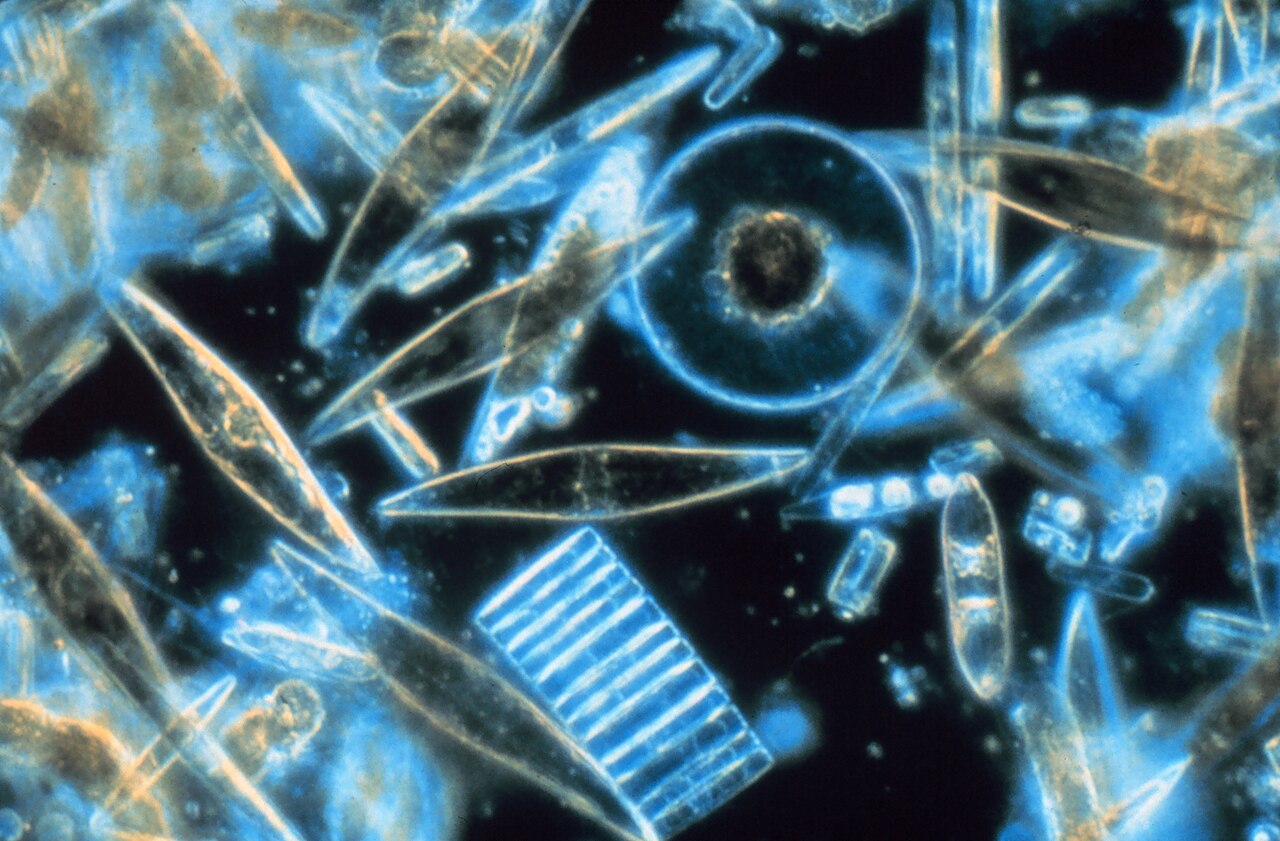
Photo: Prof. Gordon T. Taylor, Stony Brook University, NOAA Corps Collection - Wikimedia Commons, public domain. Diatoms up close: each cell sits inside a silica shell.
Brown Algae Quick Facts
| Question | Answer |
|---|---|
| What it is | Diatoms (class Bacillariophyceae), single-celled algae with silica cell walls |
| Looks like | Brown, mustard or rusty dust that wipes off with a finger |
| When it appears | Mostly in new tanks, near the end of cycling |
| Fed by | Silicates and phosphates; nitrates from overfeeding |
| Harm to fish | None directly; can smother plant leaves |
| How long it lasts | A few weeks in a new tank, until cycling ends |
| Eaten by | Otocinclus, Amano shrimp, nerite snails |
Sources: WebMD, Brown Algae in Fish Tanks (medically reviewed by Vanesa Farmer, DVM, July 2025), That Pet Place, Diatom Algae, Aquarium Co-Op, Diatoms, USGS fact sheet on diatom microfossils; checked November 2026.
What Brown Algae Really Is
The brown coating in aquariums is not the "brown algae" of the ocean, the seaweeds such as kelp. It is a bloom of diatoms, microscopic algae in the class Bacillariophyceae. The USGS describes diatoms as single-celled organisms whose cell wall, called a frustule, is made of silica. That glassy shell is why a diatom film feels slightly gritty and why diatoms need dissolved silica (silicates) to grow.
Diatoms are everywhere in natural water, so a few cells always reach a new tank with plants, fish or tap water. They only become visible when conditions let them multiply faster than anything eats them.
Why Brown Algae Shows Up
- A new tank. WebMD calls brown algae a natural part of setting up a new tank. That Pet Place notes that diatoms usually bloom toward the end of cycling, before the tank's bacteria and plants are established. More on that stage in how to cycle a fish tank.
- Silicates. Silica occurs naturally in rocks such as quartz and sandstone and in the water that runs over them, so many tap waters and some sands and gravels carry it.
- Phosphates and leftover food. Aquarium Co-Op links diatom outbreaks to high phosphate and silicate levels, and uneaten food adds phosphate and nitrate every day.
- A disturbed tank. That Pet Place adds that very large water changes or medications that kill beneficial bacteria can set an established tank back and trigger a new bloom.
Is Brown Algae Bad for Fish?
No, not directly. The WebMD article reviewed by veterinarian Vanesa Farmer notes that brown algae is not dangerous to fish. The real risk is to live plants: a thick diatom coat blocks light, so leaves cannot photosynthesize well and may weaken and die. Slow-growing plants such as anubias and java fern are the most likely to get coated, because their old leaves stay in the tank for a long time.
How to Remove Brown Algae
- Wipe the glass. Diatoms come off with an algae pad, magnet cleaner or scraper. Use acrylic-safe pads on acrylic tanks.
- Siphon the substrate. During a water change, hover the siphon over the sand or gravel to lift the brown film out instead of stirring it into the water. Step-by-step routine in how to clean a fish tank.
- Clean decor in tank water. Scrub rocks and ornaments in a bucket of old aquarium water, not under the tap.
- Rub plant leaves gently. Wipe broad leaves with your fingers; remove leaves that are badly coated.
- Leave the filter media alone. Rinsing it under tap water kills the bacteria the tank needs to stabilize, which is what ends the bloom.
Algae Eaters That Clean Up Diatoms
WebMD names Otocinclus catfish, Amano shrimp and nerite snails as animals that eat brown algae. Each has a catch:
- Otocinclus are diatom specialists but starve in brand-new tanks; add them once the tank is established and keep backup food ready (see what to feed otocinclus).
- Amano shrimp graze soft films and leftover food; they are easy to keep but vulnerable to large fish.
- Nerite snails clean glass and decor and do not breed in fresh water, though they lay small white eggs on hard surfaces.
Which eater suits which tank size is compared in best algae eaters.
How to Stop Brown Algae Coming Back
- Be patient in a new tank. That Pet Place advises against chemicals and oversized water changes during a bloom; diatoms usually fade once the tank has finished cycling.
- Feed less. Give only what fish eat in a couple of minutes.
- Change water regularly. Weekly partial changes remove nutrients without shocking the tank.
- Add plants. Fast-growing plants such as hornwort compete with diatoms for nutrients.
- Check your source water. If brown algae keeps returning in a mature tank, test the tap water for silicate and phosphate. WebMD mentions reverse osmosis (RO) water as an option when the tap water is the source.
- Keep a light schedule. A timer with 8-10 hours of light a day avoids the long photoperiods that feed every kind of algae.
Brown Algae vs Other Look-Alikes
| Problem | What you see | Tell |
|---|---|---|
| Brown algae (diatoms) | dusty brown film on surfaces | wipes off in one pass, no smell |
| Brown water (tannins) | tea-colored water, clean surfaces | color is in the water, usually from driftwood |
| Cyanobacteria ("blue-green algae") | slimy sheets, often dark green or reddish | peels off in sheets and smells musty |
| Green spot algae | hard green dots on glass and leaves | needs a scraper, does not wipe off |
If the water itself is brown or cloudy rather than the surfaces, see why is my fish tank cloudy; for odors, see fish tank smells.