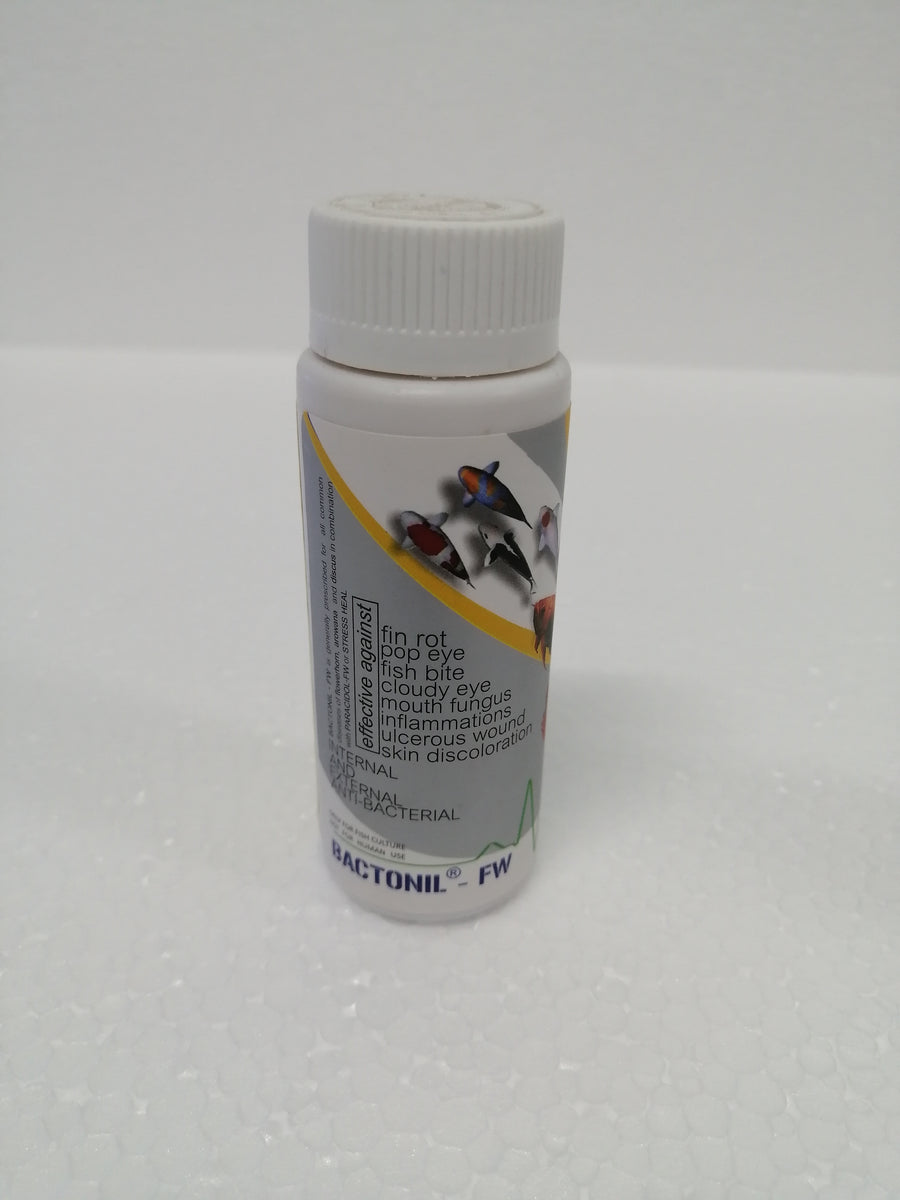
About & Origin
Backtonil is a broad-spectrum antibacterial treatment for freshwater aquarium fish, used to support recovery from common bacterial infections — fin rot, ulcers, mouth fungus (which is usually bacterial rather than a true fungus, despite the name), cloudy eye, red patches, and infected wounds.
Bacterial infections like these are often secondary problems, taking hold after a fish is stressed, injured, or already weakened by a parasite or poor water quality — so treatment usually works best alongside cleaning up the underlying cause (a water change, fixing overstocking, separating an aggressive tankmate) rather than as a standalone fix.
It's formulated for freshwater systems and is described by the manufacturer as safe to use with the full range of aquatic animals typically kept in a community tank.
One thing worth knowing before reaching for an antibacterial: it's not always obvious from the outside whether a problem is bacterial, fungal, or parasitic in origin, since several conditions produce overlapping symptoms (frayed fins, redness, cloudiness). If a course of antibacterial treatment doesn't show improvement within a few days, it's worth reconsidering whether the actual cause might be fungal or parasitic instead.
Bacterial infections tend to progress faster than fungal ones, which is why catching early signs -- a slightly frayed fin edge, a small red patch, a bit of cloudiness on one eye -- and starting treatment promptly generally gives a better outcome than waiting to see if it clears up on its own.
Fin rot in particular is worth knowing the progression of: it typically starts as a slight fraying or discolouration right at the fin edge, and if left untreated can progress inward toward the fin base and, in severe cases, the fish's body itself, where it becomes far harder to treat successfully. Caught at the fraying-edge stage, most fin rot responds well to a course of antibacterial treatment combined with clean water; caught late, recovery is slower and the fin may never fully regrow to its original shape.
Requirements
Filtration: remove activated carbon from your filter before dosing, since it will absorb the medication and reduce how well it works.
Course length: visible improvement in bacterial infections is often reported within the first day or so of treatment, but the full course (check the bottle for the specific schedule) should be completed rather than stopped as soon as symptoms start improving, to avoid the infection returning.
Underlying cause: treat the water quality issue or physical stress that likely triggered the infection at the same time — a bacterial treatment alone won't fix overcrowding, poor filtration, or an aggressive tankmate causing repeated injuries.
Isolating a badly affected fish into a separate hospital tank makes it easier to dose accurately and monitor recovery than treating a full display tank.
Reported speed: visible improvement is often reported within roughly 12 hours of starting treatment for straightforward bacterial cases, though the full course should still be completed rather than stopped as soon as things look better.
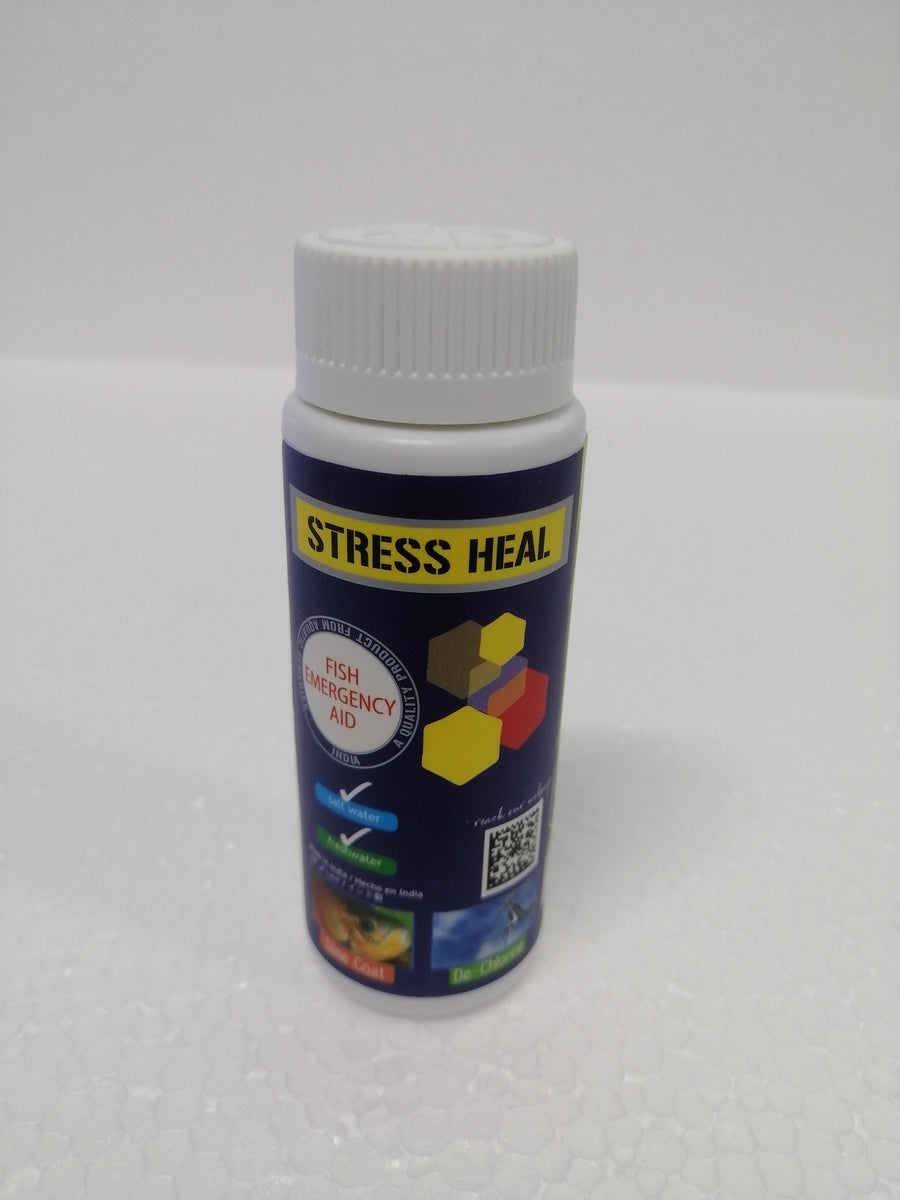
Mixed stocking: check the product's stated compatibility before dosing a tank with shrimp, snails, or other sensitive invertebrates — while many antibacterial treatments are gentler on inverts than copper-based parasiticides, it's still worth confirming rather than assuming.
Recheck water quality after treatment: once a course is finished, test ammonia and nitrite, since the medication can temporarily affect the tank's beneficial bacteria colony, and a partial water change afterward helps the biofilter recover.
Preventing repeat infections: once a fish recovers, look honestly at what likely triggered the infection in the first place — a sharp decoration causing repeated small injuries, a stocking level that's too high for the filtration, or an aggressive tankmate — and address it, since treating the same fish for the same infection repeatedly usually points to an unaddressed root cause rather than bad luck.
Dosing accuracy: use the measuring cap or dropper that comes with the bottle rather than estimating, since bacterial treatments generally have a narrower effective range than simple water conditioners — too little won't clear the infection, and significantly too much can stress the fish and disrupt the biofilter more than necessary.
Compatibility

Dosage & Usage Guidelines
Dose per the ratio on the bottle (commonly around 10ml per 50 litres for this type of product) for the full recommended course, not just until visible symptoms fade.
- Filtration: remove carbon media before dosing
- Freshwater use only
- Common symptoms it targets: fin rot, ulcers, mouth fungus, cloudy eye, red patches, infected wounds
- Storage: cool, dark place, tightly sealed
- Address the cause too: water quality, overstocking, or aggressive tankmates often need fixing alongside treatment
- Dosage: commonly around 10ml per 50 litres, freshwater only
- Reported response time: visible improvement often within 12 hours for typical bacterial infections
- After treatment: test ammonia/nitrite, since the medication can temporarily disrupt the biofilter's beneficial bacteria
- Fin rot progression: catching it at the early fraying-edge stage gives a much better recovery than waiting until it reaches the fin base
- Mixed stocking: confirm invertebrate compatibility before dosing a display tank with shrimp or snails present
- Measure accurately: use the cap/dropper provided rather than estimating -- too little won't clear the infection, too much adds unnecessary stress
- Prevent repeats: once recovered, address the likely trigger (sharp decor, overcrowding, an aggressive tankmate) to avoid a repeat infection
If a fish doesn't show any improvement after a full course, it's worth reassessing whether the underlying problem is genuinely bacterial rather than fungal or parasitic, since the visible symptoms of all three can look fairly similar at a glance. Keep the bottle sealed, cool, and out of reach of children and pets between uses.
Once a fish has fully recovered, take a look at what likely caused the infection in the first place — sharp decor, overcrowding, or a persistent aggressive tankmate — since repeated infections in the same fish or tank usually point to something worth fixing beyond just the medication.