About & Origin
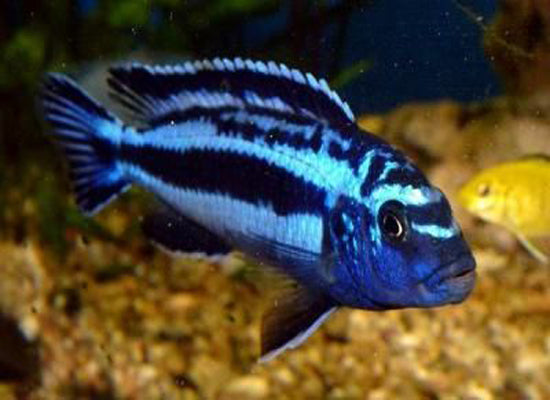
The Johanni (Pseudotropheus, sometimes classified Melanochromis johannii) is a mbuna cichlid — a member of the mbuna group — the small, rock-dwelling, algae-grazing cichlids that occupy Lake Malawi's rocky shoreline habitats in huge numbers and diversity. Males are a deep cobalt blue with dark vertical bars; females and juveniles are a contrasting orange-yellow with the same barring, a colour difference (sexual dichromatism) that's unusually pronounced even by mbuna standards.
In the wild, mbuna graze algae ("aufwuchs") off rock surfaces almost constantly, and their digestive systems are adapted to a largely vegetarian diet — feeding them like a typical omnivorous or carnivorous fish over time causes real digestive problems.
Johanni have a reputation, even within the notoriously feisty mbuna group, for being one of the more consistently aggressive and territorial species — a fish for an experienced Malawi keeper who's set the tank up specifically to handle that temperament, not a first cichlid.
Like other mbuna, Johanni is a maternal mouthbrooder, and given the species' aggression and prolific breeding, it's common for a mixed mbuna tank to end up with unplanned fry surviving in the rockwork within months of setup. Males stake out and aggressively defend a rocky territory almost from a young age, and the species is known for targeting other blue-coloured fish specifically, mistaking them for rival males — a detail worth factoring into tankmate choice beyond simple size matching.
Adults reach around 10 cm (4 inches) — small for a Malawi cichlid, but the aggression this species is known for is entirely out of proportion to its size, and it's genuinely capable of dominating tankmates twice its length in the wrong setup.
The dramatic blue-versus-orange colour split between males and females makes sexing straightforward compared to most mbuna, and buyers should expect the orange juvenile colouring some males still show at a young age to shift to full blue as they mature and establish territory.
Requirements
250+ litres (65+ US gallons) heavily aquascaped with rockwork into broken sightlines and multiple caves — this is essential for diffusing mbuna aggression, not optional decoration.
Temperament: aggressive and territorial, even relative to other mbuna. Best kept in a species-heavy mbuna community stocked at a higher density than you'd use for most fish (more fish spreads aggression around rather than letting one dominant male focus on a single victim) — never as a lone cichlid among small peaceful community fish.
Diet: vegetable-based cichlid pellets or spirulina flake as the staple, with only occasional protein — a diet too rich in protein is a common cause of Malawi bloat in mbuna specifically.
Décor: dense rockwork is the single most important setup decision for this species — build multiple separate rock piles with clear sightline breaks between them so a dominant male can't see and constantly harass fish in a neighbouring territory.
Not a beginner mbuna: given the reputation described above, this species suits a keeper who has already set up a tank specifically for high-aggression mbuna rather than someone building their first African cichlid community; adding it to an already-established, more peaceful mbuna mix can upset the existing social balance.
Filtration: like other mbuna, it's a heavy waste producer relative to its size, so oversized biological filtration and consistent weekly water changes matter as much as the rockwork for keeping this species healthy long-term.
Compatible mbuna: pairing with other robust, similarly confident mbuna (rather than shy or much smaller species) spreads aggression around the tank instead of it concentrating on one victim.
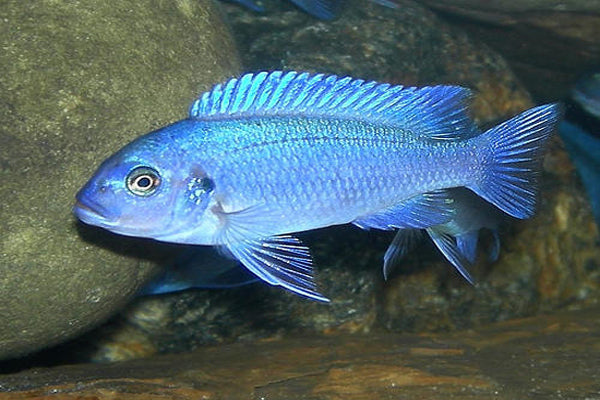
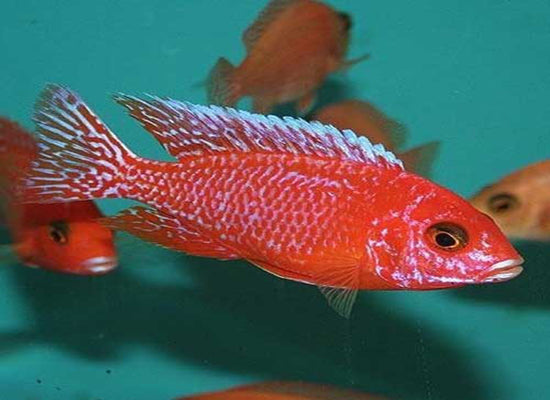
Stocking ratio: one male to three or more females of its own kind reduces how relentlessly a single female is pursued, and mixing in several other robust mbuna species (rather than just one or two) spreads out aggression so no single tankmate becomes the sole target.
Compatibility
Water & Care Conditions
These parameters follow the natural chemistry of Lake Malawi's Rift Valley water — they aren't flexible in the way softer-water community fish can be:
- pH: 7.8–8.6 (Lake Malawi is naturally hard and alkaline — this is not optional, low-pH water stresses these fish over time)
- Water hardness: 10–20 dGH (200–350 ppm); many keepers add crushed coral or aragonite sand to the substrate/filter to hold pH and hardness up long-term
- Temperature: 24–28°C (75–82°F)
- Oxygenation: strong surface agitation and filtration — Malawi cichlids are messy, heavily-stocked-tank fish that need robust biological filtration and large, regular water changes
- Ammonia/nitrite: zero at all times in a mature tank — stress from poor water quality is a common trigger for Malawi bloat, which progresses quickly and is far easier to prevent than treat
- Water changes: weekly changes of 25-30% with hardness/temperature-matched water hold parameters steady, which matters more for rift lake cichlids than for most community fish since they evolved in a remarkably stable natural environment
Test kits for pH, ammonia, nitrite, and nitrate are worth running weekly while a tank is still cycling and maturing, then monthly once stable, since buffering material like crushed coral gradually loses effectiveness and can let pH drift down without any obvious visual warning sign until fish begin to show stress. Watch for the early signs of Malawi bloat -- appetite loss, laboured breathing, pale stringy faeces, and abdominal swelling -- since it is much easier to head off early with a water change and a short fast than to treat once advanced. New water used for changes should be matched to tank temperature and, ideally, hardness before it goes in, rather than added straight from a typically softer tap supply, to avoid repeated swings in chemistry.
Mbuna in particular need the vegetable-forward diet described in Requirements — a protein-rich diet is a common, preventable cause of illness in this group.