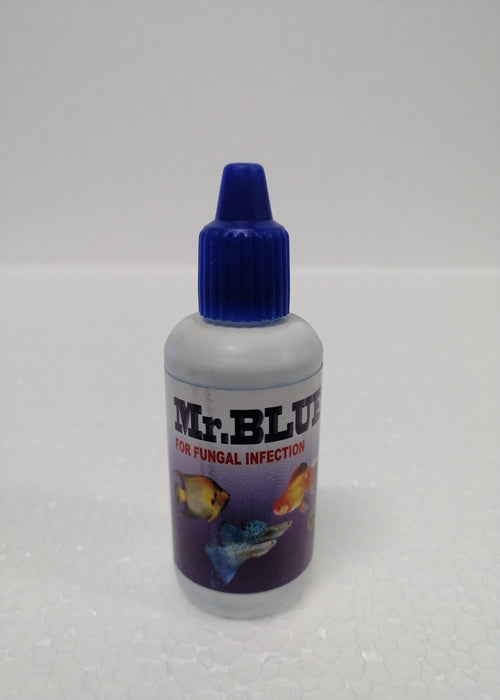
Best medicine for fungal infection removal
Quantity :30 ML
About & Origin
Mr Blue is a broad-spectrum treatment aimed primarily at fungal infections in aquarium fish, along with a group of external protozoan parasites that often show up alongside fungus — including Ich (Ichthyophthirius multifiliis), Chilodonella, Costia, Trichodina, and Tetrahymena.
Fish fungal infections (commonly Saprolegnia) typically appear as cotton-wool-like tufts on the body, fins, or around an existing wound or torn fin — fungus is usually a secondary invader that takes hold once a fish's protective slime coat has already been damaged by an injury, poor water quality, or an earlier parasite or bacterial problem.
Products in this category are often methylene-blue based, which is why the visible tank water frequently turns a distinct blue during treatment — this is expected and fades over the following days as the compound breaks down and is filtered out.
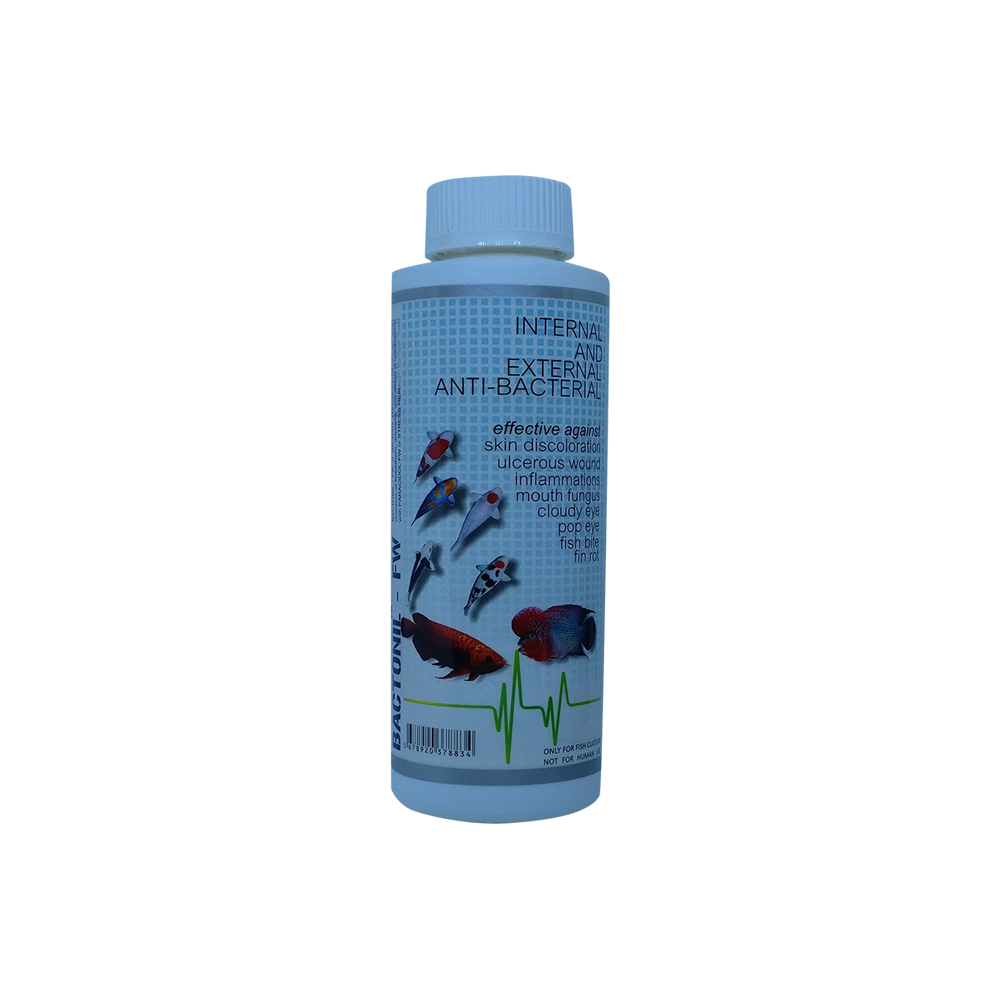
It's worth distinguishing true fungal infections from fin/tail rot and mouth fungus, which despite the common name are usually bacterial rather than fungal in origin -- true fungus tends to look distinctly cottony/fluffy rather than ragged or frayed. If a treatment aimed at fungus doesn't improve a case of fin rot within a few days, it may actually be a bacterial problem needing a product like Bactonil instead.
Requirements
Filtration: remove activated carbon before dosing — it will strip the medication (and the blue colour) straight back out of the water. Restore fresh carbon a few days after finishing treatment to help polish out any remaining tint.
Staining: methylene-blue-type treatments can temporarily stain silicone tank seals and some plastic decor; this is cosmetic and fades over time, but worth knowing before you dose a heavily decorated display tank.
Underlying wound/stress: since fungus is usually secondary, also address whatever caused the original injury or stress — a torn fin from an aggressive tankmate, a scrape from decor, or a lingering parasite infection.
Plants and biological filtration: methylene-blue-based treatments can affect live plants and beneficial bacteria at full display-tank strength — treating an affected fish in a separate, undecorated hospital tank avoids this entirely and is the generally recommended approach.
Prevention: since fungus is usually opportunistic, keeping water quality high and handling fish gently (minimising net injuries and slime-coat damage) does more to prevent fungal outbreaks in the first place than any treatment does to cure one after the fact.
Sensitive livestock: as with most methylene-blue treatments, check safety notes before dosing a tank with scaleless fish, shrimp, or snails, since some invertebrates and scaleless species tolerate it less well than typical scaled fish.
Compatibility

Dosage & Usage Guidelines
A commonly cited dose for this type of product is around 2ml per 100 litres, but always check and follow the ratio printed on your specific bottle.
- Filtration: remove carbon media before dosing
- Best used in: a separate hospital/quarantine tank rather than a planted display, to avoid affecting plants and biofilter bacteria
- Expect: visible blue tint to the water during treatment, fading over the following days
- Storage: tightly sealed, away from direct light
- After treatment: restore carbon filtration and do a partial water change to help clear residual colour
- If no improvement in a few days, reconsider whether the problem is actually bacterial (fin/tail rot, mouth fungus) rather than true fungus
- Prevention: good water quality and gentle handling reduce the wounds/stress that let fungus take hold
- Sensitive livestock: check safety notes before dosing a tank with scaleless fish, shrimp, or snails
- Staining: can temporarily tint silicone seals and light-coloured decor blue — cosmetic, and fades over time
- Shelf life: potency fades over long-term storage even sealed — check for a use-by date before dosing an old bottle
The 30ml bottle size suits occasional use rather than routine dosing -- fungal outbreaks are usually a response to a specific injury or stress event rather than an everyday maintenance item.