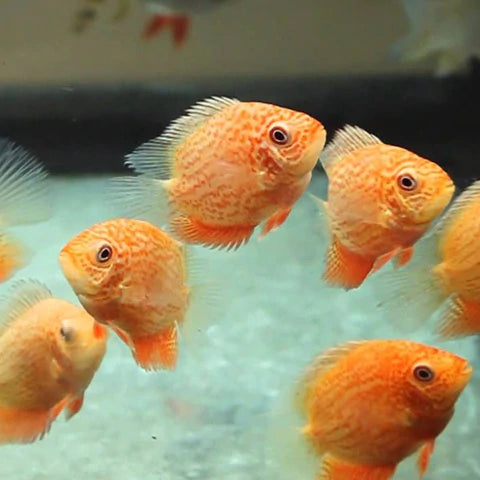
The Red Spotted Severum is a color variant of the Gold Severum, where they are selectively bred to augment the red coloration present on the fish. All color variants of Severum are very popular as they are one of the few larger and peaceful cichlids in the hobby and generally do not bother their tank mates. Red Spotted Severums are native to lakes and tributaries of the Amazon Basin in South America.
Though not the true mouth brooding Severum species (Heros Severus), Red Spotted Severums are very attractive and grow larger than their mouth brooding relatives; not to mention their remarkable breeding colors of intensely bright orange-red on their bellies, anal fins, and pelvic fins in addition to their bright red eyes and beautiful green bodies with faint vertical bands.
About & Origin
The Red Spotted Severum (Heros sp., closely related to Heros severus) is a South American cichlid native to the slow-moving, tannin-stained blackwater rivers and floodplains of the Amazon and Orinoco basins, prized for the scattering of red-orange spots across its body that intensify with age and good care. Unlike many cichlids, severums are considered one of the more even-tempered members of the family — often nicknamed a "gentle giant," and frequently recommended as an entry point for hobbyists who want to keep a genuinely large, impressive cichlid without the outright aggression of an Oscar or a Central American species.
Their deep, laterally compressed, disc-like body shape is superficially similar to a large angelfish or discus at a glance, though severums are considerably more robust and adaptable than either of those more delicate relatives, and grow to a noticeably larger overall size, making them a more forgiving choice for a keeper who wants that dramatic body shape without the fragility.
In the wild they graze on a mixed diet of algae, plant matter, and small invertebrates among submerged roots and leaf litter, which is reflected in their omnivorous appetite in the aquarium. Severums are also biparental substrate spawners, meaning a mated pair will guard eggs and fry together on a flat rock or leaf, showing genuinely attentive parental behavior that's interesting to observe even for keepers with no intention of breeding them.
This specific "Red Spotted" form is one of several named colour strains developed from the naturally variable base severum — Gold, Green, Rotkeil (red-headed), and Turquoise are other commonly seen variants — all essentially the same fish with different degrees of red/orange patterning selected for over generations of captive breeding.
fishykart.com sources healthy, actively-feeding stock, not fish pulled straight off a long shipping chain.
Requirements
Severums grow into a substantial, long-lived fish, and their requirements reflect that.
Tank size: adults reach up to 25–30cm (10–12") and are best kept in at least a 50-gallon (roughly 190-litre) tank for a single fish, more for a pair or group. A young 2-inch specimen like this one can start in something smaller, but growth is steady and the eventual upgrade is worth planning for from the outset rather than treated as a distant maybe.
Temperament: generally peaceful for a cichlid, especially outside of breeding, but still a large fish that will eat anything small enough to fit in its mouth — tankmates need to be similarly sized, not necessarily similarly tempered. A mated pair can become notably more territorial and protective around a spawning site, which is normal breeding behavior rather than a sign of an unusually aggressive individual.
Diet: omnivorous with a strong plant-matter component — a good cichlid pellet with vegetable content, supplemented with blanched vegetables and occasional protein (bloodworm, shrimp).
Decor: driftwood, smooth rocks, and a sandy substrate mimic their natural blackwater habitat; severums appreciate dimmer lighting and will happily uproot delicate plants, so stick to hardy, well-anchored species.
Growth rate and patience: severums are relatively slow-growing and slow to color up compared to many other large cichlids, often taking a year or more to show their full adult red-spotted patterning — this is normal and not a sign that anything's wrong, just a species that rewards a patient keeper.
Flat surfaces: including a broad flat rock or piece of slate in the decor gives a potential breeding pair a natural spawning site, and is worth including even if breeding isn't the immediate goal, since severums also simply appreciate the extra structure.
Compatibility
Water & Care Conditions
As a blackwater species, severums do best in soft, slightly acidic water, though captive-bred stock is generally more adaptable than wild-caught fish:
- pH: 6.0–7.5
- Salinity / hardness: freshwater, soft to moderately hard (GH 4–12), never brackish or marine
- Temperature: 26–30°C (79–86°F)
- Oxygenation: benefits from good filtration and water movement given their size and bioload; not unusually demanding beyond that
Weekly partial water changes of around 25% are a sensible baseline given how much waste a large omnivorous cichlid produces, and stable parameters matter more to long-term coloring and health than hitting an exact number on any single test. Young severums like this 2–2.2 inch size are somewhat more sensitive to swings in pH and temperature than mature adults, so a gradual, well-acclimated introduction to a fully cycled tank matters more at this stage than it will later in the fish's life.
Because captive-bred severums (as opposed to wild-caught imports) have generally adapted well to a broader range of tap-water conditions over generations of breeding, most keepers find them considerably easier to settle in than the "blackwater specialist" reputation of their wild ancestors might suggest — good filtration and consistency go further than chasing exact blackwater chemistry. That said, adding a small amount of driftwood-derived tannins (either from real driftwood or a commercial blackwater extract) is a low-effort way to more closely replicate their natural habitat and is something many severum keepers do purely for the fish's benefit, not just aesthetics. As with most cichlids, a sudden cold snap or an unheated room in cooler months is a genuine risk worth guarding against with a reliable heater and thermometer, since this species has no real cold tolerance despite its overall hardiness.