Green Terror Cichlid Tank Mates — Complete Compatibility Guide
Published: 2026-04-20 · FishyKart Blog
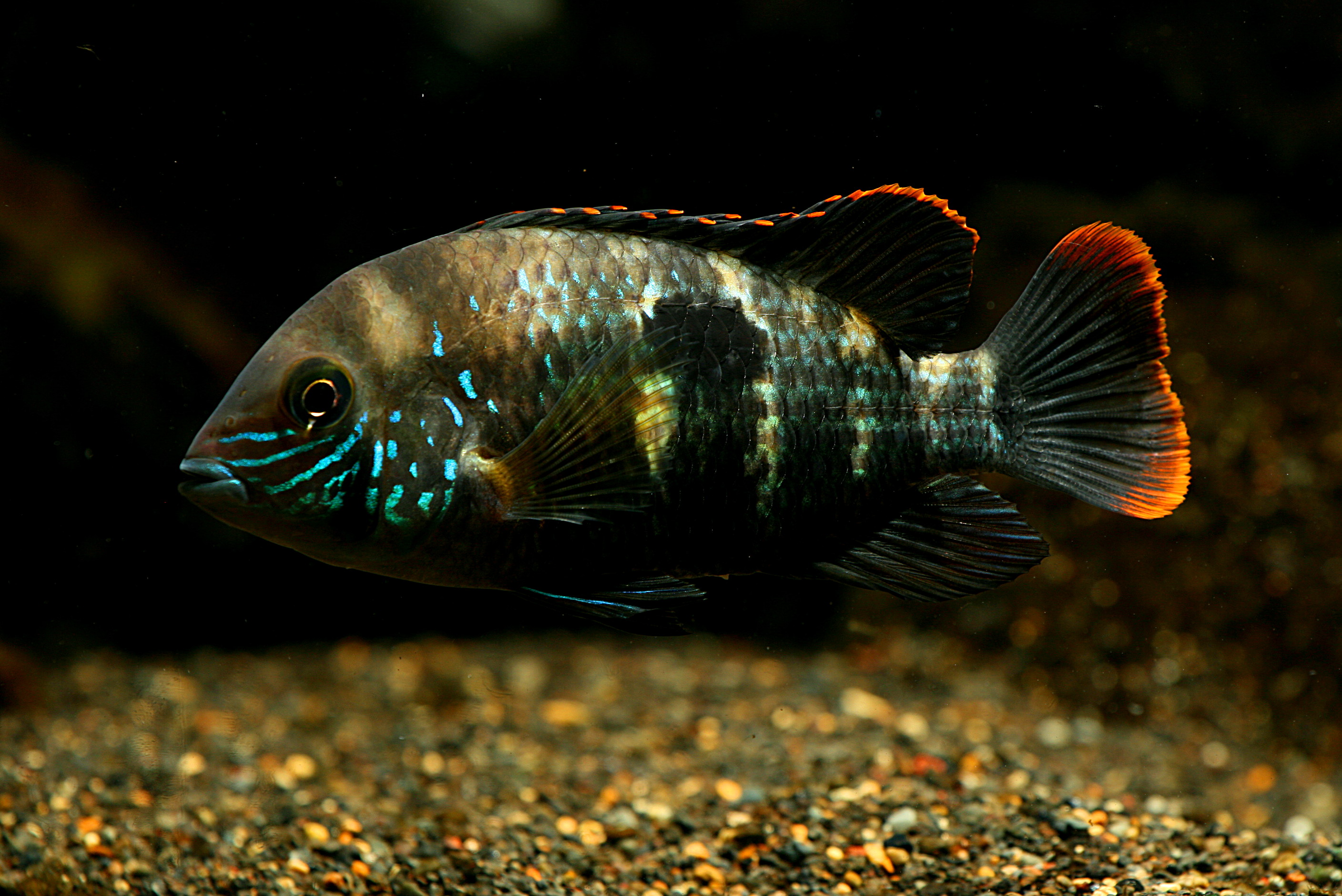
The Green Terror Cichlid (Andinoacara rivulatus) is a semi-aggressive South American cichlid that can live with other fish, but only under the right conditions. The best tank mates for Green Terrors are similarly sized South American cichlids — Oscar fish, Salvini cichlids, and Firemouths — along with large armoured plecos that can defend themselves. Green Terrors should never be kept with small fish (Neon Tetras, Guppies, Mollies) or slow, long-finned species (Angelfish, Discus), which will be harassed or eaten. A community tank with a Green Terror requires a minimum 125 gallons (470 litres) to give each species enough territory to avoid chronic conflict.

Can Green Terror Cichlids Live With Other Fish?
Yes — Green Terrors can live with other fish, but they are not community fish in the traditional sense. Unlike peaceful schooling species, a Green Terror actively patrols and defends territory. Compatibility depends on three factors: fish size (tank mates must be too large to be eaten), tank size (enough territory to reduce confrontations), and personality matching (pairing with species that can hold their own without being excessively aggressive themselves).
Green Terror Aggression Level
Green Terrors are classified as semi-aggressive under normal conditions and highly aggressive during breeding. Outside of breeding, a well-fed Green Terror in a large tank typically settles into a manageable routine — it may chase tank mates away from its preferred area but rarely causes fatal injuries to equally sized fish. Aggression escalates significantly in four situations:
- Breeding season: both male and female become highly territorial and will attack any fish that approaches the spawning site or eggs
- Overcrowded tanks: inadequate territory triggers constant aggression toward all tank mates
- Introduction of new fish: established Green Terrors will chase and attack newly added fish for days or weeks
- Small or slow-moving tank mates: any fish that triggers the predatory response (small size, slow movement, long fins) will be permanently harassed
The male Green Terror develops a nuchal hump on the forehead as he matures — larger humps correlate with higher dominance and aggression. A dominant male in a small tank will often terrorise all tank mates without pause.
Tank Size Requirements for a Community Setup
Tank size is the single most important factor in Green Terror compatibility. The minimum requirements for different community setups:
| Setup | Minimum Tank Size |
|---|---|
| Single Green Terror only | 75 gallons (280 litres) |
| Green Terror + 1 large pleco | 75 gallons (280 litres) |
| Green Terror + 1 similarly sized cichlid | 125 gallons (470 litres) |
| Green Terror + Oscar + pleco | 150–180 gallons (570–680 litres) |
| Green Terror pair (breeding) | 100 gallons (380 litres) minimum; remove all other fish during spawning |
Dividing visual space with large rocks, driftwood, and PVC pipes reduces line-of-sight conflicts and allows subordinate fish to retreat without being chased across an open tank.
Best Tank Mates for Green Terror Cichlids
South American Cichlids — Oscar, Salvini, Firemouth
The most reliable tank mates for Green Terrors are other large South American cichlids that share similar water requirements and can defend themselves from moderate aggression. These are the top choices:
- Oscar Fish (Astronotus ocellatus) — the most commonly paired tank mate. Oscars are large (25–35 cm), robust, and not easily intimidated. In a 150-gallon+ tank with plenty of visual breaks, an Oscar and Green Terror coexist well. Introduce them simultaneously or introduce the Oscar first.
- Salvini Cichlid (Trichromis salvini) — a bold, fast-moving cichlid that can hold its own against a Green Terror. Salvinis are slightly smaller but highly assertive. Works best in 125+ gallon tanks with territories clearly defined by rockwork.
- Firemouth Cichlid (Thorichthys meeki) — compatible in larger tanks (125+ gallons). Firemouths are less aggressive than Green Terrors but use their flared gill threat display effectively. Monitor for bullying.
- Jack Dempsey (Rocio octofasciata) — compatible with caution. Jack Dempseys are similarly aggressive and may engage in sustained fin-nipping conflicts. Works best in very large tanks (150+ gallons) with abundant hiding spots.
- Severum (Heros efasciatus) — a calmer, rounder South American cichlid that can coexist with Green Terrors in large tanks. Less likely to trigger aggression due to its non-threatening profile.
Large Plecos — Sailfin, Royal Pleco
Armoured plecos are among the safest Green Terror tank mates because their thick bony plates make them essentially immune to cichlid attacks. They occupy the bottom of the tank, a zone Green Terrors rarely hold as core territory, which further reduces conflict.
- Sailfin Pleco (Pterygoplichthys gibbiceps) — grows to 45–50 cm, fully armoured, completely ignores cichlid aggression. The most popular pleco companion for large cichlid tanks in India.
- Royal Pleco (Panaque nigrolineatus) — grows to 40 cm, heavily armoured, peaceful. Requires wood in the diet (driftwood in tank). Excellent tank mate for Green Terrors.
- Common Pleco (Hypostomus plecostomus) — widely available in India, grows to 50 cm, very resilient. Not as visually striking but highly compatible.
- Avoid small plecos (Bristlenose Plecos under 12 cm) — a juvenile Green Terror or large adult may bite and injure smaller pleco species, especially around the belly.
Other Compatible Fish
- Giant Gourami (Osphronemus goramy) — large, slow-moving surface fish that rarely enters cichlid territory. Compatible in 150+ gallon tanks. Indian hobbyists commonly keep Giant Gourami with medium cichlids.
- Tinfoil Barb (Barbonymus schwanenfeldii) — fast-moving schooling fish that grows to 35 cm. Their speed lets them evade aggression. Keep in schools of 5+ so the Green Terror cannot fixate on a single target.
- Silver Dollar (Metynnis argenteus) — a fast-moving, deep-bodied fish that reaches 15–20 cm. Schooling behaviour and speed make them difficult to bully. Keep in groups of 6+.
- Striped Raphael Catfish (Platydoras armatulus) — heavily armoured nocturnal catfish that hides during the day and is immune to cichlid aggression. A low-maintenance bottom tank mate.
Fish to Avoid With Green Terror Cichlids
Small Fish — Neon Tetra, Guppy, Molly
Any fish small enough to fit in a Green Terror's mouth will be eaten. This includes:
- Neon Tetras and other small tetras — will be eaten within hours
- Guppies — too small and slow; also, long fins trigger the Green Terror's predatory response
- Mollies and Platies — too small; will be eaten or harassed to death
- Danios and Rasboras — despite being fast, their small size puts them at risk
- Corydoras Catfish — too small; Green Terrors will harass and nip them even if they cannot fully swallow them
Slow-Moving Fish — Angelfish, Discus
Slow-moving fish with long, trailing fins are particularly vulnerable to Green Terror aggression even when they are not small enough to be eaten. Green Terrors fixate on slow-moving targets and will fin-nip relentlessly:
- Angelfish (Pterophyllum scalare) — tall, slow, long-finned. Will be fin-shredded and stressed to death
- Discus (Symphysodon spp.) — even more delicate than Angelfish; completely incompatible with Green Terrors
- Betta Fish — small and long-finned; will be killed
- Goldfish — slow, cold-water fish; incompatible on both aggression and temperature grounds
Overly Aggressive Cichlids — Flowerhorn, Wolf Cichlid
While the Green Terror needs robust tank mates, some cichlids are too aggressive and will bully or injure the Green Terror itself:
- Flowerhorn Cichlid — extremely territorial and aggressive; will dominate and injure a Green Terror in all but the largest tanks
- Wolf Cichlid (Parachromis dovii) — one of the most aggressive cichlids in the hobby; not compatible with Green Terrors
- Red Devil Cichlid (Amphilophus labiatus) — similar aggression profile to Flowerhorn; conflicts will escalate to serious injury
- Jaguar Cichlid — a large, highly aggressive predator; not compatible unless tank is enormous (200+ gallons) with very heavy visual blocking

Green Terror Breeding & Aggression
Why Green Terrors Get More Aggressive During Breeding
Green Terrors are biparental substrate spawners — both parents guard the eggs and fry aggressively. During breeding, a previously manageable pair will attack any fish that enters their territory, regardless of size. This includes fish that normally coexist peacefully with them. Breeding aggression typically follows this escalation:
- Pre-spawning (1–2 weeks before): the pair begins clearing a flat surface (rock, substrate, or slate) and chasing other fish away from the area more forcefully than usual
- Spawning to hatching (3–4 days): maximum aggression; the pair attacks anything that approaches within 30–50 cm of the spawning site. Injuries to other tank mates become likely
- Fry-guarding (2–4 weeks): parents move the fry in a tight school and attack any perceived threat. Aggression remains very high
Recommendation: remove all other fish from the tank during breeding, or set up a dedicated breeding tank. Attempting to breed Green Terrors in a community tank without removal almost always results in injuries or deaths among tank mates.
Buy Green Terror Cichlid Online
Green Terror Cichlids are available from FishyKart with fast delivery across India. All fish are quarantined and feeding before dispatch. Juveniles are priced at ₹200–₹500; sub-adults and adults range from ₹500–₹1,500 depending on size and colouration intensity.

