About & Origin
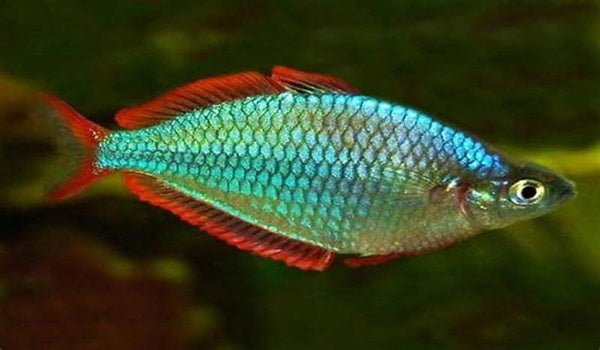
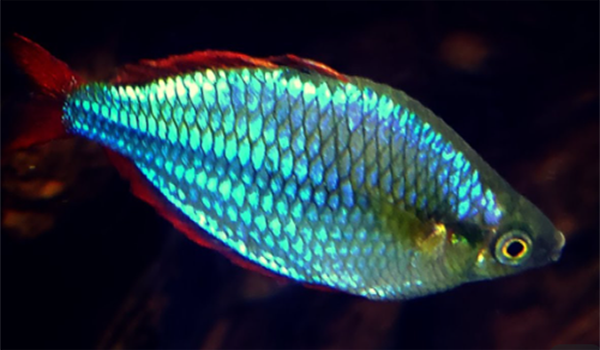
"Peacock Rainbow" is a trade name for the dwarf neon rainbowfish (Melanotaenia praecox) — despite the name, it's not related to peacock cichlids, just a marketing name playing on the fish's iridescent, multi-hued shimmer. Wild populations come from fast-flowing forest streams in the Mamberamo River system of New Guinea, and males show the strongest colour once mature and settled into a group.
The iridescence is natural pigment-cell shimmer, not dye or genetic modification, and it develops fully only with age, good diet, and confidence in the tank — a newly added or stressed fish typically looks washed-out until it settles in over the following weeks.
They are active, fast-swimming schooling fish that spend most of their time in the middle and upper water column, and males display and flare their fins at each other and at females in a way that's part of their normal, harmless shoaling behaviour rather than real aggression.
Dwarf neon rainbowfish were only formally described in the early 1990s, a relatively recent addition to the trade, and their compact adult size (rarely more than 6cm) paired with intense colour has made "Peacock Rainbow" and similar trade names popular alternatives to larger rainbowfish species that quickly outgrow standard community tanks.
Requirements
Standard dwarf neon rainbowfish care applies (shoal of 6+ for the best display colour, 60cm/24in tank with open mid/upper swimming space and side planting, secure lid since they jump, easy omnivore diet of flake/micro-pellet plus live or frozen food for conditioning, breeds readily over fine-leaved plants or a spawning mop).
Display behaviour: males posture and flash colour at each other and at females far more in a proper group than singly or in pairs — a lone male in a small tank rarely shows the full display intensity this trade name is sold on, so group size matters more for this fish's visual appeal than almost any other requirement.
Water movement: as a fast-stream species, it appreciates real current and surface agitation rather than still water — a moderate-to-strong filter outflow supports both activity level and colour noticeably better than gentle flow alone.
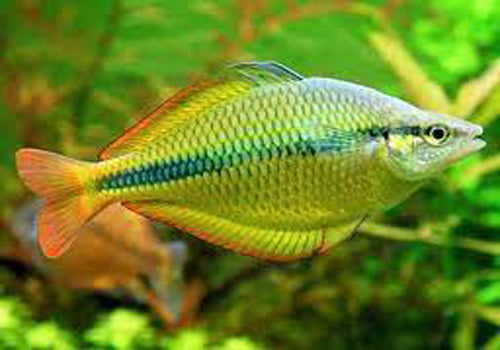
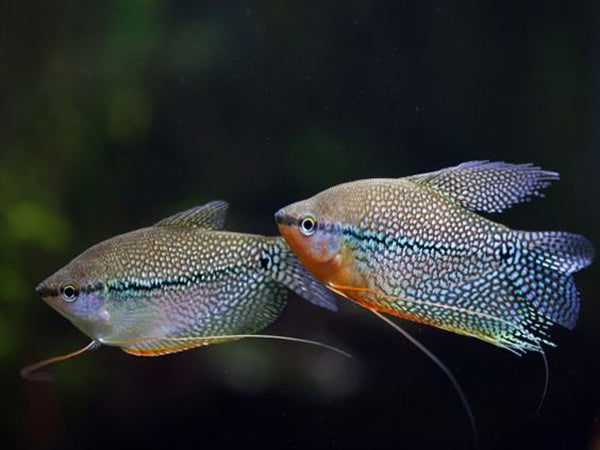
Tankmates: peaceful and fast-swimming, pairing well with other active, similarly-sized community fish — small tetras, rasboras, and calm bottom dwellers all work, while very slow or heavily long-finned species can struggle to compete for food alongside this fish's quick feeding response.
Diet: a quality flake or micro-pellet as the daily staple, with occasional live or frozen food such as brine shrimp or daphnia to support conditioning and colour intensity over time.
Compatibility
Water & Care Conditions
- pH: 6.5–7.5
- Hardness: soft to moderately hard, roughly 5–15 dGH
- Temperature: 24–28°C (75–82°F)
- Oxygenation: strong water movement matters here, reflecting the species' fast-stream origin — still water noticeably dulls both colour and activity
Colour intensity is the clearest health/happiness signal for this fish: a dull, pale, or listless individual in an otherwise well-run tank is worth checking for water flow, group size, or diet issues before assuming disease. Weekly 20–25% water changes and stable filtration matter more than exact precision on the numbers above, and well-kept individuals commonly live 4–5 years, with males reaching full colour intensity by around 6 months of age. Ich is the most common health issue seen generally, usually tied to temperature swings or new-arrival stress rather than anything species-specific, and responds well to prompt, standard treatment. A dark substrate and background also help the iridescent shimmer read clearly, since it can wash out visually against pale gravel under bright lighting. A 60cm (24in) or larger tank with open swimming space gives a proper shoal room to display naturally rather than looking cramped and dulling the whole point of keeping this fish. A secure lid matters too, since this species jumps readily when startled by sudden movement near the tank.