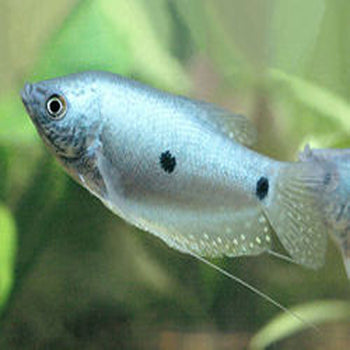
Nature of fish and tank mates
As a fish hobbyist, you may find every fish has its own charm. But Kissing Gouramis are truly and uniquely gorgeous. Their distinctive mouths with pouting lips make them fascinating and a must-add tank addition.
Kissing Gourami fish AKA kisser fish belong to the Helostomatidae family and are native to Thailand, Indonesia, Malaysia, Vietnam, Pakistan, Cambodia and India.
These fish are generally peaceful when young and may become territorial when they become adults. However, you can handle them easily by adding compatible tank mates.
Some of the ideal Kissing Gourami tank mates are -
- Yoyo Loach
- Swordtails
- Angelfish
- Rosy Barb
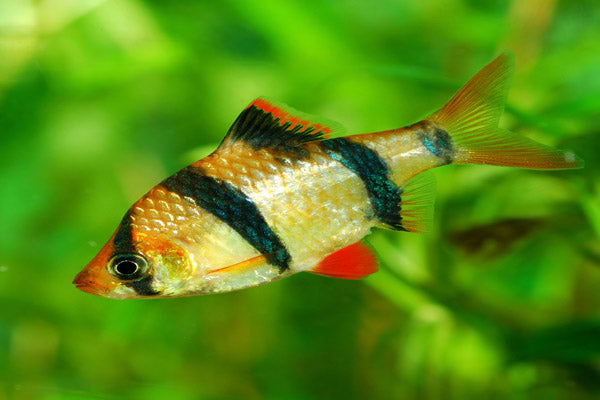
- Tiger Barb
- Chinese Algae Eaters
- Congo Tetra
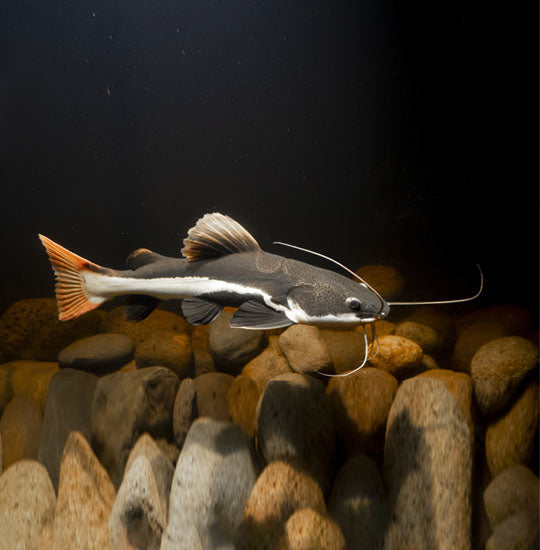
- Pictus Catfish.
Appearance
These fish come commonly in three colours - silver-green, pink and mottled. While green is more popular and mottled variety is less popular in aquariums, pink is often chosen.
Care
Kissing Gourami fish are wide swimmers. They require a 70-gallon tank with
freshwater. These fish are prone to the most common disease called Freshwater Ich if properly not taken care of.
Food
Gourami fish food can be dry flakes or pellets, blanched vegetables like spinach, lettuce, and zucchini. For protein and nutrients, add brine shrimp, tubifex worms, and bloodworms as occasional live or frozen food.
Average Size and Lifespan
Kissing Gourami size is up to 5-6 inches in captivity and up to 12 inches in the wild.
The average lifespan of Gourami aquarium fish is around 7 years and they may live up to 25 years.
About & Origin
The kissing gourami (Helostoma temminckii) is a labyrinth fish native to the slow-moving rivers, canals, and rice paddies of Thailand, Malaysia, and Indonesia, where -- like other labyrinth fish -- it can gulp air at the surface to supplement its gill breathing in oxygen-poor water.
Its famous 'kissing' behaviour, where two fish appear to lock lips, is not affection but a test of strength -- a form of territorial and dominance sparring between rival fish, most often seen between males.
Wild-type kissing gouramis are a plain silvery-green; the pale pink 'pink kissing gourami' commonly sold in shops is a selectively bred colour form of the same species.
The "kissing" contest itself can last anywhere from a few seconds to several minutes, with the two fish pressing their thick, protrusible lips together and pushing, somewhat like an arm-wrestling match, until one backs down -- it's a genuine dominance ritual rather than courtship, and can occur between two males, two females, or a male and female, since it's about establishing hierarchy rather than mating. Despite the intensity of the display, actual injury from kissing bouts is uncommon; the far more concerning form of aggression in this species is the more standard fin-nipping and chasing that can occur toward slower or more timid tankmates.
In parts of Southeast Asia the species is also farmed as a food fish, distinct from the ornamental pink strain more commonly seen in the aquarium trade, which reflects just how widespread and adaptable this fish is across both roles.
Its body shape is distinctive among gouramis: a deep, laterally compressed oval, with a small mouth built specifically for the pushing/kissing display and for grazing biofilm rather than for grabbing large prey, which is part of why it's generally not a threat to similarly sized tankmates despite its size and territorial streak. Juveniles are much more peaceful and social than adults, often shoaling loosely when young before becoming progressively more independent and occasionally combative as they mature and establish size and hierarchy.
Requirements
This fish grows larger than its cute juvenile size suggests, commonly reaching 25-30cm, and needs to be planned for a tank of at least 200 litres (55 gallons) as an adult, with open swimming space -- it's an active fish that doesn't do well cramped.
It can become territorial and boisterous, especially as it matures and especially toward its own species, so tankmates need to be similarly robust and not easily bullied or outcompeted for food.
It's an easy omnivore, grazing algae and biofilm off surfaces as a grazer while also happily taking flake, pellets, and vegetable matter like blanched lettuce or courgette.
Its grazing habit makes it a genuinely useful algae-control fish in a large, established tank, and it will spend meaningful time working over glass, decor, and broad-leafed plants for biofilm -- though as it grows and its appetite scales up with its size, expect it to supplement grazing with a fair amount of prepared food rather than living purely off algae.
Because it can become territorial with its own kind as it matures, keeping more than one in a smaller setup risks ongoing disputes -- a single specimen in a large, appropriately stocked community, or a carefully managed group in a genuinely spacious tank, both work better than a pair or trio crammed into modest housing.
Filtration should be sized generously relative to the tank's nominal volume, since a mature kissing gourami is both large and a fairly heavy grazer/eater -- undersized filtration is a common real-world cause of poor water quality and stress in tanks housing this species long-term, even when the tank itself is nominally "big enough" on paper.
A tight-fitting lid is worth having too: while not a classic jumper, an adult kissing gourami can be startled into leaping, and given the fish's size, an unexpected jump can be a real problem for both the fish and anyone standing nearby.
Compatibility
Water & Care Conditions
A hardy, adaptable labyrinth fish thanks in part to its ability to breathe atmospheric air at the surface:
- pH: 6.0–8.0
- Water hardness: soft to moderately hard, 5–20 dGH
- Temperature: 22–28°C (72–82°F)
- Oxygenation: as a labyrinth fish it can breathe surface air directly, so it tolerates lower dissolved oxygen better than most fish, though good filtration is still important for its size
- Air access: needs regular access to the water's surface to gulp air -- a tight lid should still leave some airspace and an open route to the surface, not seal it away entirely
- Water changes: weekly partial water changes of 20-30% help manage the bioload of a fish that reaches a substantial adult size
- Substrate & decor: open swimming space with some broad-leafed surfaces (decor, wood, robust plants) to graze on suits this species' natural grazing behaviour
- Common issues: generally hardy; ich and stress-related colour loss are the most commonly seen problems, usually linked to inadequate space or aggressive tankmate mismatches rather than the species being inherently delicate
- Growth planning: reaches a large fraction of its adult size within its first couple of years given good food and space, so the eventual 200+ litre setup should be planned for from the outset
- Feeding: feed once or twice daily with a mix of prepared food and algae-grazing opportunities (decor, wood, robust plants) to mirror its natural varied diet
- Longevity: a well-kept kissing gourami can live 5-7 years or more, so its housing and tankmates are worth choosing with that timeframe in mind
- Acclimation: a hardy species that generally settles in well with a standard slow, drip-style acclimation and starts feeding within a day or two of introduction
- Lighting: not especially light-sensitive; standard aquarium lighting works fine and doesn't need to be dimmed or filtered for this species specifically