About & Origin
Ludwigia inclinata is a vividly coloured aquarium stem plant, native to South America, found across parts of Brazil and neighbouring regions growing in shallow, sun-lit freshwater habitats.
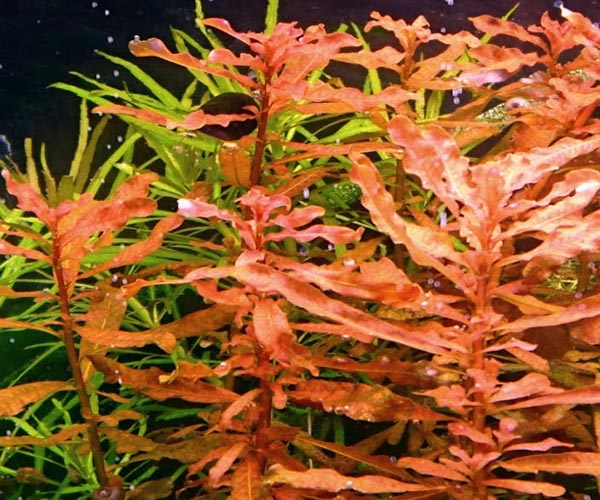
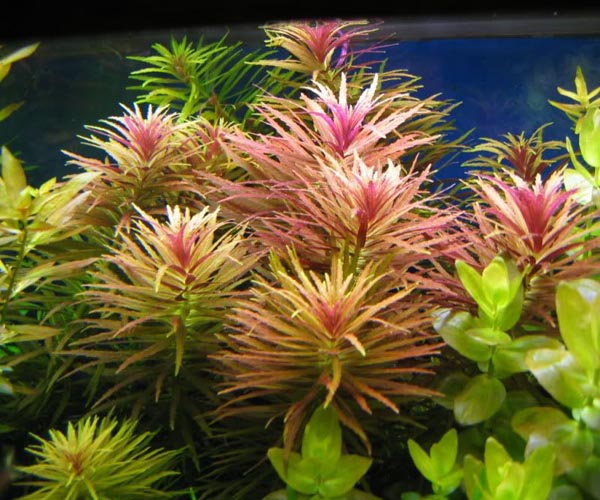
It's grown in the aquarium hobby for its exceptional colour — narrow leaves that shift through gold, orange, and red tones, often on the same stem, giving a much more dramatic, multi-toned look than most other stem plants. It's a genuine aquascaping showpiece plant, frequently used as a centrepiece or focal colour accent in competition-style planted tanks.
That striking colour comes at a cost: it's a noticeably more demanding plant than most of the other stem plants on this site, and tends to reward a proper high-tech setup rather than a casual low-tech tank.
The species is quite variable in the wild and in cultivation — several distinct forms and cultivars circulate in the hobby under names like "Cuba," "Pantanal," and the narrow-leafed "var. verticillata," each with slightly different leaf shape and colour balance, though all share the same demanding high-light, CO2-fed growing requirements and the same reputation as a showpiece rather than a beginner plant. The particular stock sold here is a standard, reliable form suited to a dedicated planted-tank setup.
In competition aquascaping, inclinata is frequently used specifically because its colour responds so visibly and quickly to changes in light and nutrient dosing — experienced aquascapers treat it almost as a living indicator of how well-tuned a high-tech tank's overall balance is, since it will noticeably green over within days of any lapse in CO2 or light, long before slower-responding plants show any sign of trouble.
Grown well, mature stems develop a dense, almost feathery cluster of narrow leaves near the growing tip in bright gold and red, contrasting against greener, older growth further down the stem — a two-tone effect within a single plant that's part of what makes it so prized as a focal point rather than simply a coloured filler species.
Requirements
This is one of the more demanding plants in the range, best suited to an established, well-equipped planted tank.
Light: high light is needed to bring out its gold-red colouration and keep growth compact; under weaker light it tends to green over and grow leggy.
CO2: supplemental CO2 injection is strongly recommended, close to essential for it to thrive and hold good colour long-term.
Nutrients: a nutrient-rich substrate plus regular liquid fertilising (including micronutrients) makes a real difference to both growth rate and colour intensity.
Planting and propagation: root as a stem plant, trim regularly to keep it dense and encourage branching, and replant healthy tops — it's a plant that rewards attentive maintenance rather than a "plant and forget" approach.
Not recommended for beginners or low-tech tanks: honestly, this is not the right first plant for someone just starting a planted tank, or for a low-light, no-CO2 setup — it will likely survive in those conditions but will look disappointing compared to its potential, defeating the point of choosing a plant specifically for its colour. It's best reserved for keepers who already have a stable high-light, CO2-injected tank running and want a genuine showpiece.
Pruning frequency: under strong light with CO2, expect to trim every one to two weeks to maintain a compact, bushy form — left unpruned it stretches upward quickly and loses the dense, colourful look it's grown for, with lower leaves thinning out as the plant races toward the light.
Iron and micronutrient dosing: colour intensity is closely tied to trace-element availability, particularly iron; a fertiliser regime that's adequate for green plants but light on micronutrients will often leave this species looking dull gold rather than the vivid red-orange it's capable of.
Compatibility
Water & Care Conditions
This is a genuinely demanding species where the full parameter picture matters more than for most of the plants on this site — it's not a "close enough" plant, and each factor below meaningfully affects its colour and health rather than being a nice-to-have. It does best within these ranges:
- pH: 6.0–7.2
- Hardness: soft to moderate, roughly 2–10 dGH
- Temperature: 22–28°C (72–82°F)
- Light: high, ideally paired with CO2 injection and consistent fertilising for the best gold-red colour
- CO2: strongly recommended rather than optional — most keepers who successfully maintain this species' colour long-term are running pressurised CO2 injection, not relying on ambient or liquid-carbon sources alone
- Stability: responds poorly to fluctuating parameters; a tank with swings in temperature, pH, or dosing consistency will show it in this plant's colour and growth form faster than in most other species
Under lower-tech conditions it will often survive but green over, grow more slowly, and lose the vivid multi-tone colour it's specifically chosen for — at that point it essentially becomes an unremarkable green stem plant, which somewhat defeats the purpose of choosing this particular species over a hardier, cheaper alternative. Keepers who can't commit to high light and CO2 are usually better served picking a different Ludwigia or Rotala variety bred for lower-tech tolerance instead.
Oxygenation: in a CO2-injected tank, make sure surface agitation and gas exchange are still adequate once lights go off and CO2 injection stops for the night, since a heavily planted, high-tech tank can otherwise see oxygen levels dip overnight — this affects the fish and other livestock sharing the tank more directly than the plant itself, but it's a real consideration in any setup dense enough to grow this species well.