
About & Origin
Plant Food is a liquid fertilizer for live aquarium plants, supplying the macro and micro nutrients that plants pull out of the water column as they grow — nutrients that fish waste and leftover food alone often don't provide in the right balance for healthy, fast-growing plants.
Even in a tank with plenty of fish, most aquarium plants benefit from supplemental fertilization: fish waste tends to be relatively rich in some nutrients (nitrogen) but poor in others (potassium, iron, and trace elements plants also need for strong leaf colour and growth), which is exactly the gap a liquid plant food is meant to fill.
Regular dosing is one of the most direct ways to visibly improve a planted tank — better colour, faster growth, and fewer of the yellowing or holed leaves that usually signal a nutrient deficiency.
How much a tank actually needs varies a lot with stocking and plant mass -- a heavily-planted tank with fast-growing stem plants will draw down nutrients much faster than a lightly-planted one with a few slow-growing Anubias, so treat the dosing rate on the bottle as a starting point to adjust from based on how your specific tank responds, rather than a fixed universal number.
Most liquid plant foods cover the key macro nutrients (nitrogen, phosphorus, potassium) and a spread of micronutrients/trace elements (iron, manganese, copper, boron and similar), with iron often called out specifically on the label since it's the nutrient most directly tied to leaf colour -- a tank running short on iron typically shows it first as pale or yellowing new growth on fast-growing stem plants, well before other symptoms appear.
Liquid fertilizers like this are generally the simplest entry point into plant feeding compared to root tabs (which target heavy root-feeders like Amazon swords specifically) or a dry-fertilizer dosing regimen (which needs more precise weighing and calculation) -- a measured cap into the water column covers the whole tank at once with minimal fuss, which is why it's the standard recommendation for most home aquascapes.
Requirements
Dosing frequency: most liquid plant foods are dosed a few times a week rather than daily or once a month, matching how quickly actively growing plants use up available nutrients.
Light and CO2 matter too: fertilizer alone won't fix slow growth if light or CO2 is the actual limiting factor — plants need all three (light, CO2, nutrients) in reasonable balance, and overdosing fertilizer without enough light just feeds algae instead of your plants.
Fish-safe at recommended doses: liquid plant fertilizers are formulated to be safe for fish and shrimp at their normal dosing rate — problems generally only arise from significant overdosing.
Dose after a water change rather than before, so you're adding nutrients to fresh water rather than diluting them away again shortly afterward.
Signs of under-fertilizing: stunted new growth, small or pale new leaves, and stem plants that stretch upward with long gaps between leaves (reaching for light/nutrients) are all common signs a tank needs more feeding, not less.
Signs of overdosing: a sudden algae bloom shortly after increasing the dose is the most common tell -- excess nutrients that plants aren't using fast enough get taken up by algae instead, so if algae spikes, it's usually a sign to cut back rather than add more light to compensate.
New tanks: a freshly planted, uncycled tank often needs less fertilizer initially since plant mass and light demand are both still low -- ramp dosing up gradually as the tank fills in rather than starting at full strength from day one.
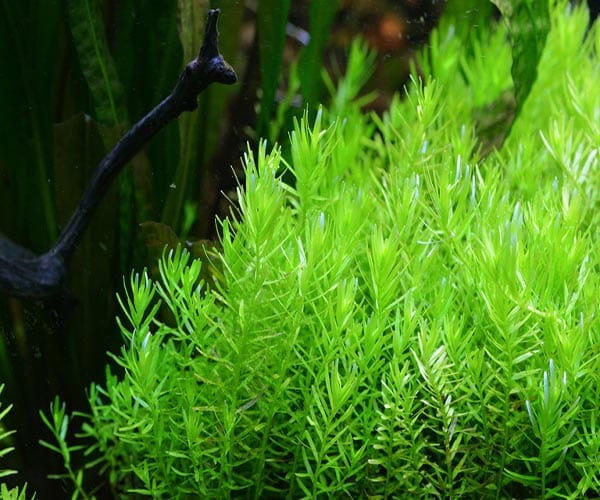
Species-specific needs: stem plants and other fast-growers (Rotala, Ludwigia, Hygrophila) typically respond most visibly to regular dosing since they're actively building new tissue constantly, while slow-growing epiphytes like Anubias or Java Fern draw far less from the water column and won't show dramatic changes on the same schedule -- don't judge whether dosing is "working" purely by how the slowest-growing plants in the tank look.
Water changes and dosing don't cancel out: a partial water change removes some dosed nutrients along with old ones, which is exactly why dosing right after a change (rather than before) is the standard advice -- it resets the tank to a known, fresh nutrient baseline instead of dosing into water that's about to be diluted away.
Compatibility

Dosage & Usage Guidelines
Dose 2–3 times a week as a starting point, adjusting based on how your plants respond — check the bottle for the exact ratio per litre.
- Best dosed: after a water change, into fresh water
- Balance with: adequate light and, for demanding plants, supplemental CO2
- Safe for: fish and shrimp at recommended doses
- Storage: cool, dark place, tightly sealed
- Adjust based on results: treat the bottle's dose as a starting point, not a fixed rule
- Signs of under-fertilizing: pale/small new leaves, long gaps between leaves on stem plants
- Signs of overdosing: a sudden algae bloom is the most common warning sign -- scale the dose back rather than adding more
- New/uncycled tanks: start at a reduced dose and ramp up gradually as plant mass increases
- Storage life: check for a use-by date; a bottle that's changed colour, separated, or developed sediment is best replaced
- Shake before use: some formulations settle over time -- give the bottle a shake before measuring out a dose
- Iron and colour: if red/pink stem plants are looking dull or green rather than vibrant, that's often specifically an iron shortfall rather than a general nutrient issue
- Pairs well with: root tabs for heavy root-feeders (Amazon swords, Cryptocoryne) planted directly in nutrient-poor substrate, since a water-column fertilizer alone doesn't reach their root zone efficiently
- Track results over weeks, not days: plant response to a dosing change is gradual -- give a couple of weeks before deciding whether to adjust the amount again
Keep a simple routine (for example, dosing right after your usual weekly water change) so fertilizing becomes an automatic habit rather than something that's easy to forget. Consistency matters more than precision here -- a slightly-off dose applied regularly beats a perfectly calculated one applied sporadically.